
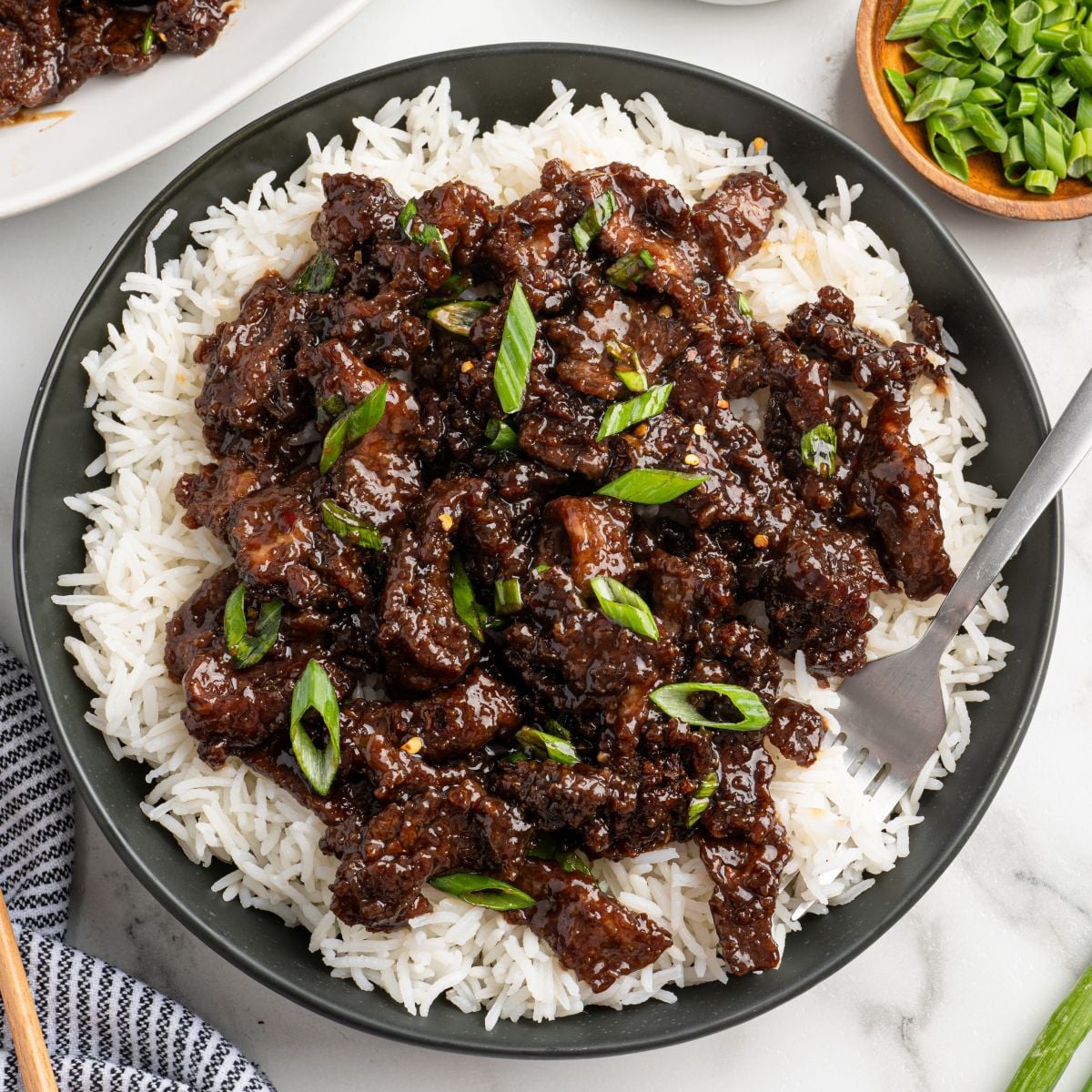
Mongolian beef is one of those dishes people keep ordering from restaurants because the combination is hard to resist: tender strips of beef, a glossy sauce, and rice underneath catching every last bit of it.
The challenge at home is that the details matter. Beef that is cut too thick stays chewy. Sauce that never quite thickens slides off the meat instead of coating it. And too much soy sauce or sugar can throw the whole balance off.
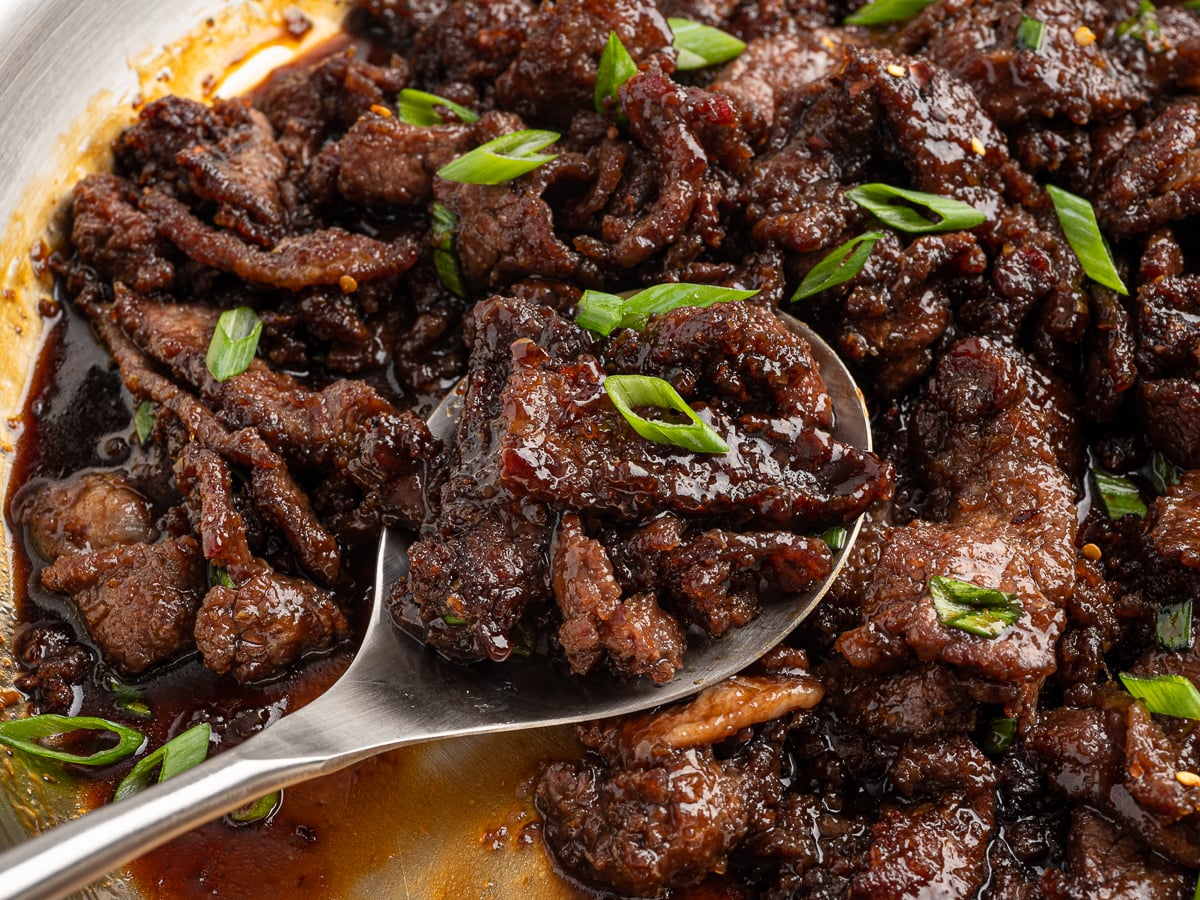
Inspired by the tender beef and glossy sauce that made PF Chang’s Mongolian Beef so popular, I redeveloped this version to solve those problems. The beef is sliced thin, marinated before cooking, and finished in a sauce that turns glossy and clings to every piece.
If you’re in the mood for more restaurant favorites, browse my copycat recipes page.
Ingredient Notes
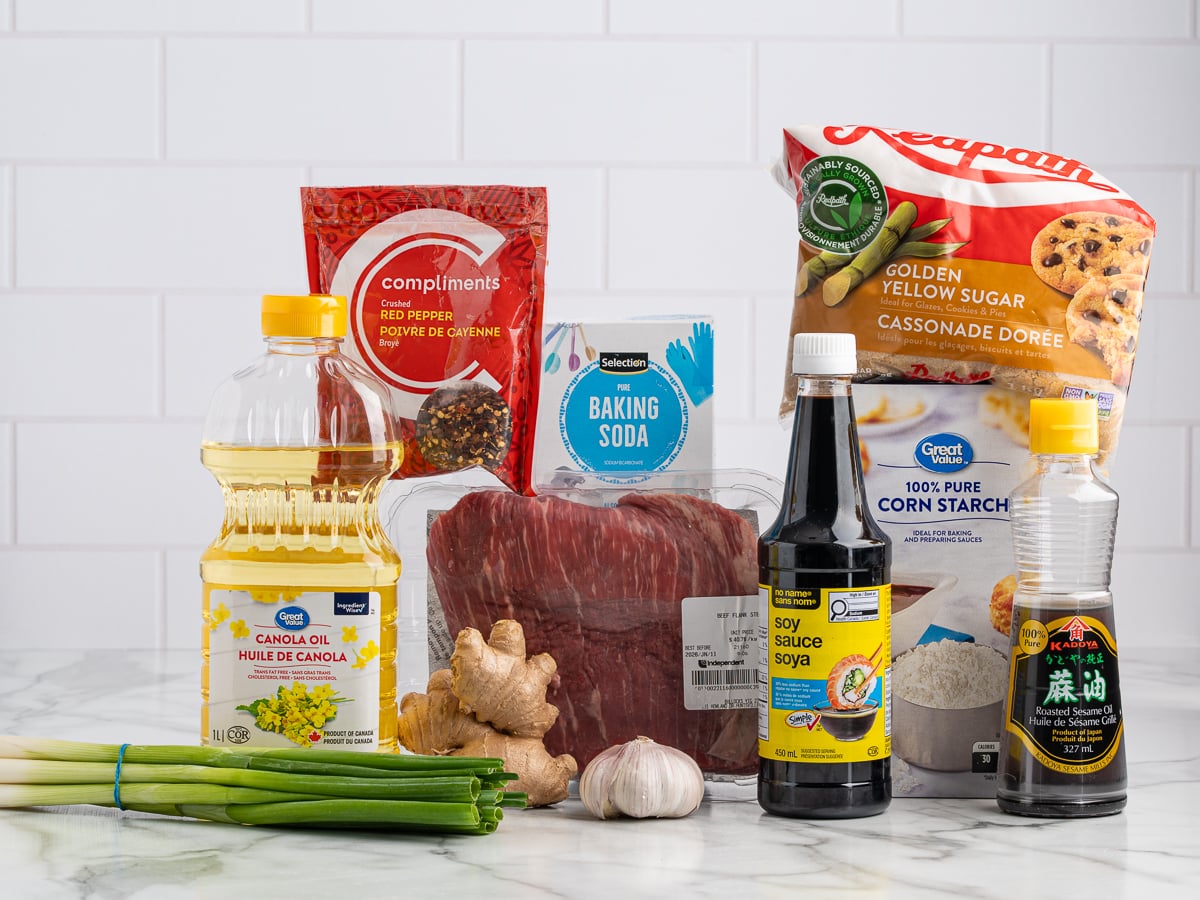
Brown Sugar
If you prefer a more savory Mongolian beef, start by reducing the brown sugar by 2 tablespoons. The sauce should taste balanced, not like candy. Taste it after it simmers and before you add the beef. It’s easy to stir in a little more sweetness, but much harder to fix a sauce that has gone too far.
Stick with light brown sugar if possible. Dark brown sugar adds more molasses flavor and can make the sauce taste heavier and sweeter.
Low-Sodium Soy Sauce
The sauce was developed with low-sodium soy sauce. Regular soy sauce can make the finished dish noticeably saltier and overpower the garlic, ginger, and brown sugar.
That same sauce is just as good over noodles, so you can turn it into Mongolian beef noodles when you want a change.
Flank Steak
Slice the steak thinly against the grain. The grain is the set of long lines running through the meat. Cutting across those lines shortens the muscle fibers, which helps keep the beef tender instead of chewy.
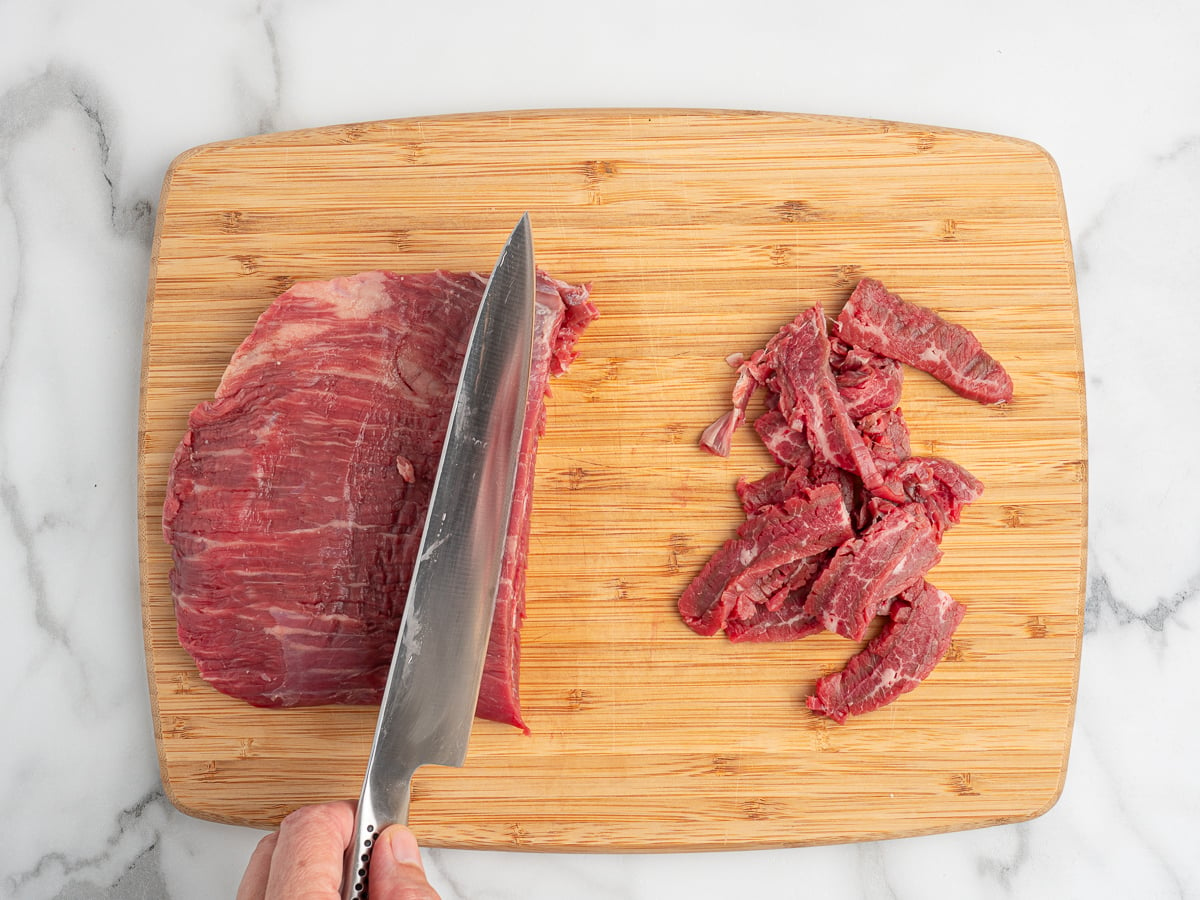
Try to keep the slices similar in thickness so they cook evenly. If the steak feels soft or your knife is dragging, chill it in the freezer for 30 to 45 minutes first. Slightly firm beef is much easier to slice thinly.
During redevelopment, I switched from thicker pieces to long, thin strips because they cooked more evenly and stayed more tender.
Cornstarch
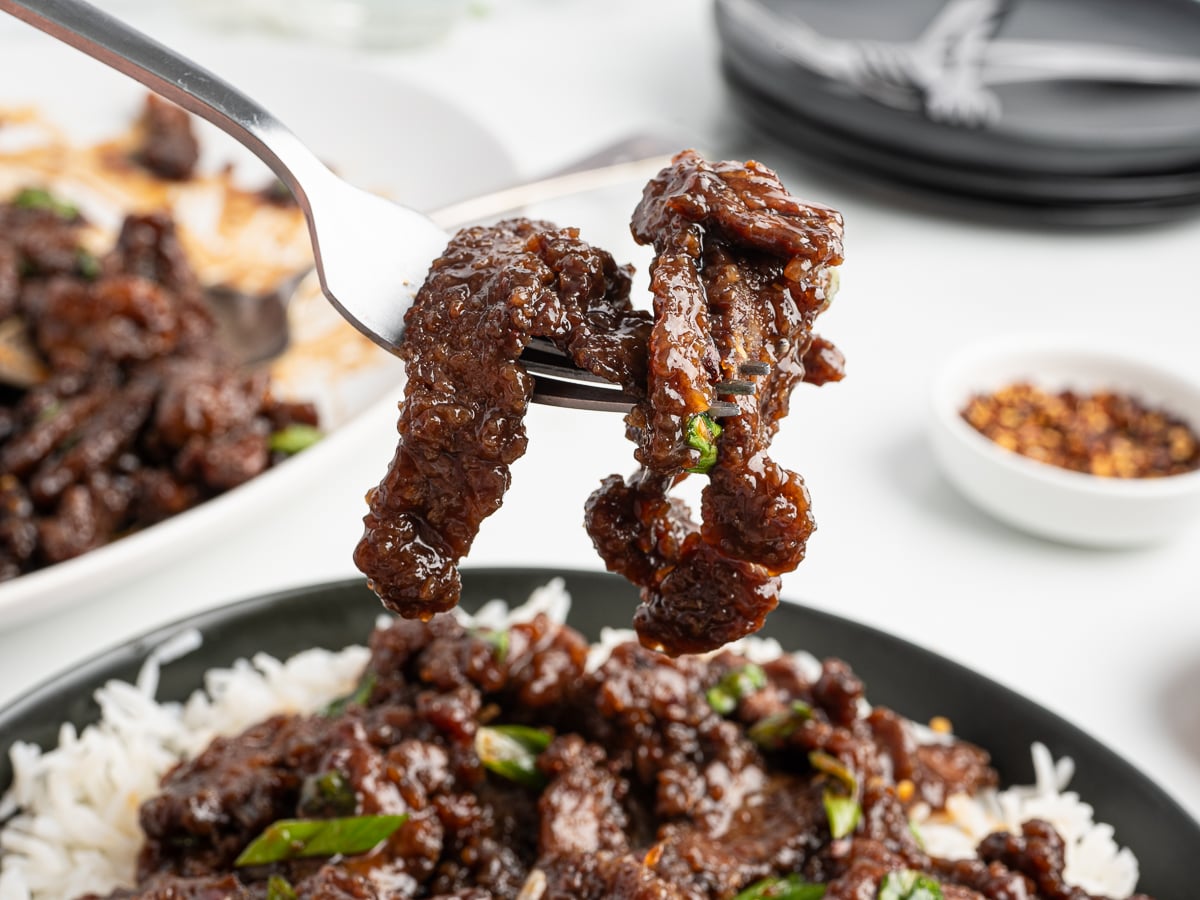
Cornstarch helps create the light coating on the beef, but that’s not its only job. During testing, the sauce stayed thinner than expected without the added slurry, so this recipe uses cornstarch twice: once for the beef and once to create the glossy sauce that coats it.
That double duty, coating the meat and thickening the sauce, is the same trick behind my sesame chicken.
How To Know It’s Done
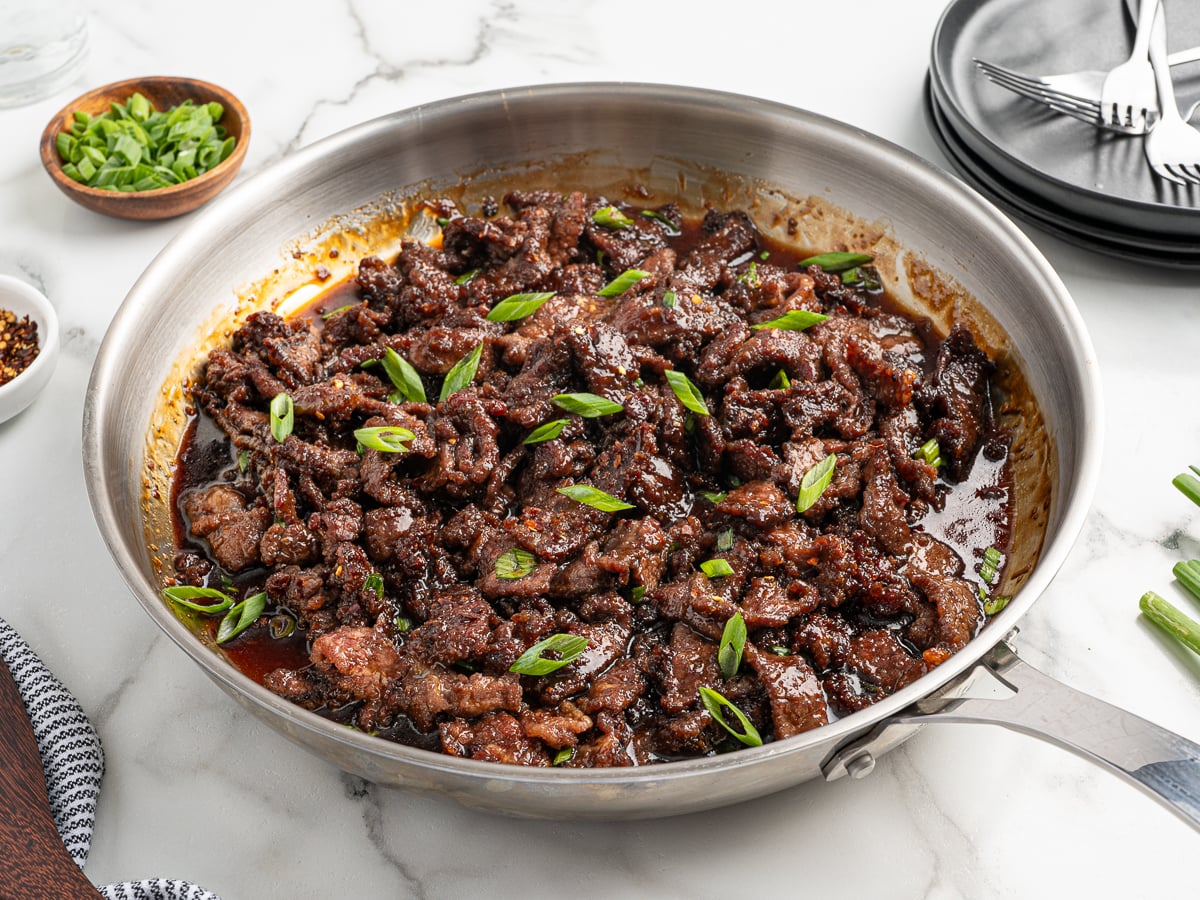
Watch the sauce, not the clock. Once the slurry goes in, the sauce will look cloudy for a few seconds, then turn glossy as it thickens. That’s your sign it’s ready.
Take the pan off the heat while the sauce still moves easily when you stir it. The sauce continues to thicken for a minute or two after cooking stops. If you wait until it looks perfect in the skillet, it can end up thicker than intended by the time it reaches the table.
Don’t Miss This Step
Do not judge the sauce too early. The sauce is supposed to look thin when the soy sauce, brown sugar, garlic, and ginger first go into the skillet. Wait until the slurry is added before deciding whether it needs adjustment. Most of the thickening happens at the very end.
Make-Ahead
This recipe is at its best when the beef is fried and sauced right before serving, but you can do most of the prep ahead of time.
Slice the beef and mix the sauce ingredients up to a day in advance, then keep them covered in the refrigerator. Wait to combine the beef with the marinade until about an hour before cooking. The baking soda is part of what helps tenderize the meat, so there is no advantage to letting it sit all day.
Having the beef sliced and the sauce ready turns dinner into a quick fry, simmer, and toss. I serve it over steamed rice, or over fried rice when I want the full takeout spread, with a cool Asian cucumber salad on the side to balance the sweetness.
Storage
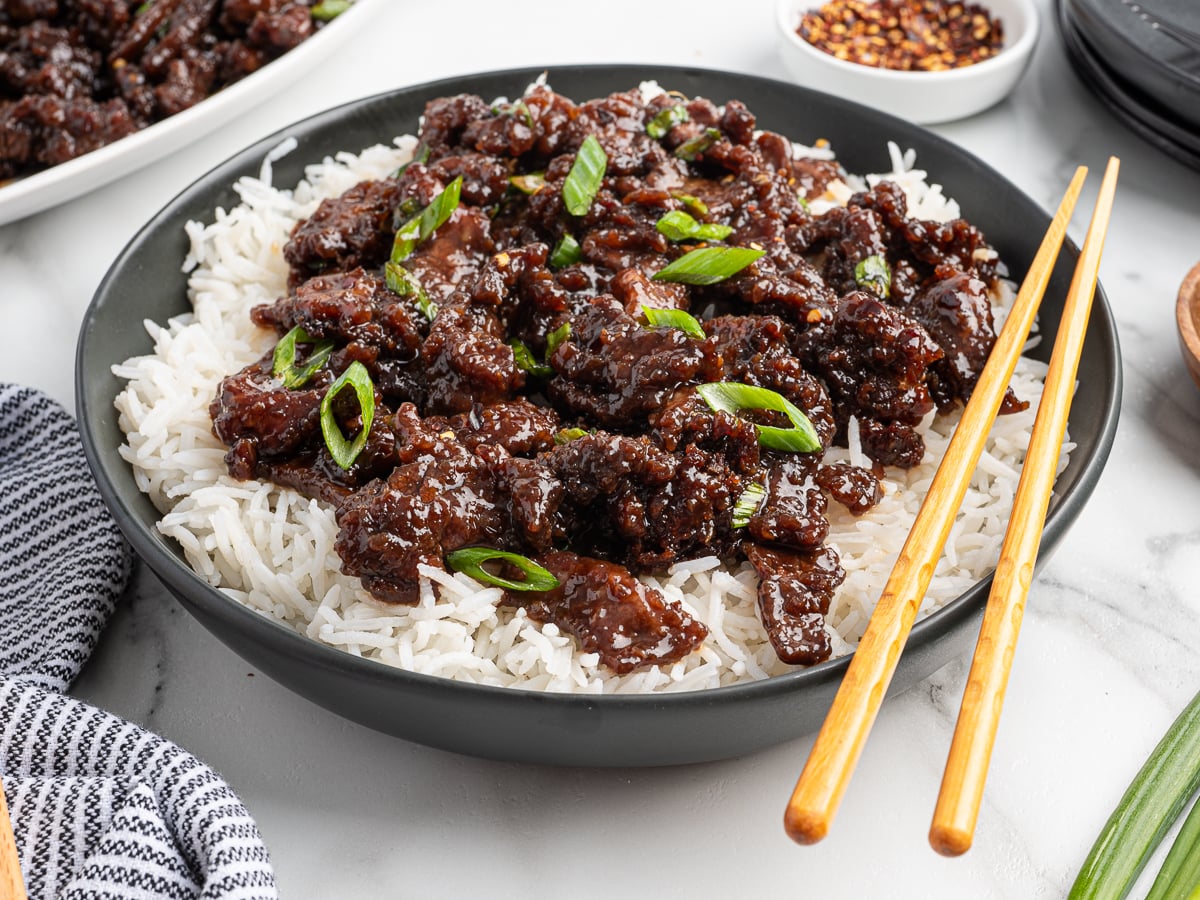
Mongolian beef is best the day it is made, when the coating still has a little crispness and the sauce is glossy.
The leftovers are still worth saving, but the texture changes. As the beef sits in the sauce, the coating softens and the crisp edges disappear. By the second day, the beef is more tender than crisp, which is exactly what should happen.
Reheat gently in a skillet over medium heat. If the sauce looks thicker than it did on day one, add a splash of water while reheating. It will loosen back into a glaze and coat the beef more evenly.
Recipe Testing Notes
This recipe was originally published in November 2019 and redeveloped in June 2026.
The beef was changed from thicker pieces to long, thin strips and a short baking soda marinade was added. Together, those changes produced beef that was noticeably more tender and closer to the restaurant-style texture we were aiming for.
The sauce was updated too. Testing showed that the original version tasted good but stayed thinner than expected. Adding a cornstarch slurry created the glossy finish that coats the beef instead of collecting underneath it.
One of the most useful discoveries came from a recipe tester who prepared the steak from the ingredient list before reading the method. The recipe still worked, but the thicker pieces changed the look and texture of the finished dish. That test led to a simple update: the cutting instructions now appear only in the method so readers are less likely to make the same mistake.
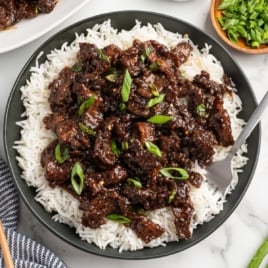
Recipe for Mongolian Beef
Ingredients
Beef
- ⅓ cup cornstarch
- 1½ pounds flank steak
- 1 cup vegetable oil
Sauce
- 1 tablespoon vegetable oil, leftover from removing all the fry oil except this 1 tablespoon
- 2 teaspoons fresh ginger, minced
- 1 tablespoon garlic, minced
- ½ cup soy sauce
- ½ cup water
- ½ cup brown sugar, packed
- 2 tablespoons hoisin sauce
- 1 teaspoon sriracha hot chili sauce
- ¼ teaspoon red pepper flakes
Finishing
- 1 teaspoon sesame oil
- ⅛ teaspoon red pepper flakes
- 4 to 5 green onions, cut on the diagonal into 2-inch pieces
Instructions
- Slice the meat against the grain into ¼-inch slices, then cut those slices down to 2-inch bite-size pieces. You can freeze the beef for about 30 to 50 minutes, in the package, prior to slicing. This will make slicing the beef easier.
- Place the cornstarch in a bowl and toss the meat pieces in the cornstarch. Let sit for 15 minutes.
- Heat the one cup of vegetable oil in a large pan over medium-high heat.
- Add the cornstarch coated beef to the hot oil. Be careful to not crowd the pan and cook in batches. Cook 2 to 4 minutes per side (it will cook more in the sauce later). Remove meat to a plate. Be careful of hot oil! Leave all those yummy bits of fry stuff left in the pan. They will add to the sauce flavor.
- Now to make the sauce. Empty out all the oil from the pan except about 1 tablespoon. Reduce the heat to medium.
- Add the ginger and garlic and stir for about one minute.
- Add the brown sugar first because you don’t want to add liquid to hot grease. Stir. Then add the soy sauce, water, hoisin sauce, sriracha and red pepper flakes to the pan. Bring to a boil and simmer until it thickens. Stir occasionally scraping up the yummy bits at the bottom of the pan.
- You can add a cornstarch/water mixture if it doesn’t get as thick as you like. I added 1 tablespoon cornstarch mixed with 1 tablespoon cold water. Stir this mixture into the bubbling sauce and cook for an additional 2 to 3 minutes until the sauce thickens.
- Once the sauce has thickened, add the meat back into the pan. Add the sesame oil, red pepper flakes, and green onions. Stir to combine and heat through.
- Serve over rice and enjoy!
Notes
- If you are watching your salt intake, you can choose low sodium soy sauce instead of regular soy sauce.
- The easiest way to slice the steak is if you freeze the flank steak for 30 to 50 minutes. Slice the meat against the grain into ¼-inch slices. Be sure to slice your meat across the grain.
- Leave all those yummy bits of fry stuff left in the pan. They will add to the sauce flavor.
- You can add a cornstarch/water mixture (cornstarch slurry) if it doesn’t get as thick as you like. I added one tablespoon cornstarch mixed with one tablespoon cold water to thicken up my sauce. Stir this mixture into the bubbling sauce and cook for an additional 2 to 3 minutes until the sauce thickens.
Nutrition












Comments
Toni Thomason says
This is a family favorite and one of our go-to meals. It’s perfect.
inger says
This recipe looks and sounds good but I don’t like sesame oil what other kind of oil can I use.
Thanks you
Layne Kangas says
Hi, Inger – the sesame oil is just a suggestion, not something you have to include in the recipe. You can simply skip adding any if you don’t care for it. Enjoy!