
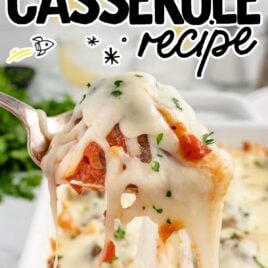

Most meatball casseroles have the same problem: the pasta doesn’t cook evenly. You get soft noodles in the middle and firm ones at the edges, or the whole thing comes out watery.
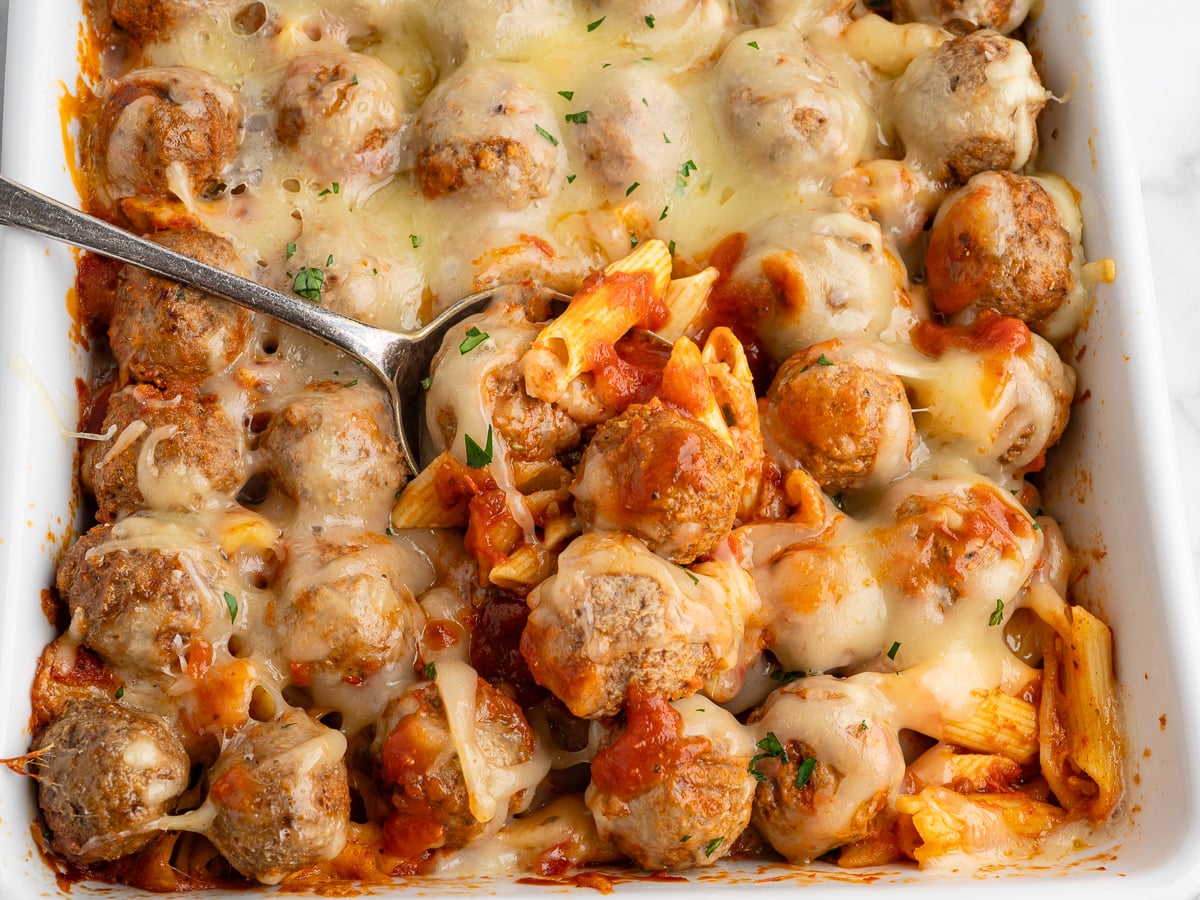
The Fix: I tested two versions to fix the texture and consistency problems. The first time with pre-cooked pasta, the second with dry pasta and beef broth. The broth version was better in every way. It had more flavor, a more consistent texture, and the pasta cooked evenly from edge to center. That’s the one you’re getting here.
Read Before You Start Cooking
- I use low-sodium broth in this recipe. The marinara and the meatballs already carry salt, and when I tested this with regular broth it was too salty to fix.
- I don’t add the cheese at the beginning. I add it in the last 5 to 10 minutes, uncovered. When I tested adding it earlier, it overcooked, turned greasy, and sank into the sauce instead of sitting on top.
- Before this goes in the oven, I push the pasta down until it’s mostly covered by liquid. When I didn’t, the noodles above the surface didn’t hydrate. They baked and stayed firm while everything else was done.
- I plan for 45 to 50 minutes total. In testing, the pasta needed a few extra minutes beyond the initial bake time to reach al dente, so I always check it before adding the cheese, not after.
- You can assemble this up to 8 hours ahead and refrigerate it covered. I’d add about five minutes to the bake time if it’s going in cold.
Ingredient Notes
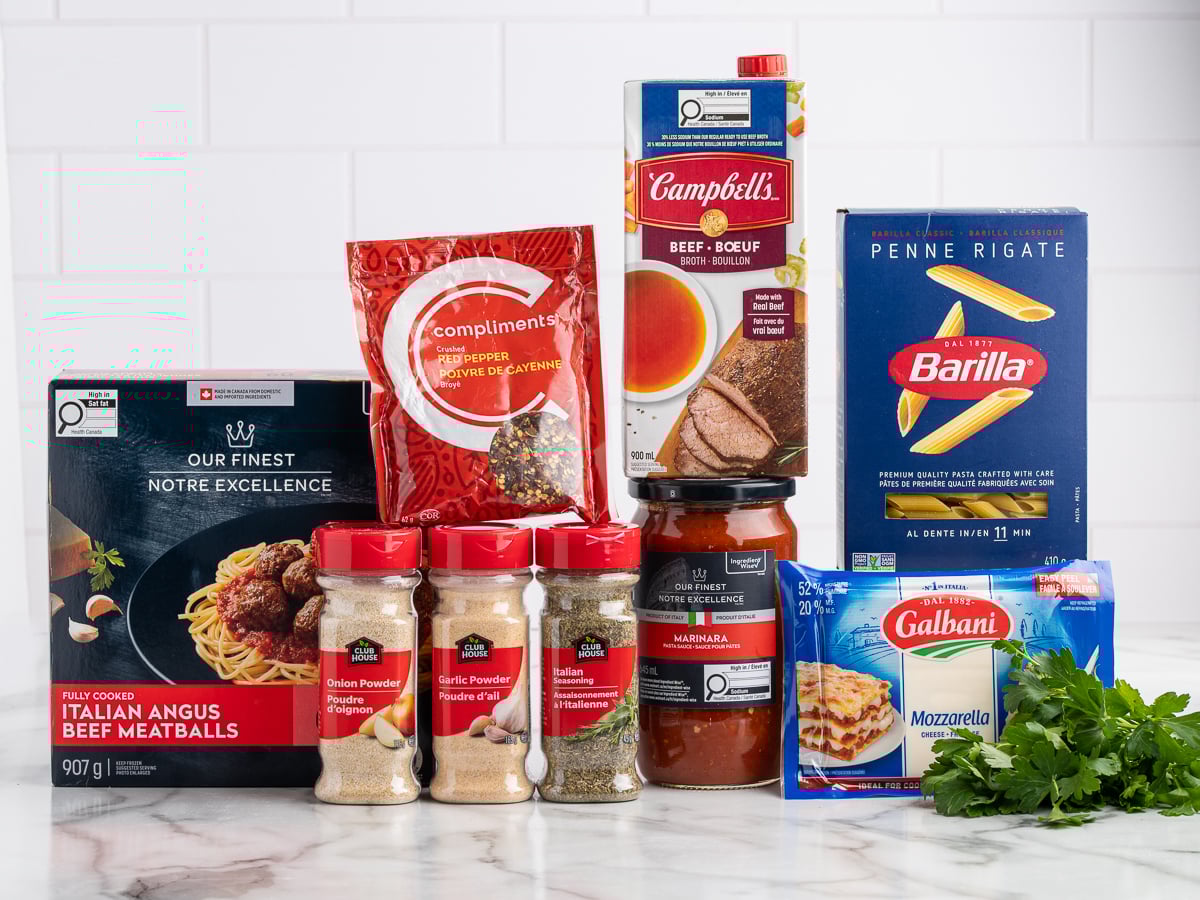
- The sauce is the primary flavor driver and the brand you use will directly affect the result. A better sauce makes a better casserole. I noticed the difference immediately when I switched brands.
- You can use homemade meatballs here. Just make sure they are fully cooked before they go into the dish.
- I use low-sodium broth here. The marinara and the meatballs already carry salt, and when I tested this with regular broth it was too salty to fix.
- Any short sturdy shape of pasta works. Penne, ziti, rigatoni, and cavatappi all hold up well. Avoid anything delicate or very small as the cook time and texture won’t hold up the same way.
- I’d recommend buying a block of mozzarella and shredding it yourself. I find it just melts more smoothly than pre-shredded. However, if you just want to save time, pre-shredded will work.
The Most Important Steps in This Recipe
Instead of pre-cooking the pasta, it cooks right in the broth and marinara as the casserole bakes. The oven heat alone won’t do that. If there isn’t enough liquid, or the pasta isn’t mostly submerged, the pieces above the surface bake and only get harder.
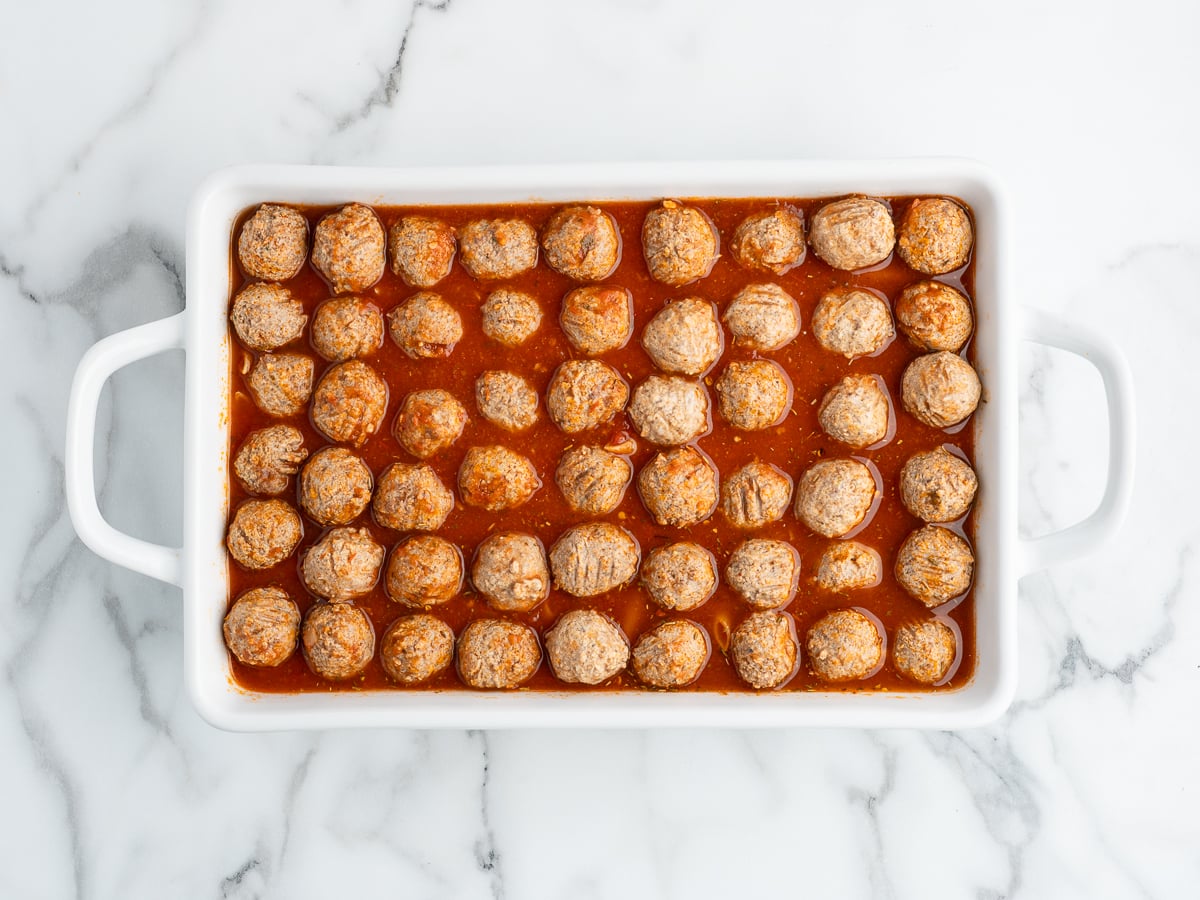
Before the dish goes into the oven, I stir everything together and press the pasta down until it’s mostly covered. It will look soupy at this stage, and that’s what you want.
I cover the dish tightly, pressing the foil to the edges of the pan so the steam stays trapped inside. That steam is part of what cooks the pasta.
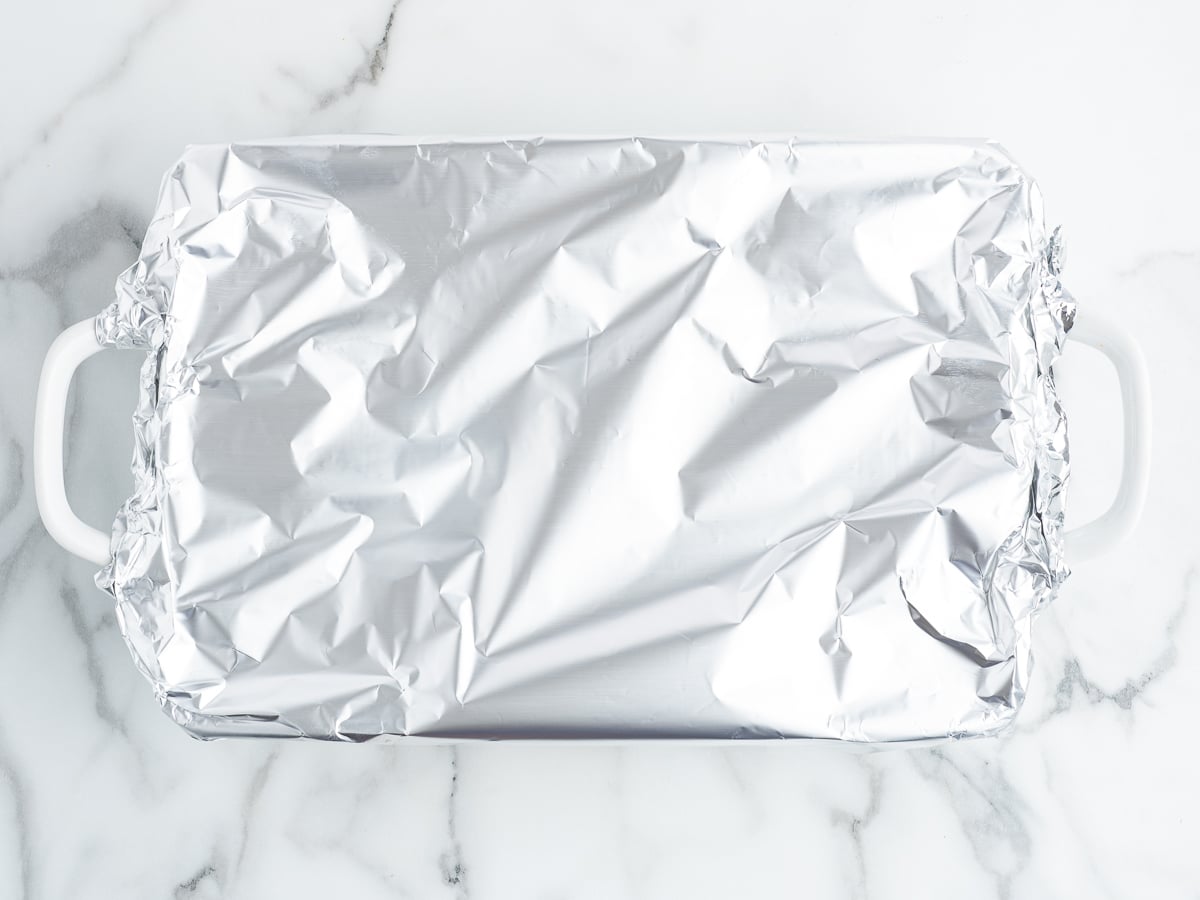
If the foil is loose, the liquid evaporates too quickly and the pasta won’t cook evenly, even if the ratio was right going in.
Where Most Recipes Go Wrong
- Pasta is still firm after the full bake time – either there wasn’t enough liquid, or the pasta sat above the liquid instead of being pushed down before baking. I ran into this the first time I tested it and had pieces along the edges that never softened.
- Bland result – the marinara was low quality, or the flavor relied entirely on the jarred sauce. I noticed a big difference just from switching brands and adding a little parmesan to the sauce before baking.
- Meatballs cold in the center – they went in frozen. When I tried this without thawing them first, the timing was off and the dish didn’t cook evenly.
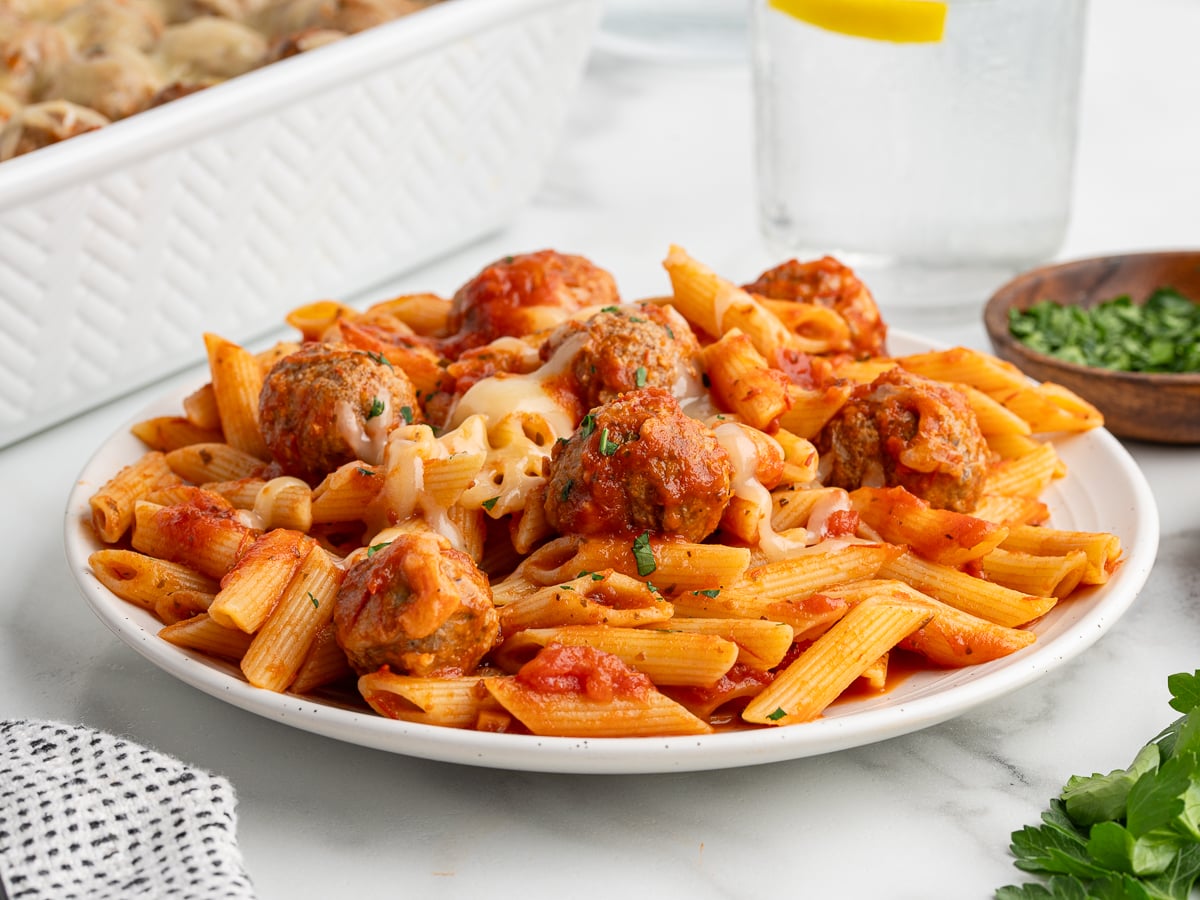
If you’re serving this for dinner, keep it simple. Garlic bread and a salad are the obvious choices, and they work for a reason. The casserole is rich and filling, so you don’t need much alongside it.
If you are making this for two, cut the recipe in half and use a 9×9 baking dish. Be sure to check the pasta a few minutes earlier than the full batch timing.
This isn’t a good freezer dish. I tested it and the pasta softens too much when reheated, so it’s better made fresh or eaten within a couple of days.
Need another dinner idea? Browse my dinner recipes for comforting casseroles, easy pastas, slow cooker favorites, baked chicken dinners, and more recipes you’ll want to make again and again.



Meatball Casserole
Ingredients
- 1 pound dried pasta (like ziti, rotini, penne, etc)
- 28 to 32 ounces frozen meatballs, thawed
- 24 ounces marinara sauce
- 3 cups low sodium beef broth
- 1 teaspoon Italian seasoning
- ¾ teaspoon garlic powder
- ¼ teaspoon onion powder
- ¼ teaspoon red pepper flakes
- 2 ½ cups mozzarella cheese, freshly shredded
- Fresh parsley, optional garnish
Instructions
- Preheat the oven to 400 F.
- Spray a 9×13 baking dish with cooking spray.
- Pour the dried noodles, meatballs, pasta sauce, broth, Italian seasoning, garlic powder, onion powder, and red pepper flakes into the dish.
- Stir around and try to push the pasta down so it’s mostly covered by the sauce/liquid.
- Tightly cover in foil and bake for 40 minutes.
- Remove from the oven and see if the pasta is cooked to al dente. If it isn’t, cook for an additional 5 minutes.
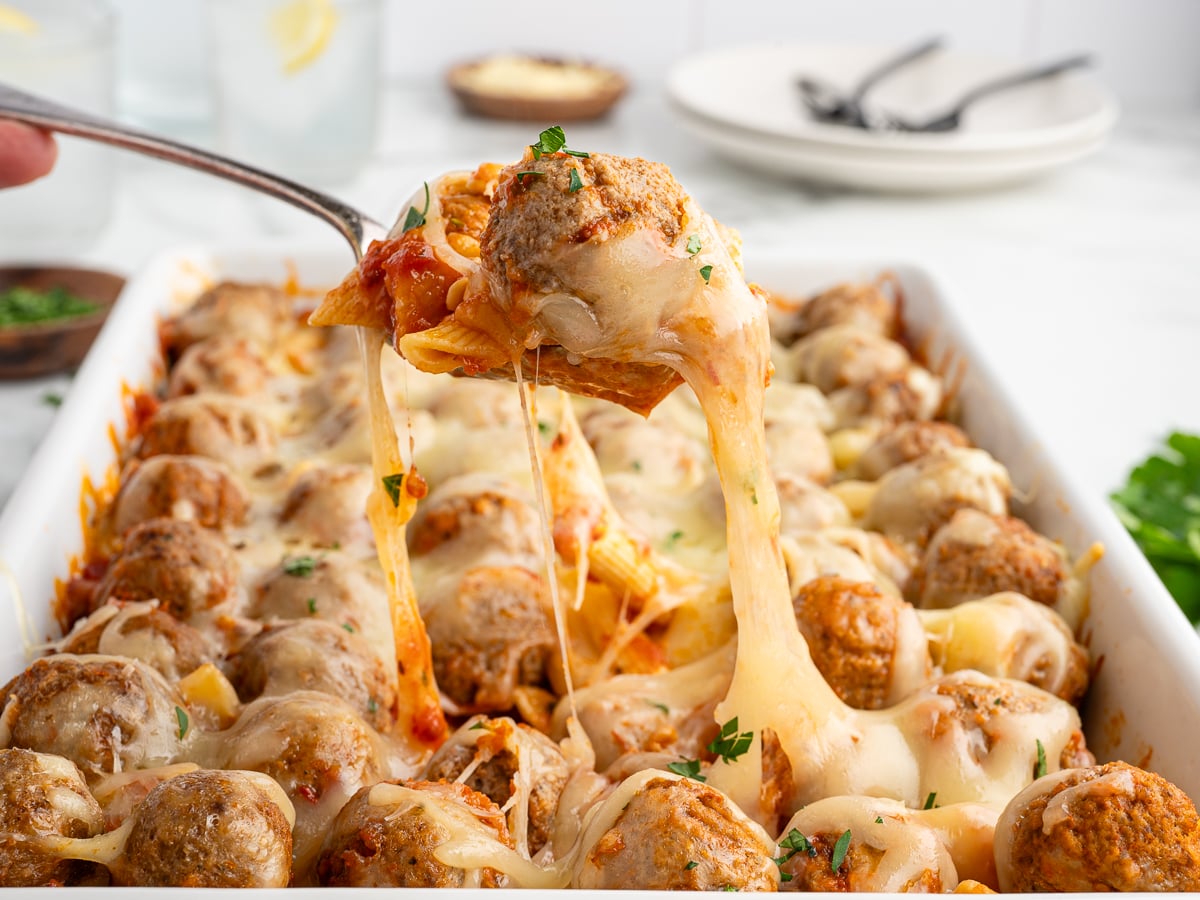
- Once the pasta reaches al dente, remove from the oven and top with the mozzarella cheese.
- Keep the foil off and return to the oven for about 5-10 minutes, until the cheese is bubbly and melted.
- Garnish with fresh parsley, if desired.
Notes
- You can make this using homemade meatballs as well, just make sure they’re cooked through first.
- Freshly shredded mozzarella cheese melts nicer than pre-shredded.
- Use a good quality marinara sauce for best tasting results.
- Use your favorite meatballs as this dish will taste best to you.
- You can substitute chicken or vegetable broth in place of beef broth. If you use beef meatballs use beef broth or if you use chicken meatballs use chicken broth, ideally.
- If you don’t use low-sodium broth your dish may end up too salty.
- You can halve this recipe and make it in a 9×9 or 10×10 baking dish.
- Store leftovers in the fridge in an airtight container for up to 3 days.
- Oven temperatures vary and may need to be recalibrated periodically to ensure they are accurate. Make sure to check your casserole at the lower end of the recommended cooking time.
Nutrition
Frequently Asked Questions
If you prefer a homemade sauce or have dietary restrictions, feel free to use your own marinara sauce. Just ensure you have enough to coat the pasta and meatballs.
For a leaner option, consider using turkey or chicken meatballs.
If you prefer a different type of cheese, feel free to substitute mozzarella with provolone or fontina. They both melt well and have a mild flavor that won’t overpower the other ingredients.
This casserole can be assembled up to 8 hours ahead of baking. Simply cover it tightly with aluminum foil and store it in the refrigerator until you’re ready to bake it.
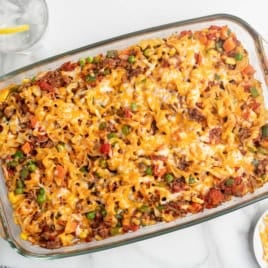
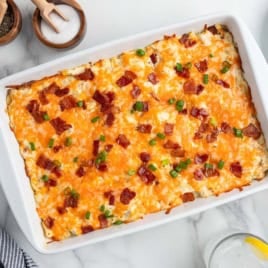








Recipe Test – Updated April 2026
I had this recipe tested two different ways to fix the uneven pasta issue. My independent recipe tester, Angela, made it using two different methods to determine which produced the best result.
The Verdict: This version in this post works as written. You’ll get evenly cooked pasta from edge to center, the sauce thickens as it rests, and the cheese melts cleanly on top instead of disappearing into the dish.
Tester Comparison (Pasta Method): When Angela tested this using pre-cooked pasta. The texture was softer but less consistent and the flavor fell a bit flat. Adding dry pasta and letting it cook in the broth as the casserole bakes fixed both the flavor and the texture.
Tester Correction (Cheese Timing): When the cheese was added as the casserole went into the oven, it overcooked, turned greasy, and sank into the sauce. Adding it in the final 5 to 10 minutes, uncovered, keeps it melted on top.
Tester Tip: The pasta may need a few extra minutes beyond the initial bake time to reach al dente. Check it before you add the cheese, not after.