
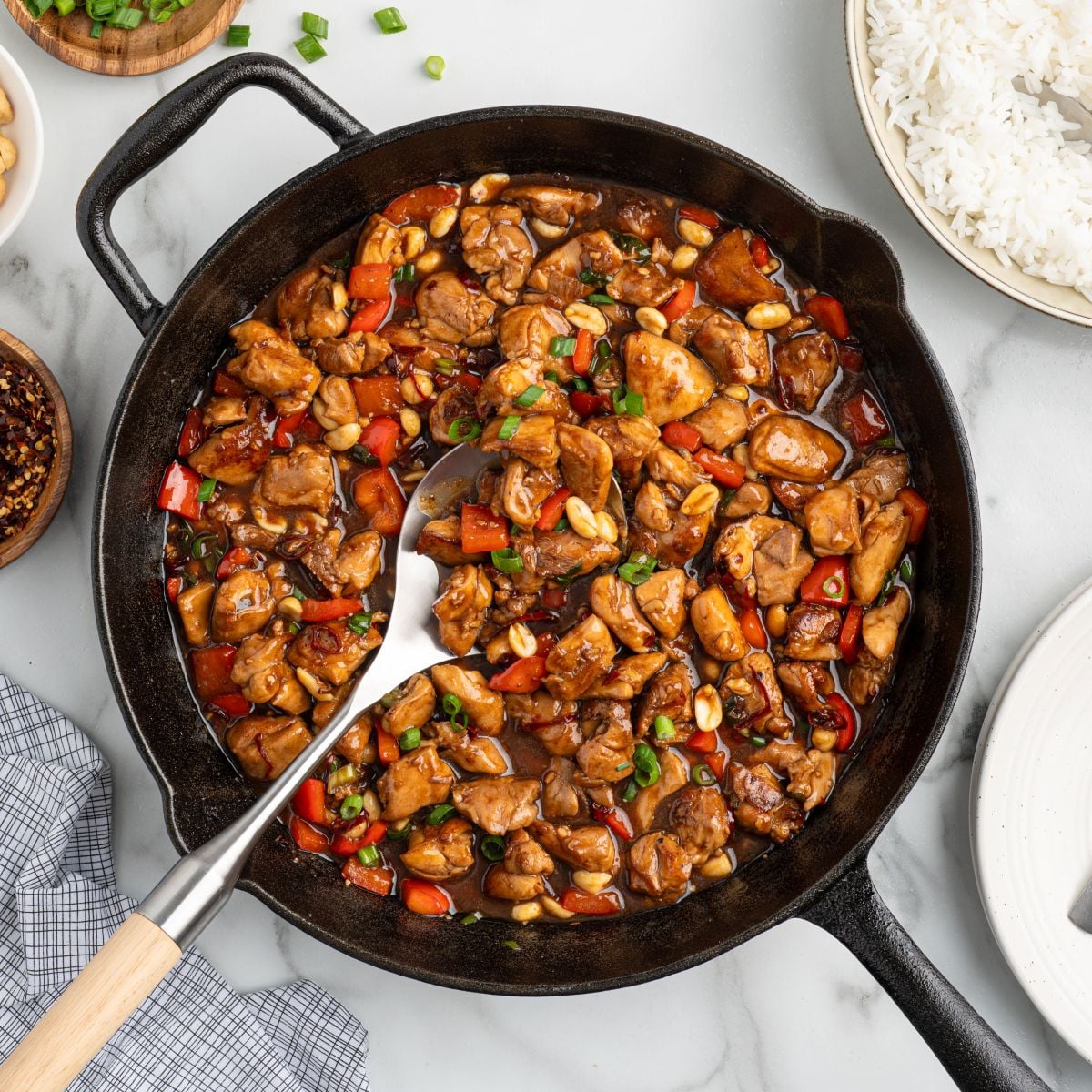
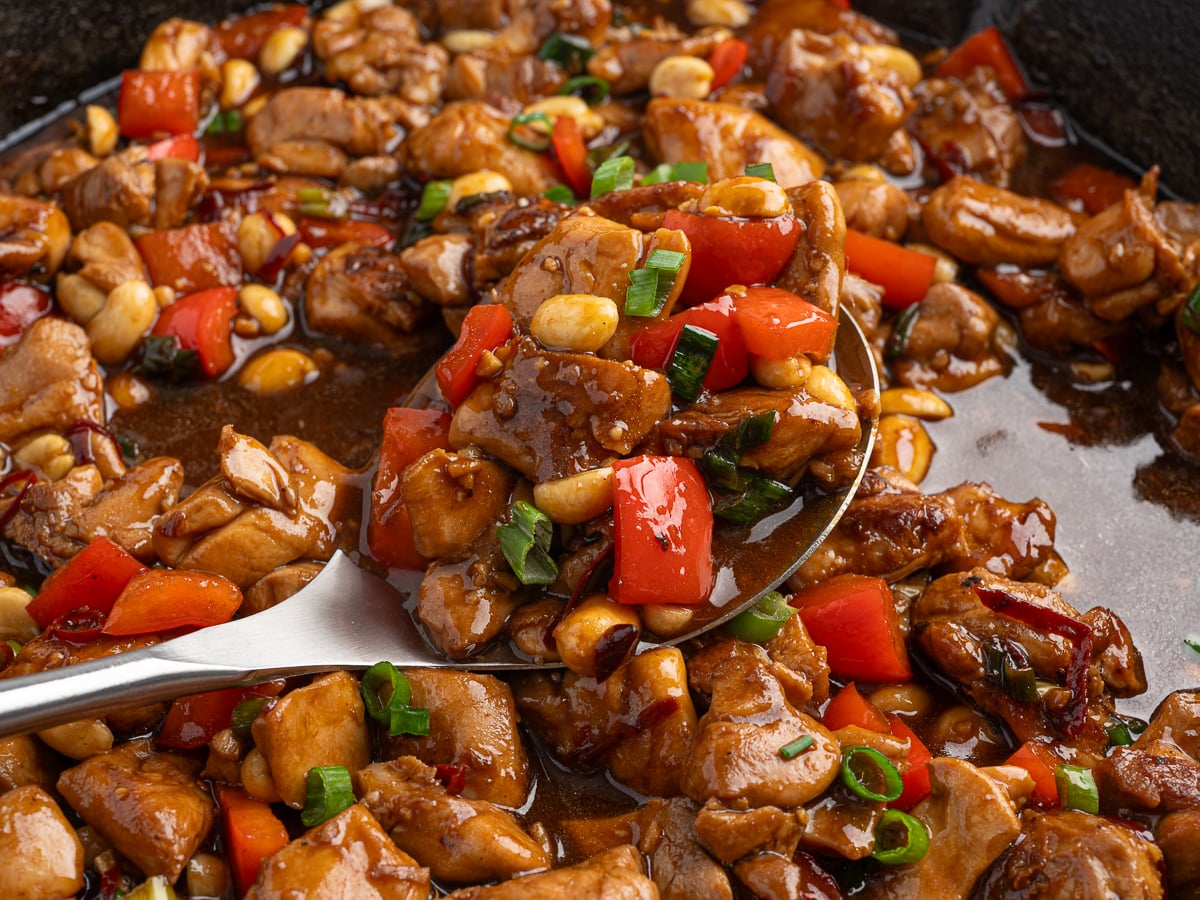
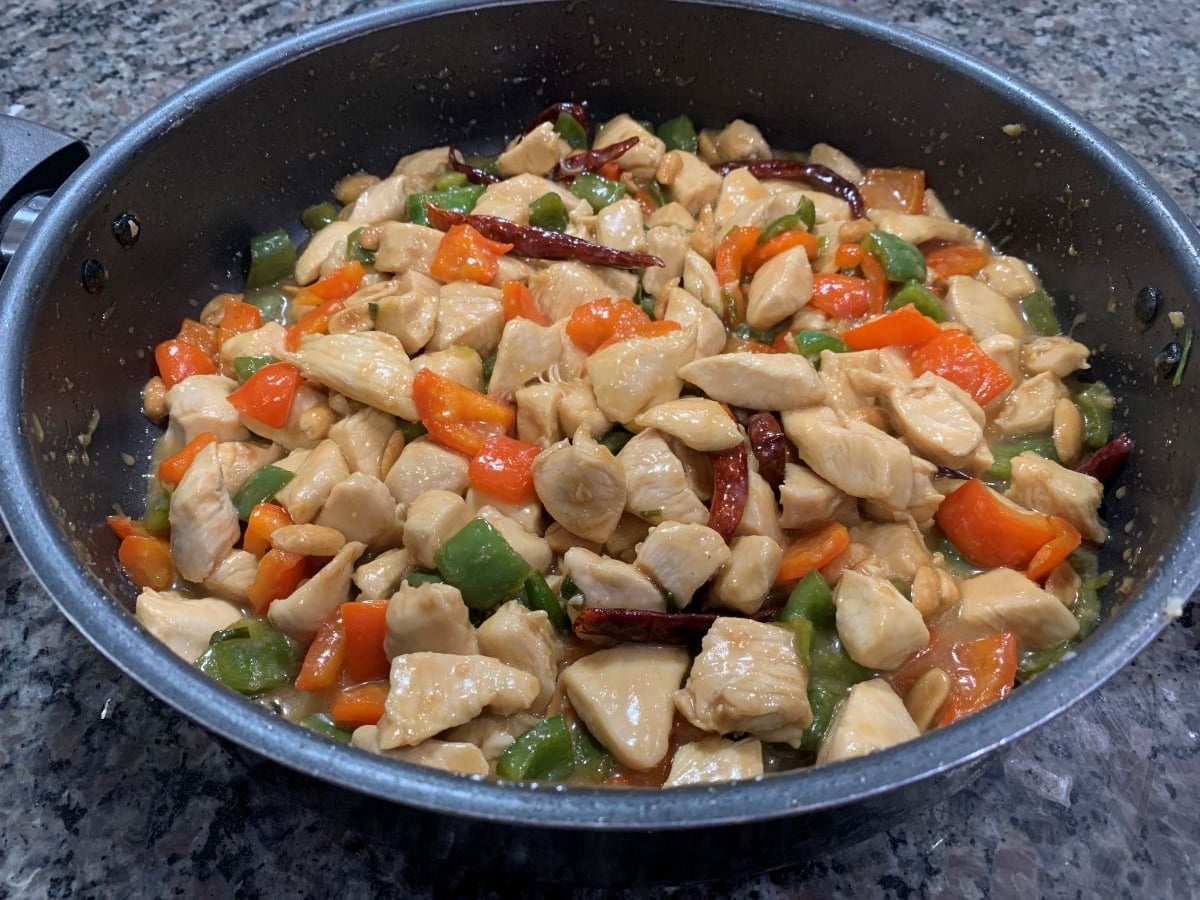
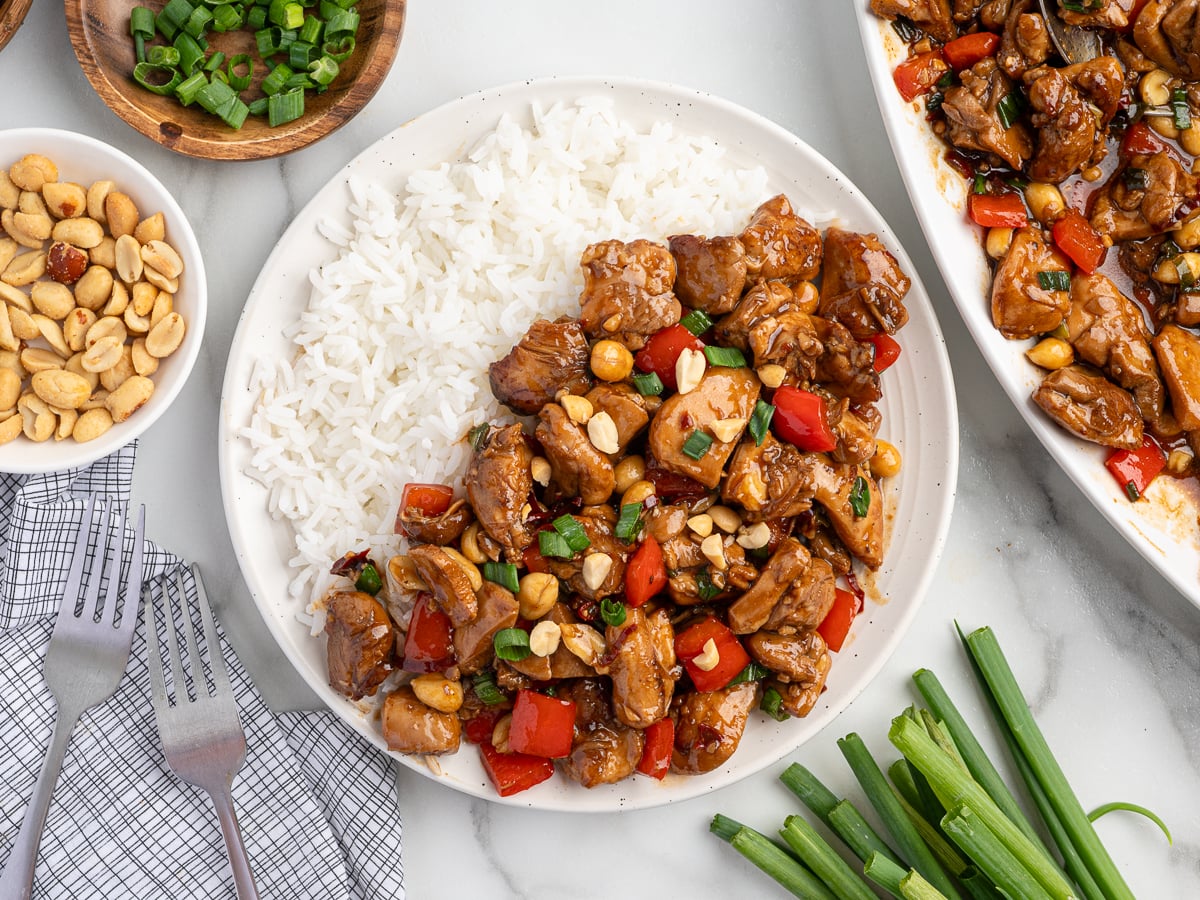
I make this kung pao chicken on weeknights when I want takeout food but I want to control what goes into the dish. It comes together in one skillet, faster than delivery would show up, for a fraction of what the takeout box costs.
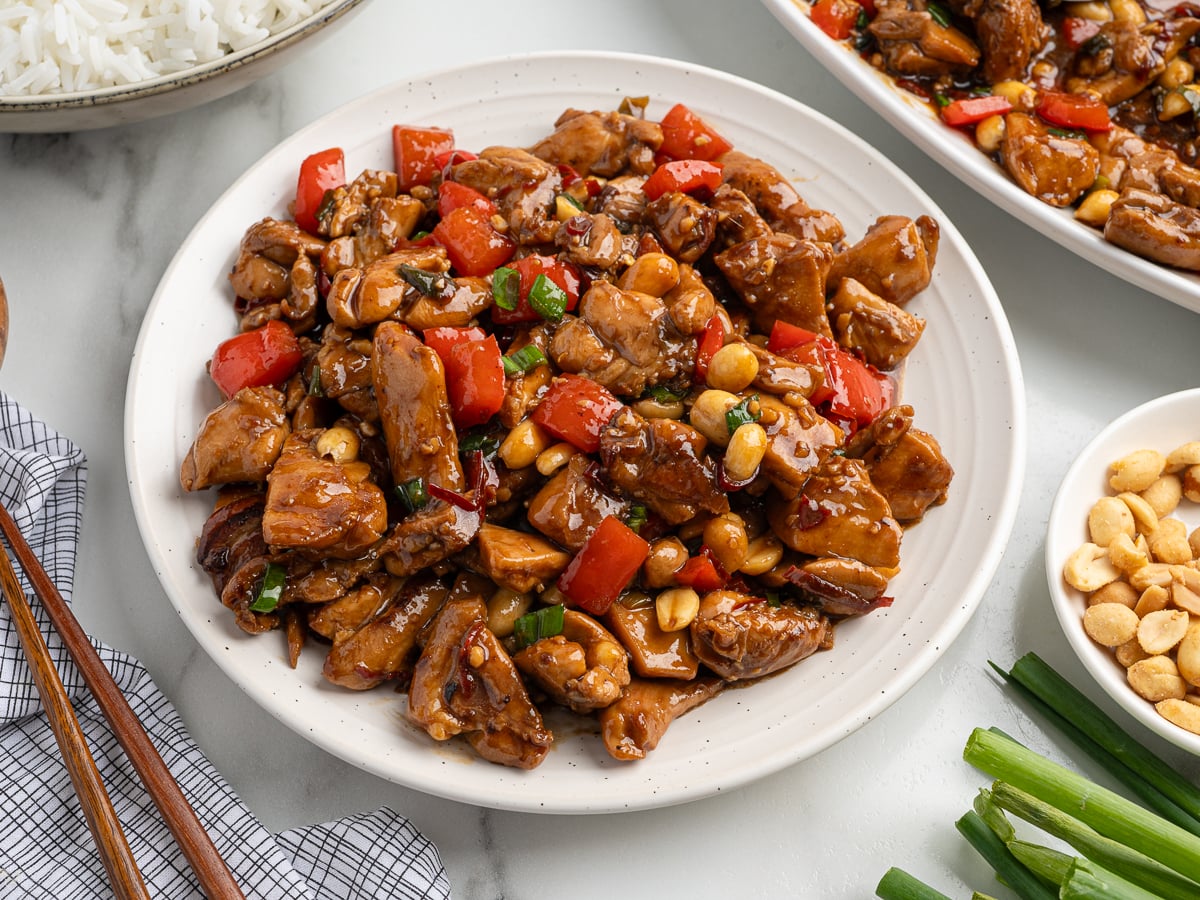
Spoon it over hot rice and you have the dinner you were craving, hotter and fresher than it ever arrives in a paper bag.
Read Before You Start
A crowded pan steams the chicken. The chicken only browns if (1) the pan is hot and (2) the pieces have a little room.
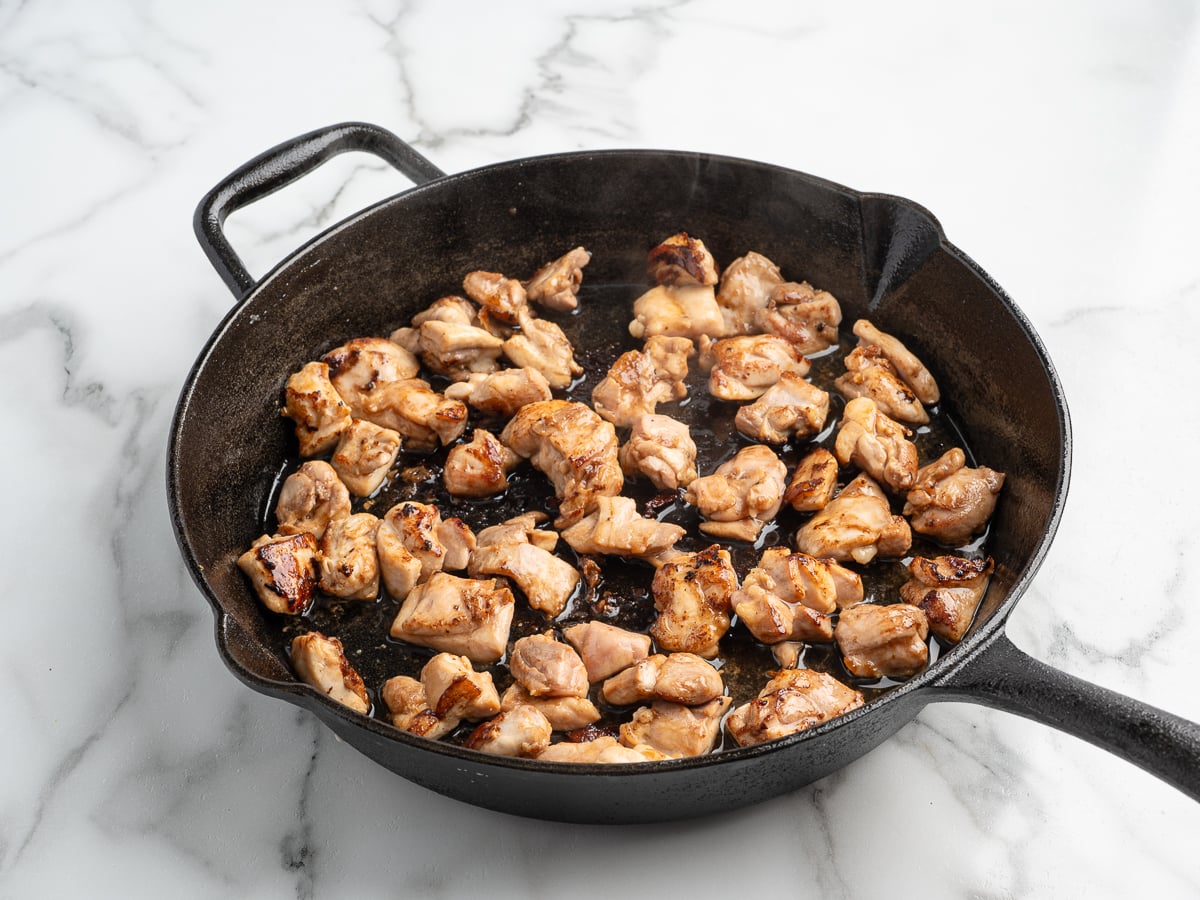
Use your widest skillet (I used a 12-inch skillet) so every piece can sit flat with room around it.
Ingredient Notes
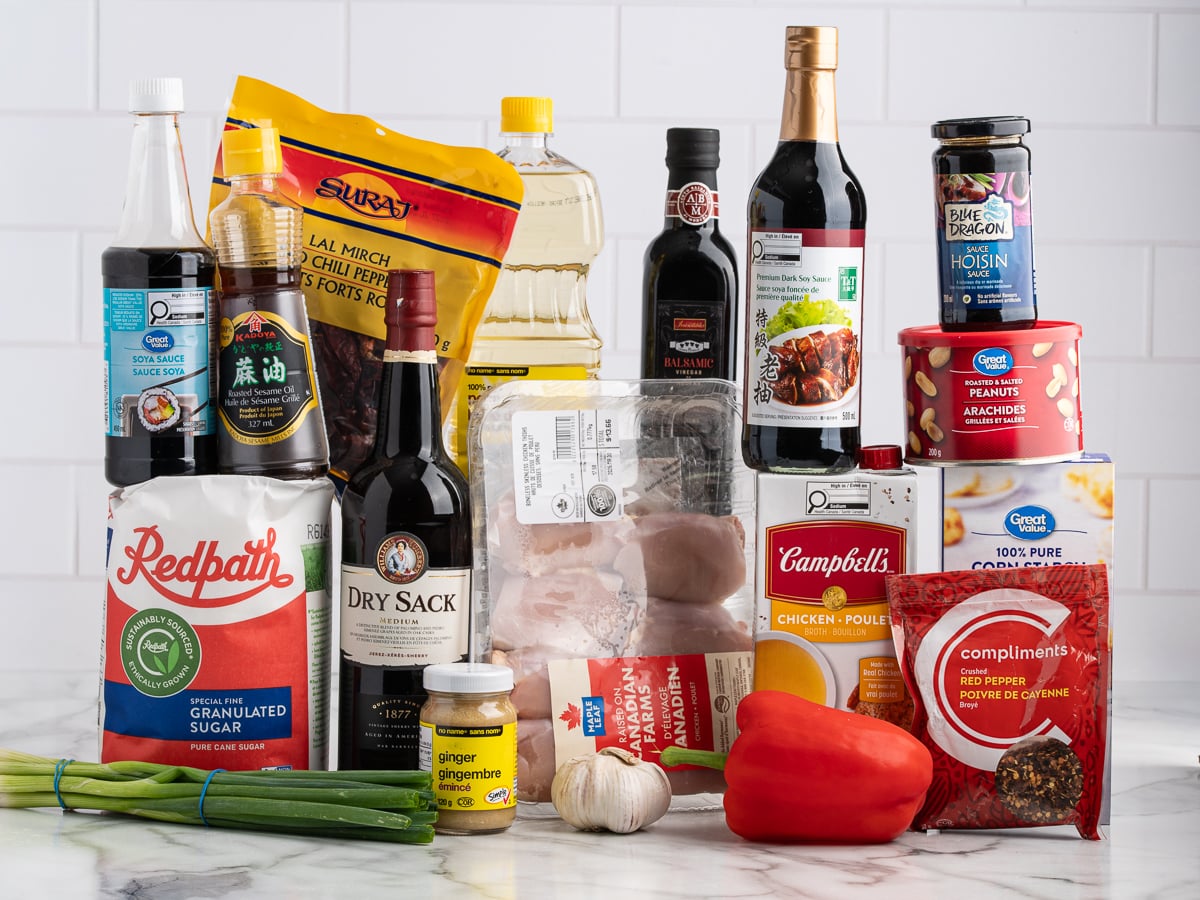
- Use thighs over breast if you can. When you cook all the chicken at once, the edges cook longer than the centers, and thighs stay juicy through that. Breast dries out.
- If breast is all you have, keep the marinade and do not skip it. The cornstarch and soy sauce hold the moisture in, and that matters more with breast than with thigh.
- The heat here is a clean chili heat. If the kung pao you remember from a restaurant made your lips buzz, that is Sichuan peppercorn, and you can add a half teaspoon, toasted and ground, to get it.
About The Sugar
Taste the sauce and fix the sugar before you cook it. Once the sauce coats the chicken, you cannot pull the sweetness back out. The most common change people make to kung pao is cutting the sugar, so give it a taste before you commit.
Start with about two-thirds of the sugar, taste the sauce, and add the rest only if you want it.
Two things make this recipe sweeter than you expect. The balsamic adds sweetness of its own, and the sauce gets sweeter as it cooks down. If you like it sweet like takeout, use the full amount. If not, start low.
Don’t Miss This Step
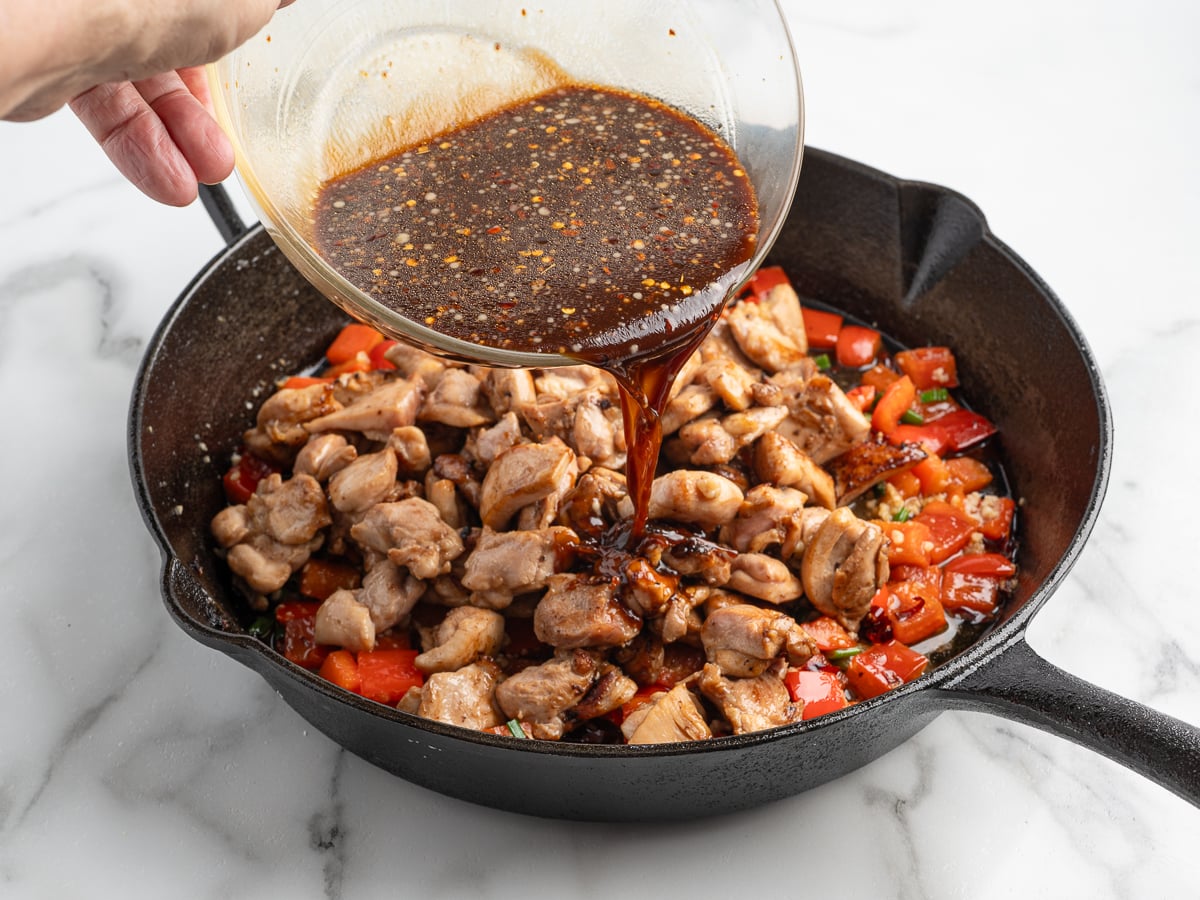
Watch the sauce, not the clock. Pull the pan off the heat the moment the sauce turns dark and shiny, even if it is a bit loose. It keeps thickening as it cools.
Make It a Takeout Night
When I want the full spread instead of just one dish, kung pao is one of the mains and I build around it.
- Swap the plain white rice for fried rice. It catches the kung pao sauce and makes the plate look like the takeout container it is standing in for.
- Add a second main so there is something for every taste at the table. I go with sesame chicken for the sweeter eaters, or Mongolian beef when I want a deeper, savory sauce next to the heat of the kung pao.
- For a noodle on the table, chicken lo mein gives people a choice besides rice.
- Put out a starter while the chicken cooks. Egg rolls and crab rangoon both hold if you make them a little ahead.
Make Ahead
Most of the work here is chopping, not cooking, so I get that done early. You can whisk the sauce and chop the vegetables a day ahead and keep them in the fridge in separate containers.
The chicken can sit in the marinade for a couple of hours, but no longer, because soy sauce starts to turn the texture mushy after that.
I would not freeze the cooked dish. The peanuts go soft and the bell pepper turns limp, and those textures are most of what makes it worth eating, so prep the parts ahead instead of cooking ahead.
Storage
Leftovers keep in the fridge, but two things change overnight. The peanuts lose their crunch, so I stir in a few fresh ones when I reheat. The sauce also tastes saltier and sweeter the next day, after it soaks into the chicken. Add a splash of water when reheating to help the flavor and loosen the sauce. Eat it hot. I would not eat this one cold.
Recipe Test Notes – Updated May 2026
This recipe was originally published in January 2021. It was updated in May 2026.
When I tested this, the choice I kept circling was whether to cook the chicken all at once or in two batches. Two batches gave me a better sear, because every piece sat flat on the hot pan with room around it. But it doubled my time at the stove, and on a weeknight that is the difference between dinner now and dinner later.
So I wrote the recipe for the one-batch way, because, for most of people, saved minutes matter more than a few extra browned edges.
If you want more simple ways to recreate restaurant dishes right in your own kitchen, you can browse my full collection of copycat recipes.
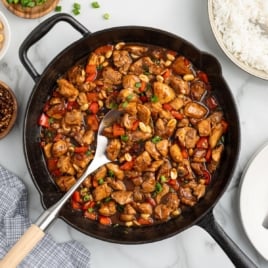
Kung Pao Chicken Recipe
Ingredients
Marinated Chicken
- 6 boneless skinless chicken thighs (about 1½-pounds, trimmed and cut into 1-inch pieces)
- 2 tablespoons low-sodium soy sauce
- 1 tablespoon dry sherry
- 1 teaspoon cornstarch
Kung Pao Sauce
- ⅓ cup chicken broth
- ¼ cup low-sodium soy sauce
- 3 tablespoons granulated sugar
- 2 tablespoons dry sherry
- 1 tablespoon balsamic vinegar
- 2 teaspoons dark soy sauce
- 1 teaspoon hoisin sauce
- 1 teaspoon sesame oil
- 1 tablespoon cornstarch
- ½ teaspoon red pepper flakes (adjust amount according to desired heat level)
Stir-Fry
- 2 to 3 tablespoons peanut oil (divided into 2 tablespoons to cook the chicken and 1 tablespoon to cook the vegetables if needed)
- 1 large red bell pepper, stems and seeds removed (cut into ½ inch pieces) (yields about 1 cup)
- 6 to 8 dried red chili peppers, thinly sliced and seeds discarded (amount added varies on desired level of heat)
- 1½ tablespoons garlic, minced
- 1 tablespoon ginger, grated
- 4 tablespoons sliced green onions (divided into 2 tablespoons cooked with the red bell peppers and 2 tablespoons stirred into the finished sauce with the peanuts) (plus additional for garnish)
- ½ cup lightly salted roasted peanuts, plus additional for garnish
Instructions
Marinated Chicken
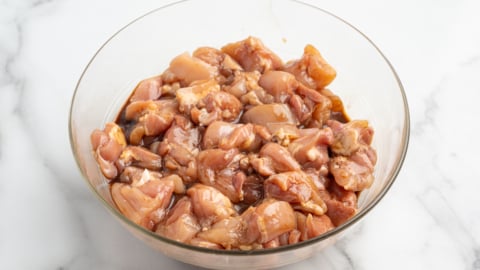
- Toss together in a medium bowl, the chicken thigh pieces, low sodium soy sauce, dry sherry, and cornstarch until the chicken is well coated with the other ingredients and set aside for 10 minutes while preparing the rest of the ingredients.

Kung Pao Sauce
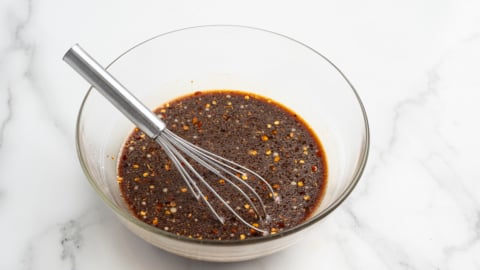
- Whisk together in a small bowl the chicken broth, low sodium soy sauce, granulated sugar, dry sherry, balsamic vinegar, dark soy sauce, hoisin sauce, sesame oil, cornstarch, and red pepper flakes until well combined and no lumps of cornstarch remain. Set aside.
Stir-Fry
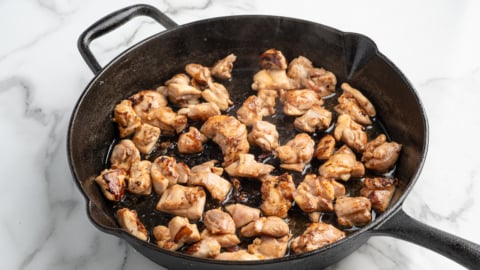
- To a large (12-inch) heavy duty skillet over medium-high heat, add the peanut oil. Once the oil is hot, shake off any excess marinade from the chicken before adding to the skillet in a single layer. This helps the chicken to sear in the skillet and not steam.
- Allow the chicken to cook on the first side, undisturbed, for 5-6 minutes or until it is golden brown. Flip the chicken and continue cooking for an additional 4-6 minutes or until golden brown and no pink remains. Transfer the seared and cooked chicken to a clean plate and set aside.
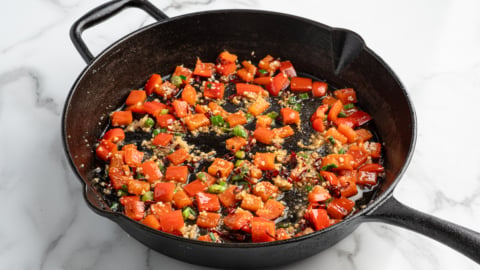
- If needed, add the additional 1 tablespoon peanut oil to the skillet (to prevent the vegetables from sticking), add the red bell pepper, 2 tablespoons of the sliced green onions, and dried red chili peppers and cook for 1-2 minutes. Add the garlic and ginger and cook for an additional 30 seconds to 1 minute or just until the vegetables are crisp-tender and the garlic is fragrant.
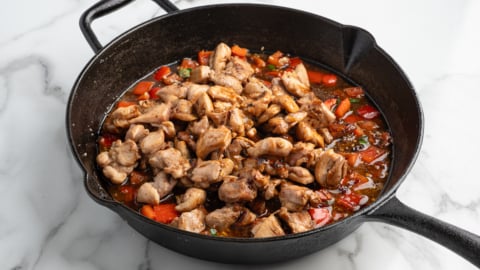
- Add the Kung Pao sauce and reserved chicken to the skillet, stirring to combine. Allow the sauce to bubble and thicken for 1-2 minutes, stirring constantly, or just until it turns glossy and evenly coats the chicken and vegetables.
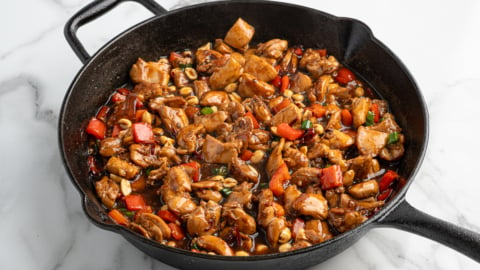
- Remove the skillet from the heat, add the peanuts and remaining 2 tablespoons sliced green onions and stir to evenly distribute before serving. Garnish with an additional sprinkle of green onions and peanuts if desired.
Notes
- The spice level of this dish can be adjusted to your desired taste by either decreasing, or increasing, the amount of red pepper flakes and dried red chilies used. You can start with the lesser amounts and add more to taste as needed.
- Dried red chili peppers (also known as Arbol chiles) are typically small in size (about 2 to 2½-inches long) and can be found online or in the ethnic section of the grocery store. They add a cayenne-like spice to sauces and recipes. The seeds from these peppers were removed before adding to the skillet; however, if you want a stronger heat level, you can add some of the seeds to your sauce.
- Dry sherry is used in this recipe as it is an easy to find ingredient that is often used as a substitute for Shaoxing Chinese cooking wine.
- Balsamic vinegar is often used as a substitute for Chinese black vinegar in Asian recipes. The Chinese black vinegar can be purchased at a specialty store or online if desired to use in the recipe.
- Dark soy sauce is richer in color, slightly thicker, and has a deeper flavor than traditional soy sauce. It can be found online or in Asian markets. You can substitute the dark soy sauce by adding an additional 2 teaspoons of hoisin sauce to the Kung Pao sauce mixture.
- Boneless skinless chicken breasts can be substituted for the chicken thighs in this recipe. You will need to note that the white meat may not take as long as the dark meat to cook and brown in the skillet so cooking times may need to be adjusted as needed.
- This recipe comes together very fast once the chicken and vegetables start cooking. It is best to have all your ingredients prepped and ready before beginning.
- If serving with white rice, it is best to start cooking your rice prior to cooking chicken to ensure that your rice is done and ready as soon as the Kung Pao chicken is done cooking.
Nutrition











Comments
Gloria says
This is really good and the sauce tastes better than take out!
Jennifer says
Where does the sugar come in? Or am I missing it? Thanks 😊
Layne Kangas says
It’s in the first step of making the sauce. Enjoy! 🙂
Dot says
Excellent. I didn’t have the sichuan peppercorns and it still turned out amazing. My husband and his dad were scrambling to the fridge after work to get the leftovers which wasn’t much at all. I purchased the sichuan peppercorns off Amazon and I am making the recipe exactly as written. I am willing to bet the recipe is even better! Doubt there will be any leftovers this time. Thanks so much for sharing your recipe.
Dot says
Excellent. I didn’t have the sichuan peppercorns and it still turned out amazing. My husband and my son were scrambling to the fridge after work to get the leftovers which wasn’t much at all. I purchased the sichuan peppercorns off Amazon and I am making the recipe exactly as written. I am willing to bet the recipe is even better! Doubt there will be any leftovers this time. Thanks so much for sharing your recipe.
Dot says
Excellent. I didn’t have the sichuan peppercorns and it still turned out amazing. My husband and my son were scrambling to the fridge after work to get the leftovers which wasn’t much at all. I purchased the sichuan peppercorns off Amazon and I am making the recipe exactly as written. I am willing to bet the recipe is even better! Doubt there will be any leftovers this time. Thanks so much for sharing your recipe.
*Meant to say my husband and my son
Jeannette Shields says
When I look for the dry sherry in the wine aisle at the grocery store, will it say specifically “dry sherry “ and what color is this (ex., white wine is white and red wine is red)? I have no experience in wine. Thank you for this help. I’m looking forward to trying this recipe!
Layne Kangas says
Hi, Jeannette – dry sherry will likely be by the vinegar/condiment aisle in your grocery store, not the wine aisle. Enjoy!