
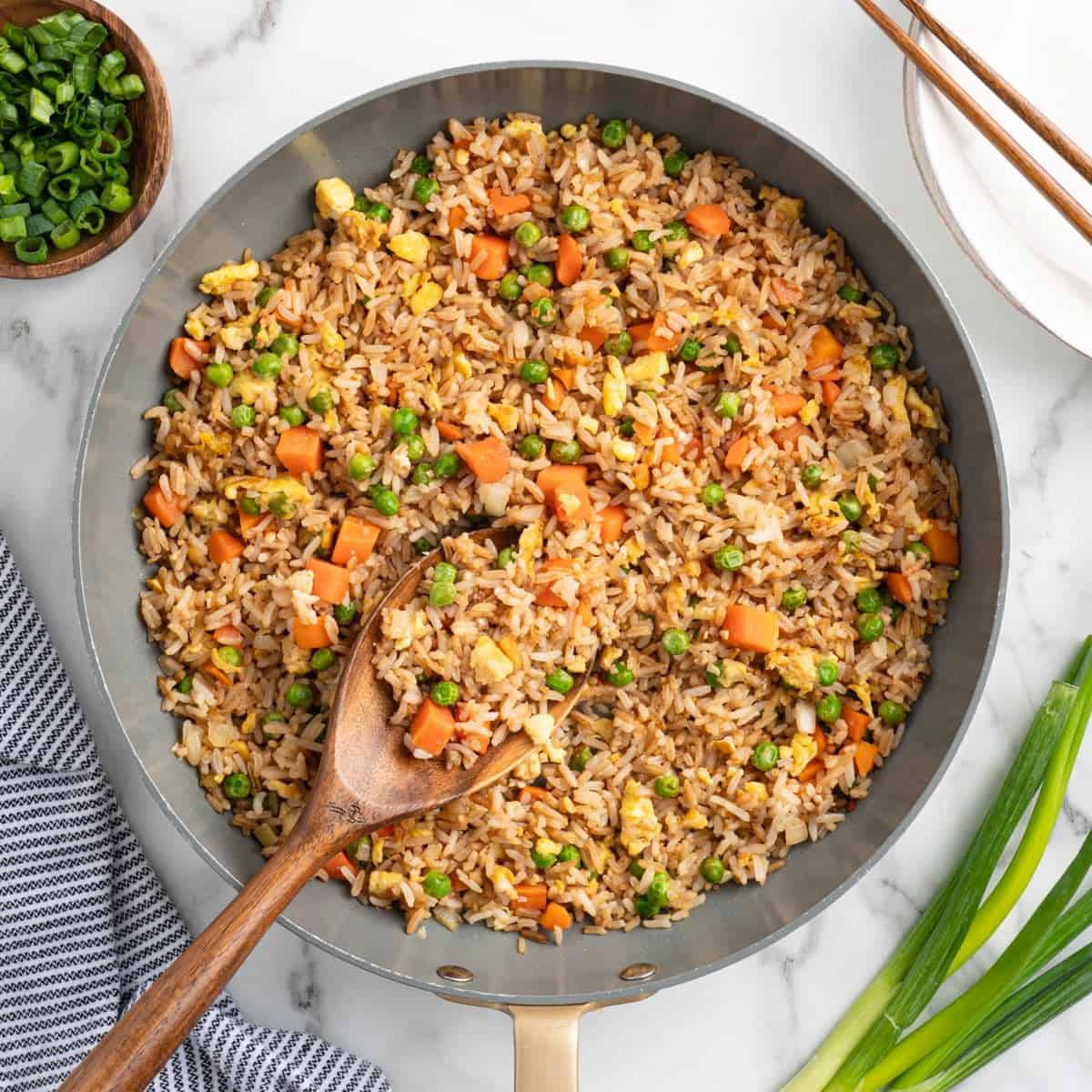
Most homemade fried rice misses in one of two ways. The rice turns soft and clumpy instead of lightly fried, or the flavor never quite reaches what you get from your favorite takeout place.
In the past, I’ve run into both problems. The fix turned out to be simpler than I expected: the right rice and more deliberate seasoning. Once I started paying attention to those two things, my fried rice looked and tasted like takeout.
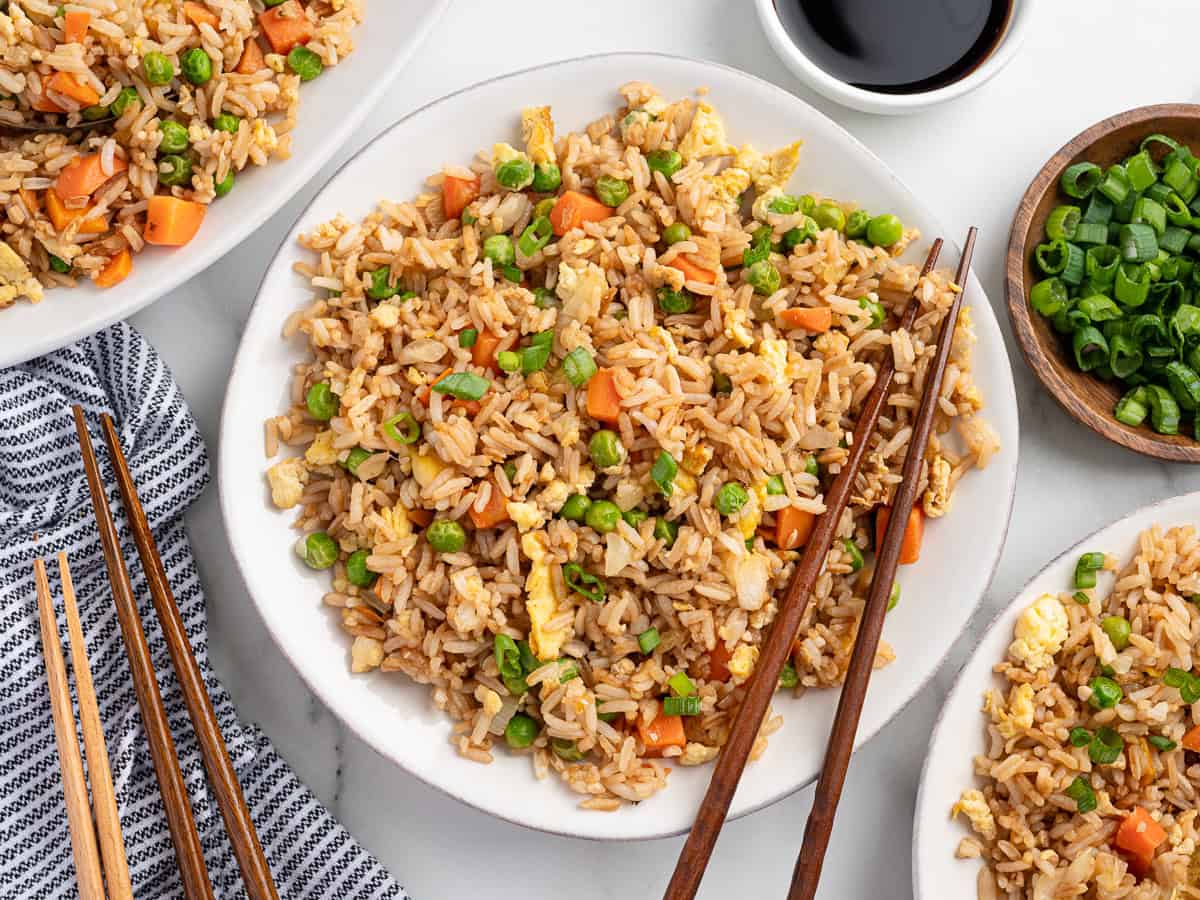
The following are my notes on what made the biggest differences. The complete recipe is in the recipe card below.
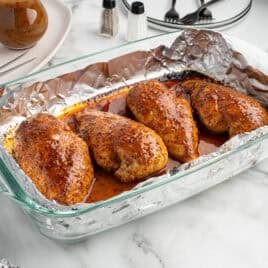
If you want to add more protein, you’re after my:
The Rice You Choose Matters More Than Anything Else
Before I settled on jasmine rice, I cooked three varieties the same way and fried them side by side: standard long-grain white rice, basmati, and jasmine.
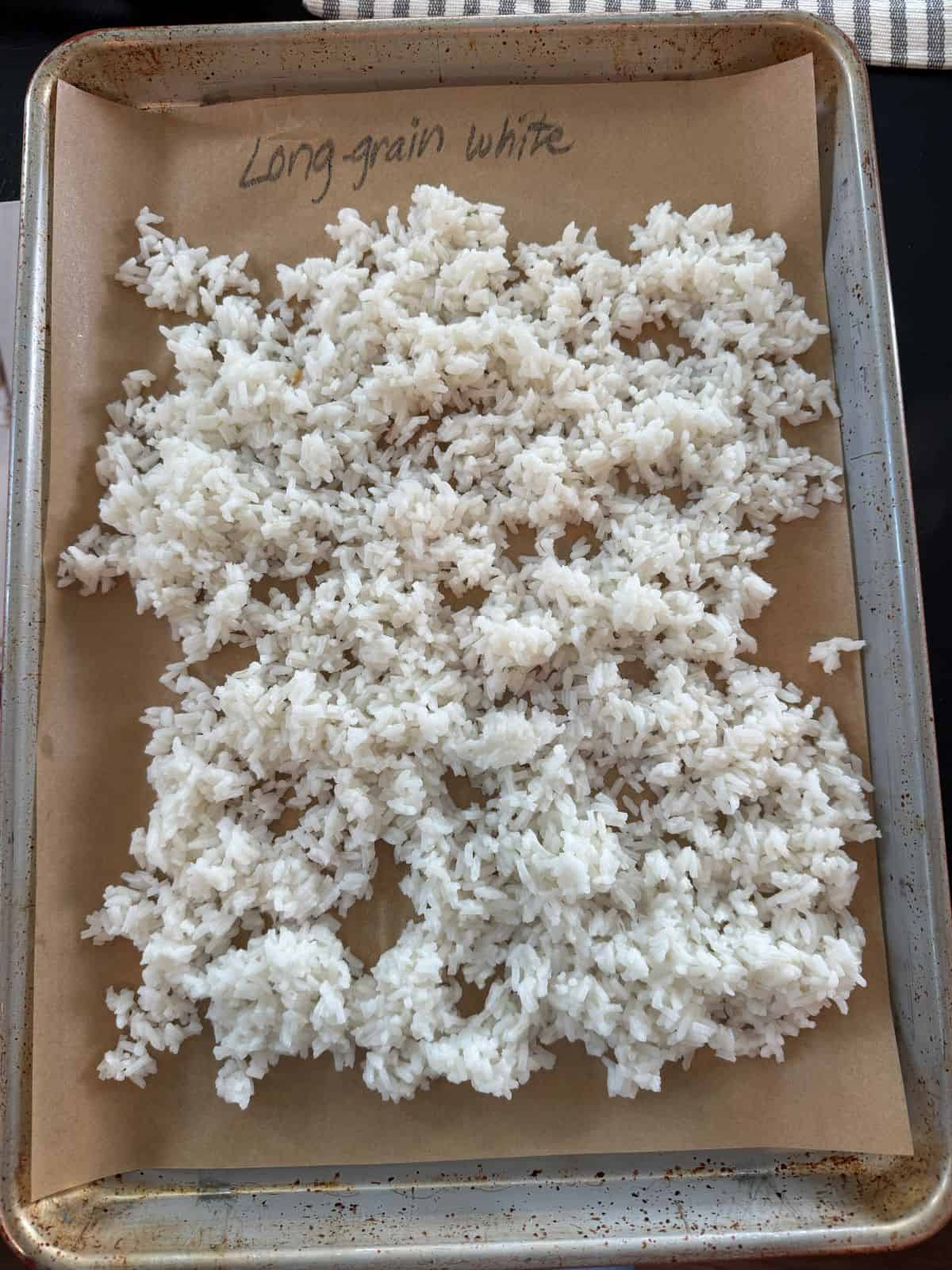
#1 – Standard long-grain white rice was the disappointment. It cooked up soft and slightly sticky, and once it hit the hot pan it stayed clumpy instead of frying. It also looked the least appealing in the finished bowl.
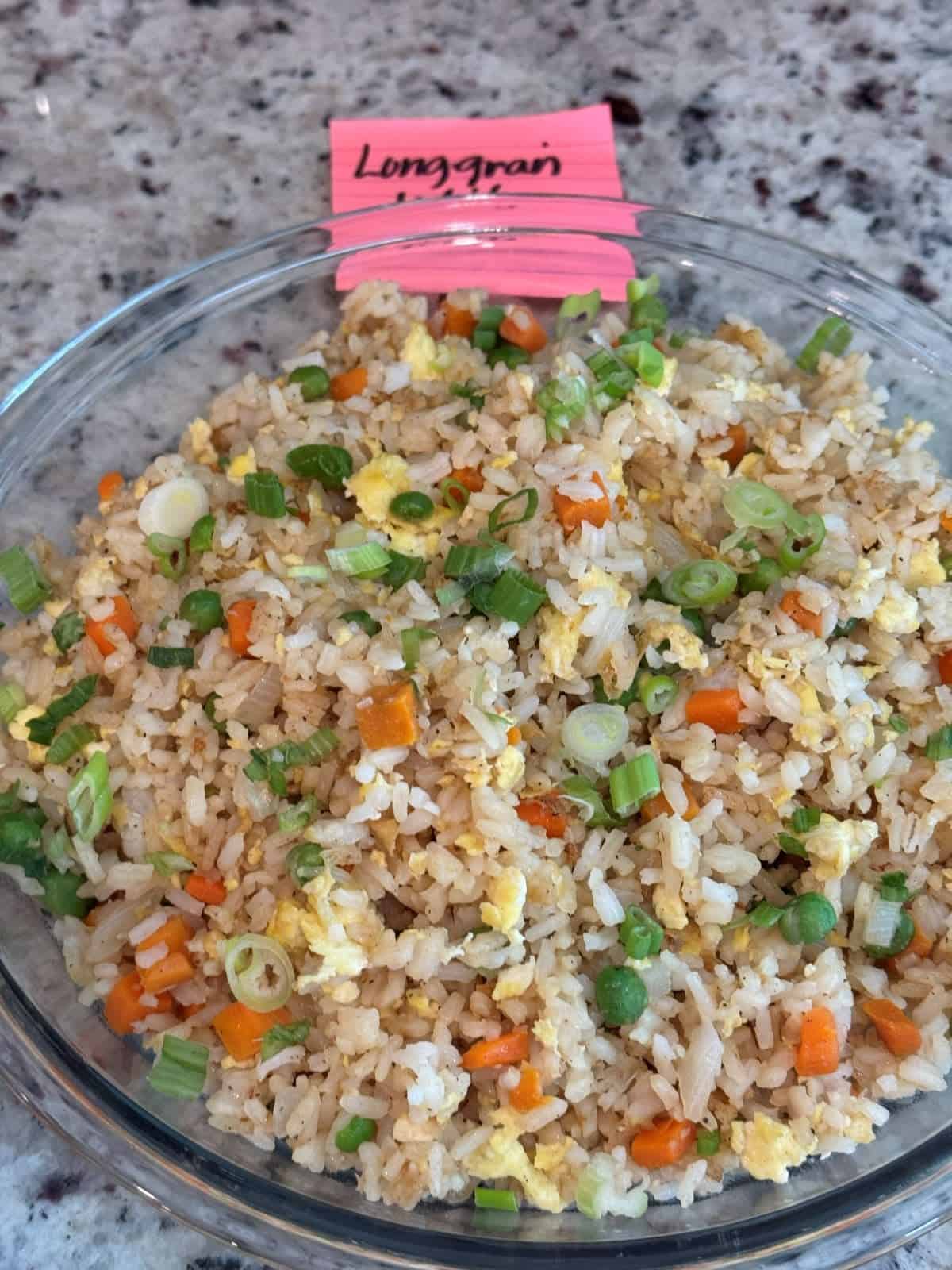
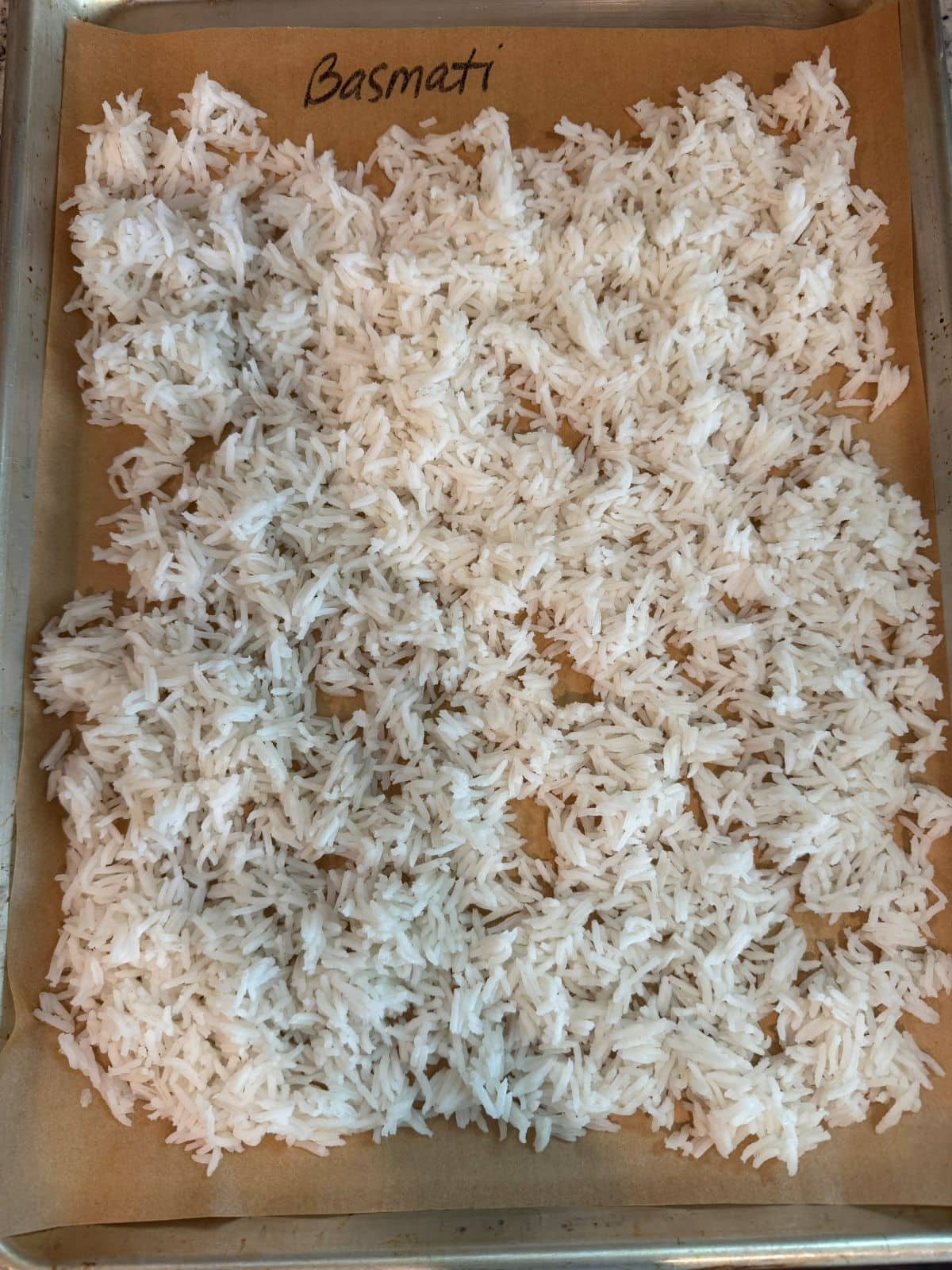
#2 – Basmati went in the opposite direction. The grains stayed long, dry, and very separate. They reminded me more of al dente pasta than takeout fried rice. It fried perfectly well, but it did not feel like the version I was trying to recreate.
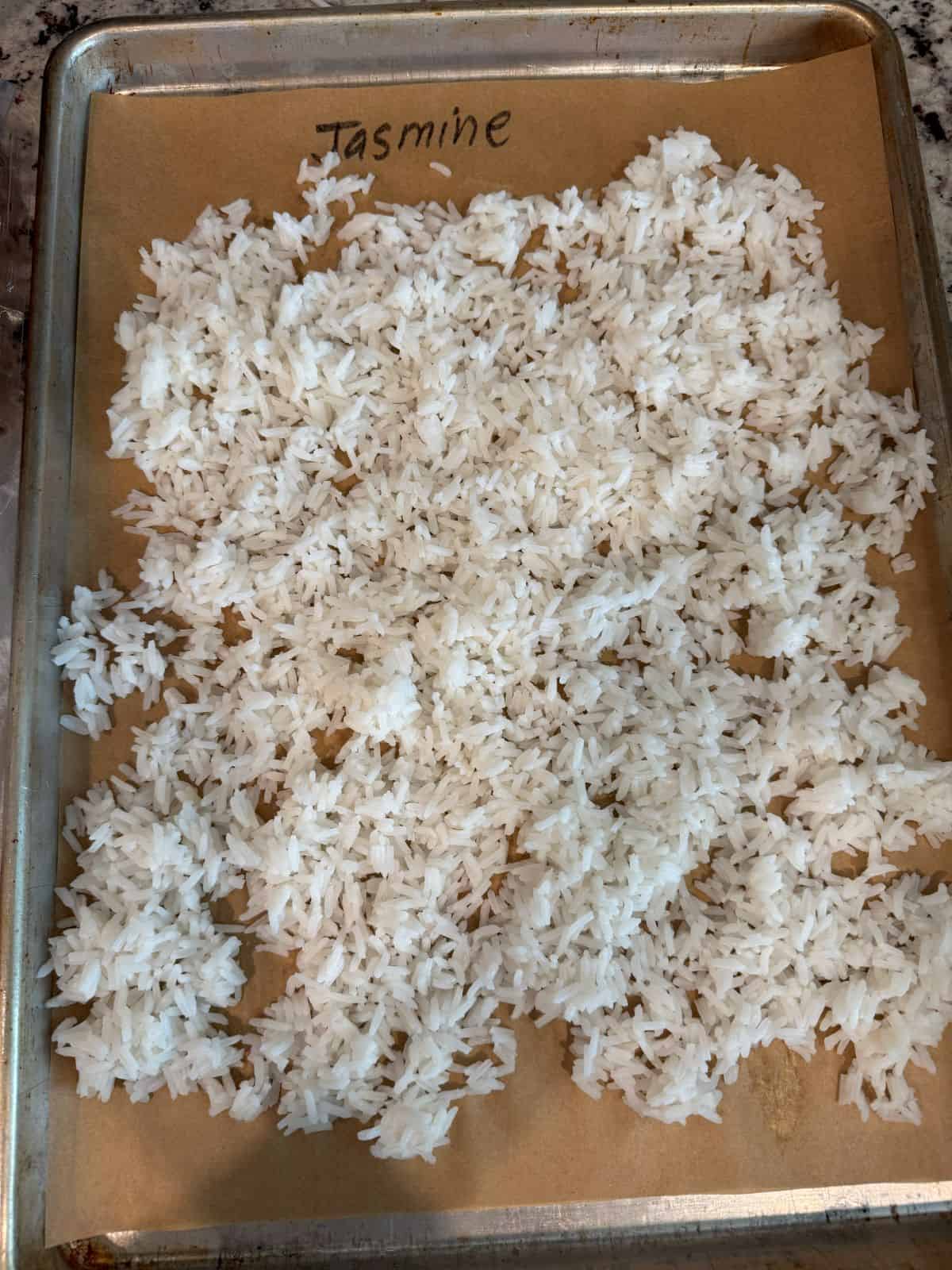
#3 – Jasmine rice landed right in the middle. The grains stayed separate without feeling dry, and they fried up easily while still keeping the softer texture people expect from restaurant fried rice.
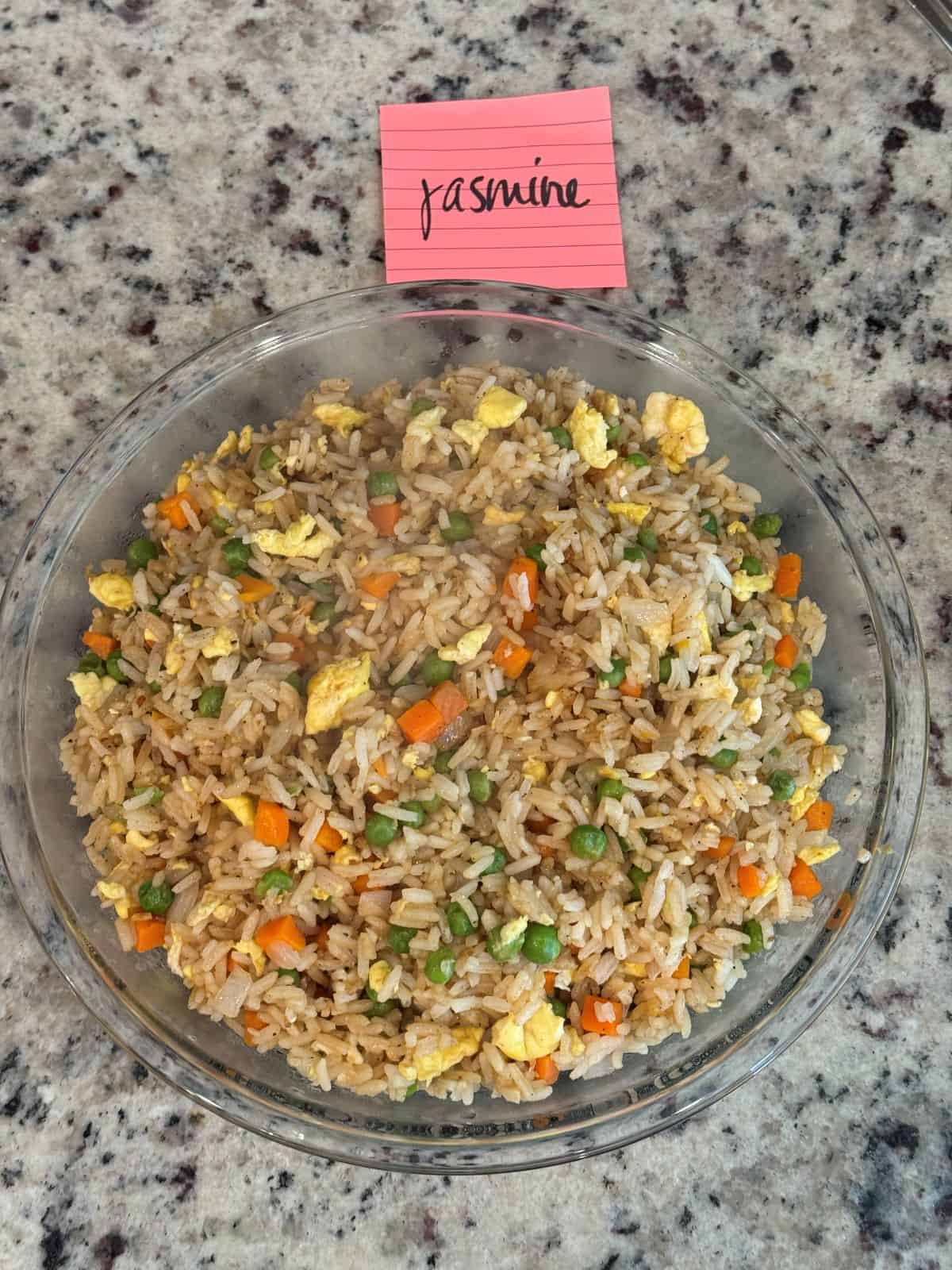
When I put all three bowls in front of the pickiest takeout fan in my house, jasmine was the clear winner.
If all you have is long-grain white rice…
…you can still make this recipe successfully.
Just expect a softer texture and a little more clumping. To push it closer to jasmine, rinse the raw rice well before cooking, until the water runs much clearer, and chill it (ideally) overnight instead of for a couple of hours.
Rinsing washes off the extra surface starch that makes long-grain clump, and the longer chill gives the grains more time to dry out.
Cold, Dry Rice Is the Other Half of the Texture
Even the right rice variety can disappoint if it goes into the skillet straight from the pot.
Freshly cooked rice still holds a lot of moisture, so instead of frying, the grains steam and stick together. Chilled rice dries slightly on the surface, which helps the grains stay separate and develop that lightly fried texture.
Day-old rice from the refrigerator is the most reliable option, but you do not have to plan a full day ahead. This works surprisingly well:
- Spread freshly cooked rice onto a sheet tray.
- Refrigerate it uncovered for one to two hours.
- The rice is ready when it feels cool and dry.
Pro Tip: Try This Shortcut
I tried the bagged frozen pre-cooked jasmine rice from Trader Joe’s to see if it would work instead of my own chilled rice. It did. The rice goes straight into the hot skillet from frozen and just needs a few extra minutes to heat through. Buy the plain jasmine rice, not a seasoned fried rice blend.
(If it’s a more seasoned rice you want, my Spanish rice is a better bet for you.)
I made one batch with the frozen rice and one with my own chilled rice, and no one at the table could tell the difference. The grains stayed separate, the texture was the same, and both batches tasted just as good.
Why Homemade Fried Rice Often Tastes Flat
A lot of homemade fried rice recipes lean almost entirely on soy sauce for flavor. Soy sauce adds color and savoriness, but it does not season a whole skillet of rice on its own. The result is the complaint that shows up again and again in recipe reviews: it looks like fried rice, but it does not quite taste like it.
The fix is simple: salt and black pepper.
I tested the recipe with and without them, and the teaspoon of salt is doing real work here. It brings the whole dish into focus and fills the flavor gap that soy sauce alone leaves behind. The black pepper adds a low warmth in the background.
One Thing To Watch
This recipe was developed using low-sodium soy sauce. If you are using regular soy sauce, reduce the added salt slightly and taste as you go.
Creating The Fried Texture
Once the rice goes into the skillet, the instinct is to start stirring right away. Leave it alone instead.
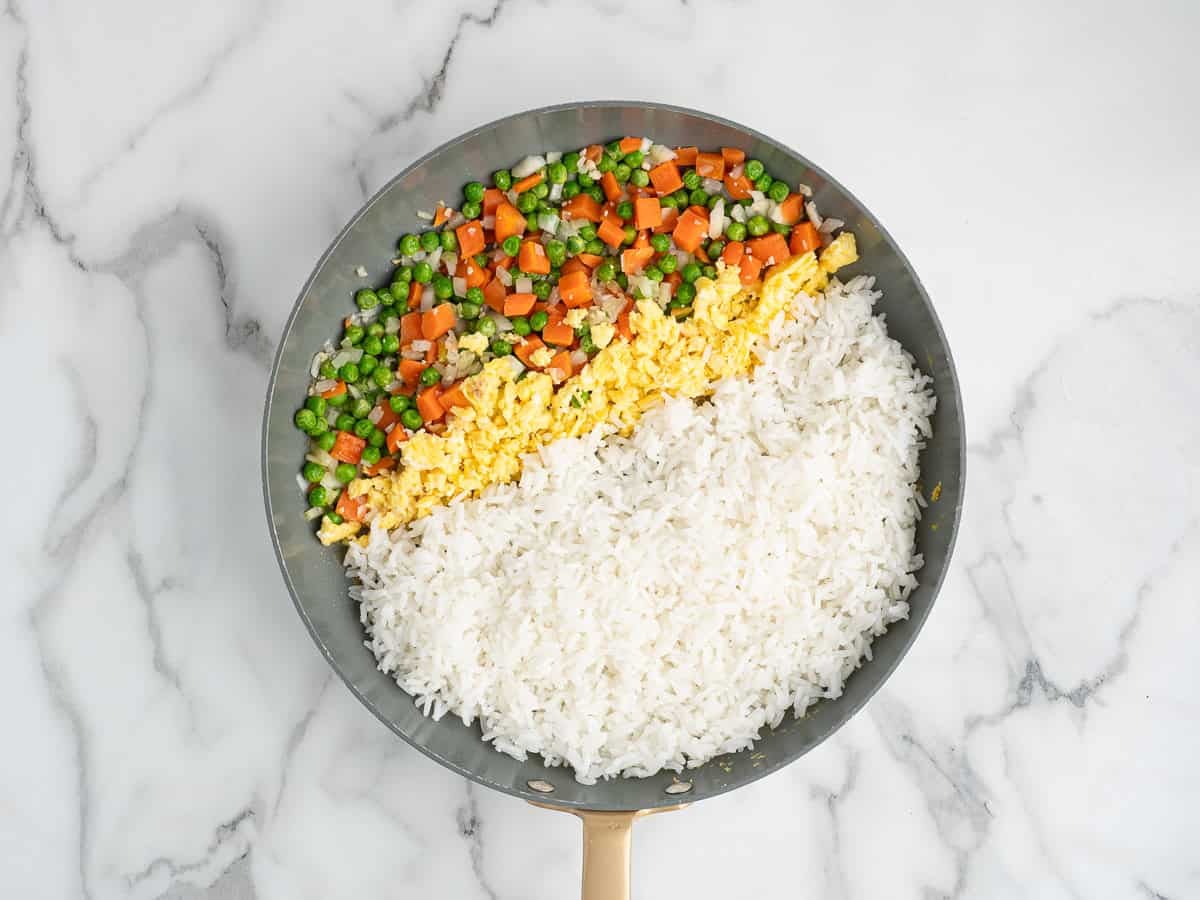
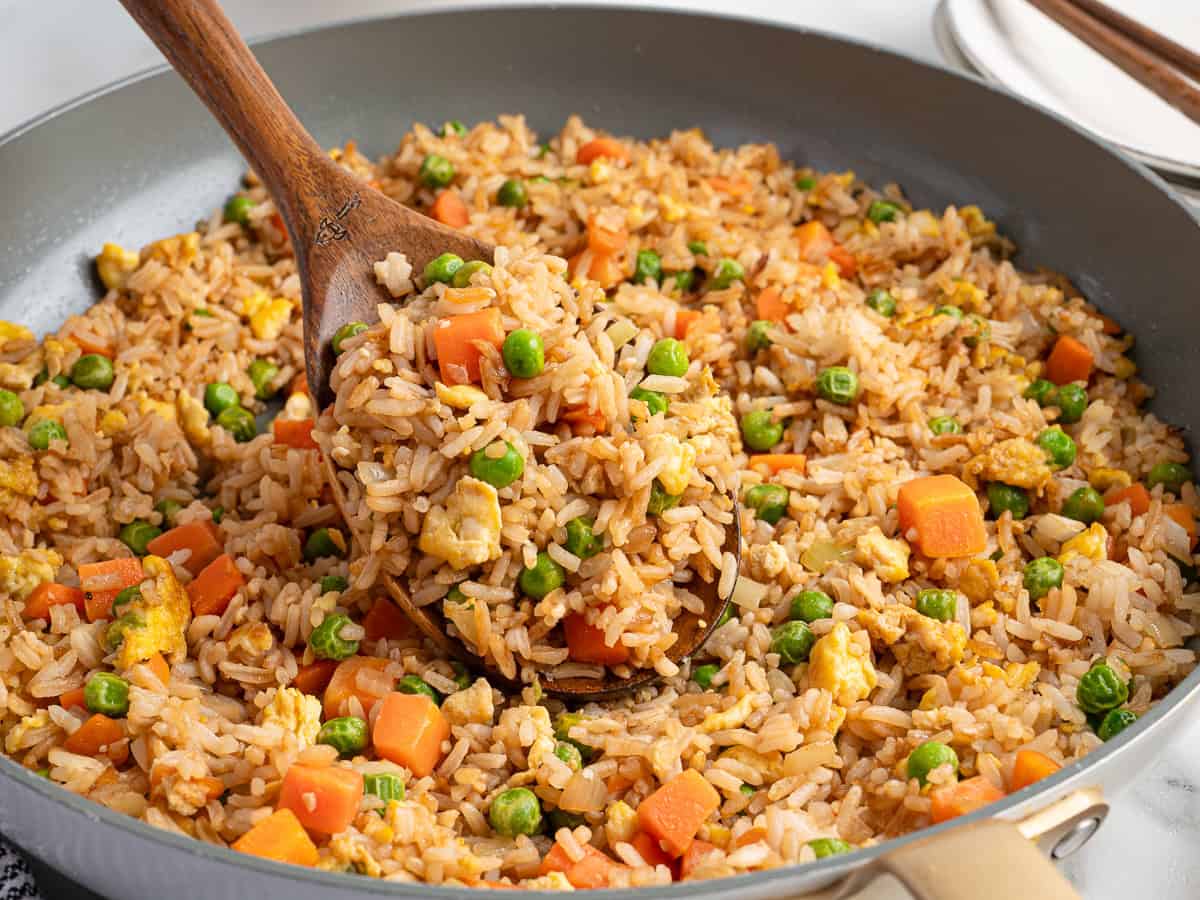
You will hear the change before you see it. Once the rice starts sizzling steadily against the skillet, the bottom layer is frying instead of steaming. That brief contact with the hot pan is what creates the texture people associate with good fried rice.
After that, stir occasionally to keep everything moving and prevent sticking, but let the skillet do some of the work first.
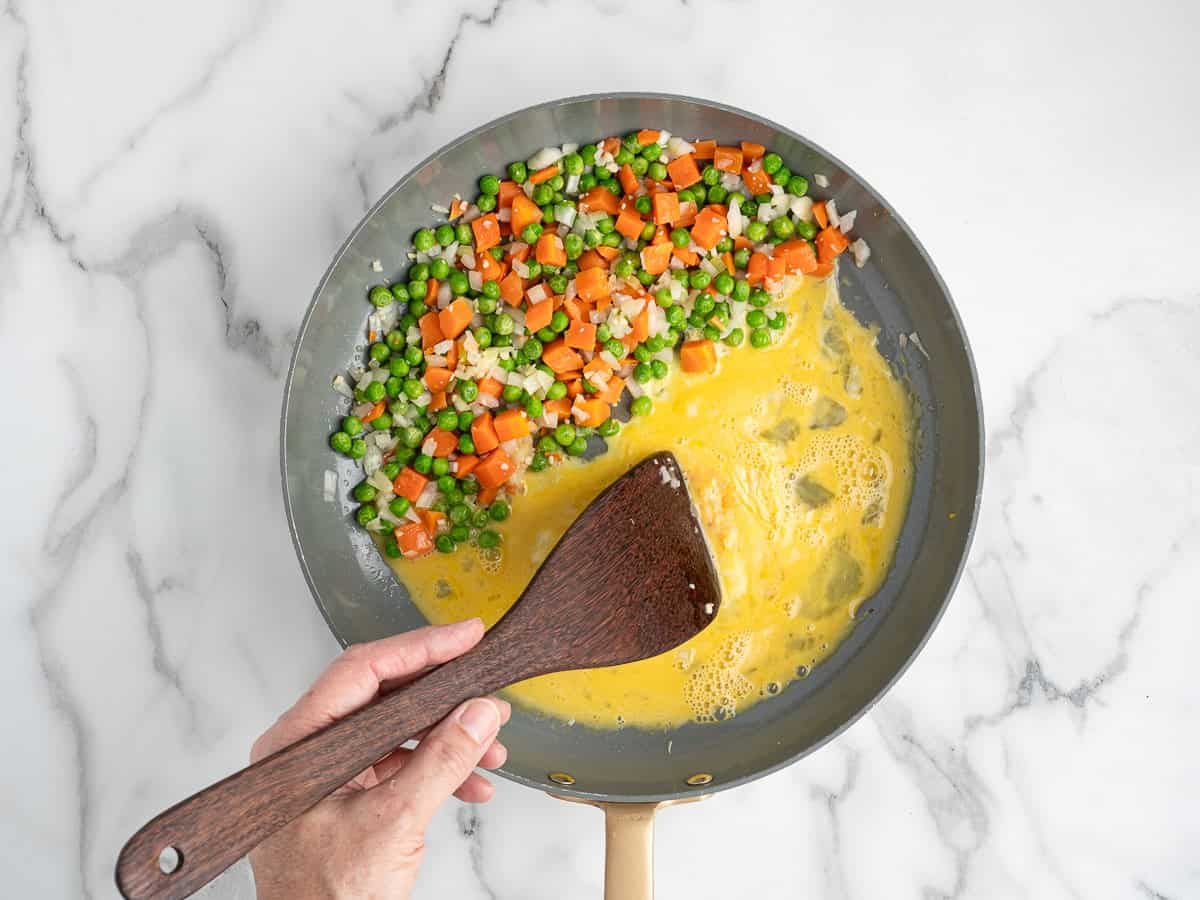
The eggs benefit from the same patience. After pouring them into the cleared section of the skillet, let them sit for thirty to forty-five seconds before scrambling.
Recipe Testing Notes
This recipe was originally published in May 2018. It started as a much simpler version built around cooked rice, vegetable oil, soy sauce, and sesame oil. It was updated in June 2026 to enhance the flavor.
Make It A Takeout Night
When I want the hibachi-restaurant version of dinner I plate it with Benihana hibachi chicken, which is built around fried rice to begin with.
I almost always start the meal with crab rangoon egg rolls, since they tend to vanish before the rice is even out of the pan.
Best Fried Rice Recipe
Ingredients
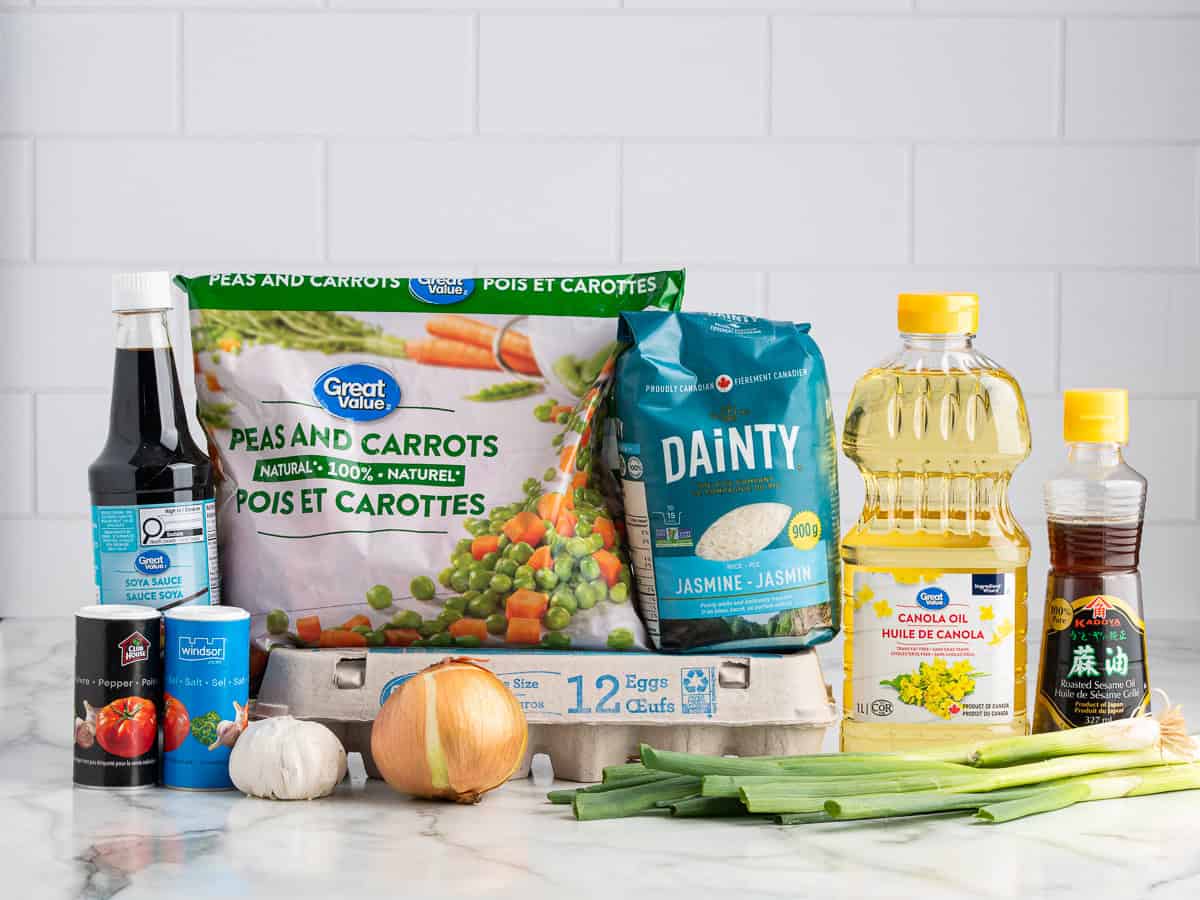
- 3 cups day old jasmine rice cooked according to package directions and chilled overnight
- 2 tablespoons canola oil, divided (1 tablespoon to cook the vegetables and 1 tablespoon to cook the rice)
- ½ cup diced sweet yellow onion
- 1 cup frozen vegetables peas and carrots combination
- 2 teaspoons minced garlic
- 2 large eggs, lightly beaten (room temperature)
- 1 teaspoon sesame oil
- 1 teaspoon salt
- ¼ teaspoon black pepper
- 3 tablespoons low-sodium soy sauce
- 2 tablespoons thinly sliced green onions garnish
Instructions
- In a large (12-inch) non-stick skillet over medium-high heat, add 1 tablespoon canola oil. Once the oil is hot, add the onion and cook for 1 minute before adding the frozen vegetables and garlic. Cook for an additional 2-3 minutes or until the onions are translucent, the frozen vegetables have warmed through completely, and the garlic is fragrant.
- Push the cooked vegetables to the side of the skillet, pour the lightly beaten eggs into the clear side of the skillet and allow the eggs to cook and scramble until no wet egg remains. Allowing the eggs to sit undisturbed for 30-45 seconds, or until the edges start to firm, before you start to scramble them, will ensure that the eggs do not stick to the hot skillet. Push the scrambled eggs to the side of the skillet with the cooked vegetables.
- Add the remaining 1 tablespoon canola oil and sesame oil to the clean side of the skillet.
- Transfer the chilled rice into the skillet on top of the hot oil then lightly mix the vegetables and egg into the rice, being sure to break apart any large lumps of chilled rice. Season the rice with salt and black pepper.
- Allow the rice to sit undisturbed in the hot skillet for 2 minutes or until you start to hear the sizzle of the rice frying. This will help to get that signature “fried rice” texture. Continue to cook the rice, stirring occasionally to prevent burning and sticking, for 7-8 minutes or until the rice is lightly fried and heated through completely.
- Pour in the soy sauce, stirring to fully coat the fried rice and cook for an additional 1-2 minutes or until all the soy sauce has been absorbed into the rice.
- Transfer the fried rice to a serving bowl and garnish with the sliced green onions before serving.
Notes
- Prepare the jasmine rice according to package directions (to yield 3 cups total cooked rice). Transfer the rice to a large baking sheet lined with parchment paper. Place into the refrigerator, uncovered, overnight to chill and dry thoroughly before using.
- Cold dry rice will yield the best results for this fried rice recipe. Day old rice, that has been refrigerated overnight, works best. However, you can speed up the chilling process, to make this dish in a few hours, by placing the tray of cooked rice into the refrigerator for 1-2 hours or in the freezer for 30-60 minutes to chill and dry thoroughly.
- Frozen pre-cooked jasmine rice can also be used as a shortcut ingredient in this recipe. It may take 3-4 more minutes to fully cook and warm through but will yield the same final results as the chilled day old rice.
- Jasmine rice is used in this recipe because it holds its shape while maintaining a softer texture when cooked and cooled. Other long-grain white rice varieties can be substituted however, they will yield slightly different results. Basmati rice for example, will yield a firmer texture that is slightly drier when fried. Standard long-grain white rice will yield a stickier, fluffier rice when cooked and cooled. It tends to clump more when fried.
- If using standard soy sauce (not the low-sodium called for in the recipe), you may want to reduce the amount of salt added to rice to prevent your finished fried rice from tasting too salty.
- Your favorite blend of frozen vegetables can be substituted for the peas and carrots combination used for this recipe. Do not add more than 1 cup of frozen vegetables.
- The canola oil can be substituted with peanut oil, avocado oil, or any oil that can handle high heat.
- If adding a protein (shrimp, chicken, or pork) to your fried rice, you will want to cook it in the skillet then transfer to a clean plate before proceeding with the fried rice recipe. Once the fried rice is fully cooked, you can transfer the cooked protein to the skillet and lightly toss to combine with the fried rice before serving.
- For best results, be sure to use a non-stick skillet or well seasoned cast iron skillet. Rice sticks to a stainless steel skillet in the small amount of oil called for in this recipe. If using stainless steel, be sure to preheat properly and add extra oil to the skillet if needed when frying the rice to avoid sticking.
- This fried rice is best served immediately. Leftovers, once cooled completely, can be stored in an airtight container in the refrigerator for up to 4 days. This fried rice can also be stored in the freezer for up to 2 months, thawed completely in the refrigerator before reheating in a skillet over medium heat until warmed through.
- If you’d like to add a protein, you’re looking for my chicken fried rice.
Nutrition










Comments
Barbie says
Yummy! It’s a winner ❤️
Ashley says
I really liked this recipe! It was so simple and came out so tasty.
Maryanne Pollard Pimienta says
Delish
Pattie E says
Excellent! Followed the recipe except I did have to make some changes… :). While the veggies were cooking I added a tablespoon of butter and when I added the rice, I added another tablespoon of butter. Rice never got brown, but I thought once the soy was added that would give it the color. Also used a teaspoon of sesame oil since that is what gives it great flavor. Regardless of these minor changes, it was really good and a keeper!