
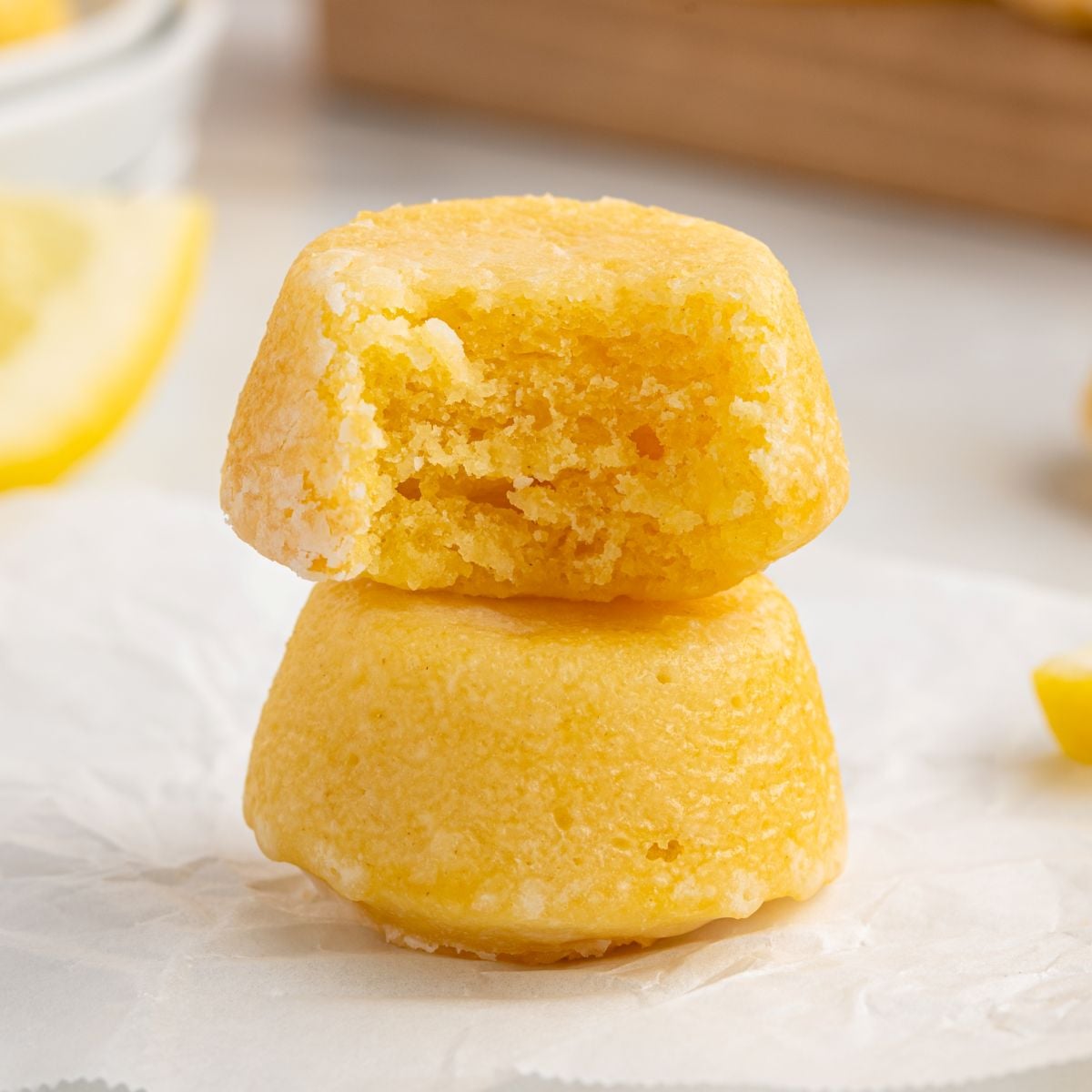



Lemon Drop Cakes are the kind of thing I set out for company and quietly watch disappear. By the time there are a few left, someone’s already asking how I made them.
They’re soft, almost melt-in-your-mouth, with a thin lemon glaze that sets into a light shell. These are bite-sized lemon cakes baked in a mini muffin pan, then dipped so each one is fully coated. From scratch, one batch, 48 cakes, in under an hour.

Recipe Development Notes – March 2026
The first time I made these, they baked up like a traditional mini cake. Cakey, and once dipped, the glaze sat heavier than I wanted. This version fixes those issues. (If a more cakey texture is what you’re after, my lemon drizzle cake keeps that more traditional structure.)


The Cakes
The batter comes together into a thick paste.
That’s when most people think something’s gone wrong. It hasn’t. It loosens into a smooth batter and that’s what you want.

Where most batches fall apart is the fill.
I keep each cup about three-quarters full. Any higher and the tops dome and spread, which makes them harder to remove and uneven to glaze.

The same fill rule applies in my chocolate cupcakes — the difference between a clean rise and overflow comes down to the same thing.
The other place things go wrong is the pan.
I use baker’s spray here. Regular cooking spray doesn’t create the release layer this batter needs.
The cakes are done when:
- The edges are just lightly golden
- A toothpick comes out clean or with a few moist crumbs
Leave them in the pan for ten minutes after they come out.
The crumb is still settling and firming against the pan. Ten minutes and they release cleanly. Less than that and they tear.
When they’re ready:
- They lift out easily
- They hold their shape
- They feel light in your hand
The Glaze
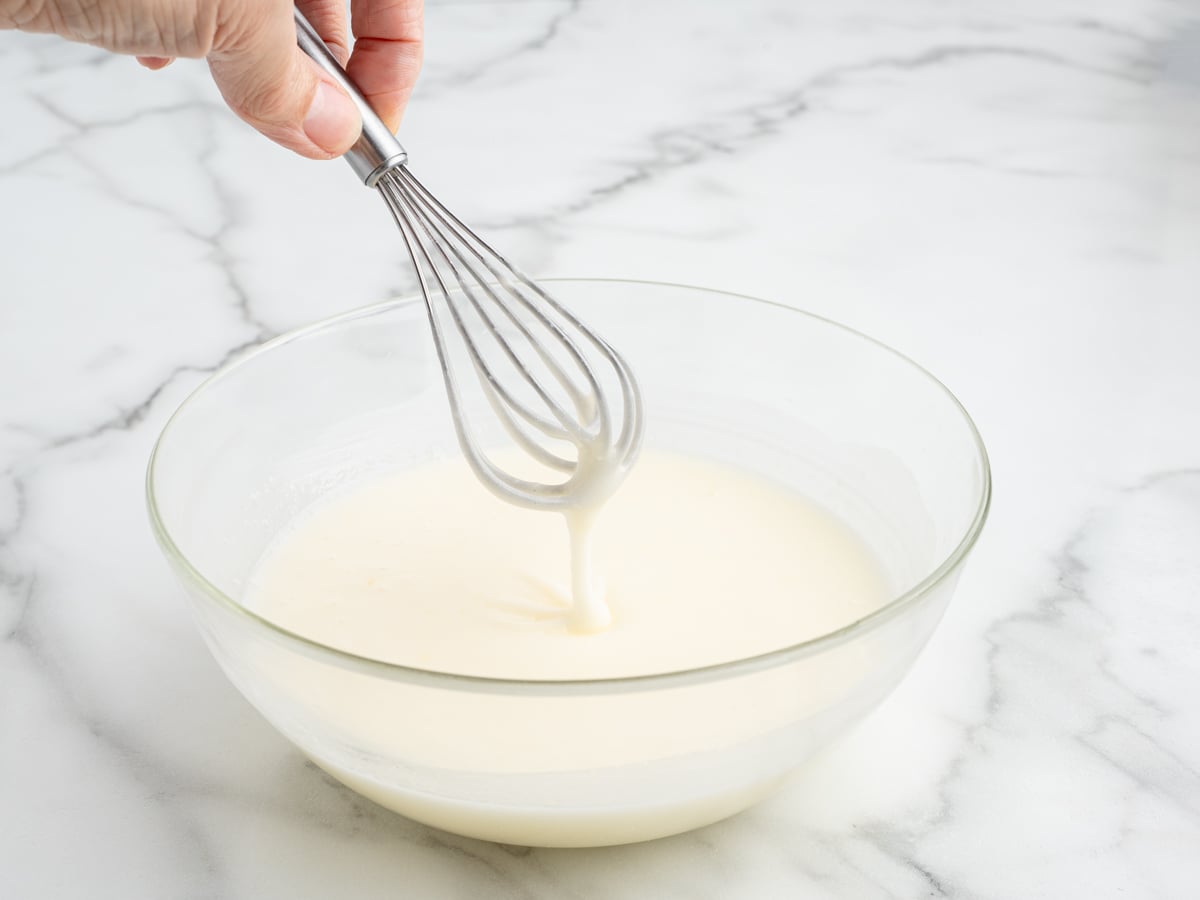

A warm cake is the most common reason the glaze doesn’t set.
It causes the glaze to slide instead of setting. I put mine on a wire rack over parchment and leave them until there’s no warmth left.
The melted butter is what gives the glaze its glisten.
Without it, the glaze stays soft. With it, you get that light sheen once it sets. I use the same kind of glaze on my homemade glazed donuts — that thin shell that sets glossy is what makes both of them.
The glaze is ready when:
- The surface is dry
- There’s a light sheen
- There’s no tackiness when touched

If you like easy holiday desserts that are simple to serve, you’ll probably find more favorites in my easy desserts made in a muffin tin.

Lemon Drop Cakes
Ingredients
The Cakes
- 1 cup flour, all-purpose
- ¾ cup sugar, granulated
- ½ teaspoon salt
- ¼ teaspoon baking soda
- ½ cup butter, unsalted, room temperature
- ½ cup water
- 1 egg, large, room temperature
- ¼ cup sour cream
- ½ teaspoon vanilla extract
- 2 teaspoons lemon zest
- 1 tablespoon lemon juice
The Glaze
- 1 ½ cups powdered sugar, make sure to sift it
- 2 ½ tablespoons lemon juice
- 2 tablespoons milk, choose full fat/whole milk
- 1 tablespoon melted butter, unsalted, cooled slightly
Instructions
The Cakes
- Preheat the oven to 325°F.
- Lightly grease a 48 count mini muffin baking pan with non-stick baker’s spray (not cooking spray).
- In a large mixing bowl, whisk together the all-purpose flour, granulated sugar, salt, and baking soda. Set aside.
- In a small saucepan over medium heat, add the butter and water. Heat until the butter is melted and the mixture just begins to boil.
- Remove from the heat and pour into the bowl of dry ingredients.
- Using a handheld mixer on medium speed, beat just until fully combined and the mixture resembles a thick paste.
- Add the egg, sour cream, vanilla extract, lemon zest, and lemon juice to the bowl.
- Mix on low until fully incorporated and a smooth batter forms.
- Fill the mini muffin cups ¾ full. Be careful not to overfill the cups.
- Bake for 12-13 minutes or just until lightly browned around the edges and a toothpick inserted into the center of the cakes comes out with just a few moist crumbs.
- Cool in the pan for 10 minutes, then transfer to a wire rack to cool completely before glazing.
- While the cakes are cooling make the glaze.
The Glaze
- Whisk together in a small bowl the powdered sugar, lemon juice, and whole milk until fully combined.
- Add the slightly cooled melted butter and whisk again until smooth and a thin consistency.
- Dip each cooled lemon drop cake into the glaze, coating it completely.
- Allow excess glaze to drip back into the bowl.
- Place the glazed lemon drop cake onto a wire rack placed over a piece of parchment paper (to allow excess glaze to drip off).
- Repeat until all the cakes are glazed.
- Allow the finished cakes to set at room temperature for 30 to 60 minutes or until the glaze is fully set.
Notes
- Free range eggs typically have darker yolks and will result in a cake with a more vibrant color.
- If you want your lemon drop cakes to be an even deeper or richer yellow color when baked, add 1-2 drops of yellow gel food coloring. Good options to use are the Americolor brand Egg Yellow #106 or Lemon Yellow #107.
- These lemon drop cakes can be served at room temperature or chilled. Store in an airtight container, in a single layer, in the refrigerator for up to 5 days.
Nutrition
Frequently Asked Questions
Yes. Bake and glaze them the day before and store in an airtight container. The glaze holds well. I usually put these out alongside chocolate fudge and strawberry mousse when I need a full tray — the three cover every flavor without overlapping.
The cups were filled past three-quarters. Each one should hold roughly one and a quarter to one and a half tablespoons of batter depending on your pan.
Freeze them before glazing. Store in an airtight container in the freezer for up to two months. Thaw in the refrigerator and glaze once fully thawed.
The cakes weren’t completely cool when they were dipped. A warm cake causes the glaze to slide instead of setting. Glaze that’s too thick stays soft instead of setting into a shell.
In an airtight container in a single layer. They keep at room temperature for three to four days or refrigerated for up to five days.
Yes. Bottled juice produces a flatter result. I don’t use it.












Leave a Comment