

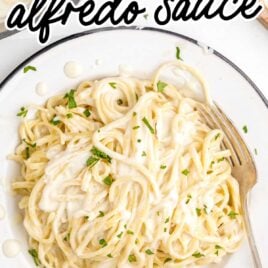

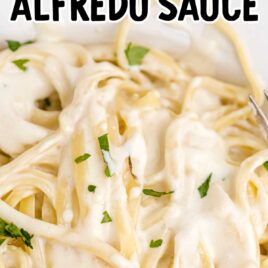
This is the version I make when I want smooth, creamy Olive Garden-style alfredo at home. It clings to every strand of pasta, stays silky instead of breaking, and doesn’t turn grainy as it cools.

My first few batches went grainy before I figured out what I was rushing. The fix is one step most recipes skip: letting the heavy cream simmer for a full 3 minutes before adding the cheese. That’s what keeps the sauce smooth instead of breaking. I’ve tested it both ways, and this is the one I come back to every time.
Read Before You Turn On The Stove
#1. I prefer using freshly grated Parmesan because it melts straight into the sauce. Pre-shredded is coated to prevent clumping and can leave unmelted bits behind. It still works in a pinch, but it needs low heat and constant whisking to come together.
2. I add the salt with the garlic, not at the end. When I tried finishing with salt, it never blended the same way and the flavor sat on top instead of coming through. Adding it early lets it fully dissolve into the sauce so it tastes seasoned all the way through
Ingredient Notes

- I strongly recommend unsalted butter so you can perfectly control the sodium level at the end.
- Freshly minced cloves will give you a much sharper, authentic restaurant flavor than jarred garlic.
- Don’t substitute the heavy whipping cream with half and half as it lacks the fat content needed and your sauce will break.
- Learn from my trial and error – use whole milk not skim or 2% milk. Cutting the heavy cream with just enough whole milk is the secret to a silky consistency.
- I recommend buying authentic Parmigiano Reggiano cheese.
If you’re looking for other Olive Garden meal ideas, these are the posts you’re after:
My Step-by-Step Process for Smooth Alfredo Sauce
A smooth and creamy Alfredo sauce comes down to steady heat and patience. When creating this recipe, rushing the process was the fastest way to break the sauce.
- Prep the Dairy: I always let the cream, milk, and cheese sit out while I prep the garlic. Adding cold dairy to a hot skillet can shock the sauce and slow everything down.

- Control the Heat: I cook this sauce over low to medium-low heat the entire time. Garlic burns quickly, and boiling cream can cause the cheese to separate.
- Whisk the Flour: When the flour goes into the butter and garlic, I whisk continuously. That step prevents lumps and cooks out the raw flour flavor before the liquids go in.
- Melt the Cheese Gradually: I sprinkle the Parmesan in small handfuls, whisking until each addition melts before adding more.
- Keep the Heat Low: Once the Parmesan goes in, too much heat can cause the cheese to seize and the sauce to break.
Getting the Consistency Right
Alfredo thickens quickly as it cools, so the sauce in the pan should be slightly thinner than you think it needs to be. Once tossed with hot pasta, the starch from the noodles will naturally thicken the sauce.


Before draining the fettuccine, scoop out about ½ cup of its cooking water. If the sauce thickens too much, adding a tablespoon at a time of the starchy hot water will bring it back.
How To Use This Sauce
While this is the perfect sauce for tossing with fettuccine, you can also use this exact recipe as the rich, from-scratch foundation for baked pastas and casseroles.
Skip the jarred sauce and use this as a direct 1:1 substitute in my:
- Chicken Spinach Alfredo
- Chicken Alfredo Stuffed Shells
- Asiago Tortellini Alfredo with Grilled Chicken
How To Serve, Store And Reheat
To Serve – A rich, heavy cream sauce needs the right sides to either cut through the richness or soak up what is left in the bowl. Skip the store-bought sides and pair it with these:
- Copycat Olive Garden Salad – For the full restaurant-at-home experience.
- Garlic Knots from Crescent Rolls – Perfect for soaking up every bit of sauce left on the plate.
- Oven Roasted Vegetables – Add caramelized crunch that balances pasta.
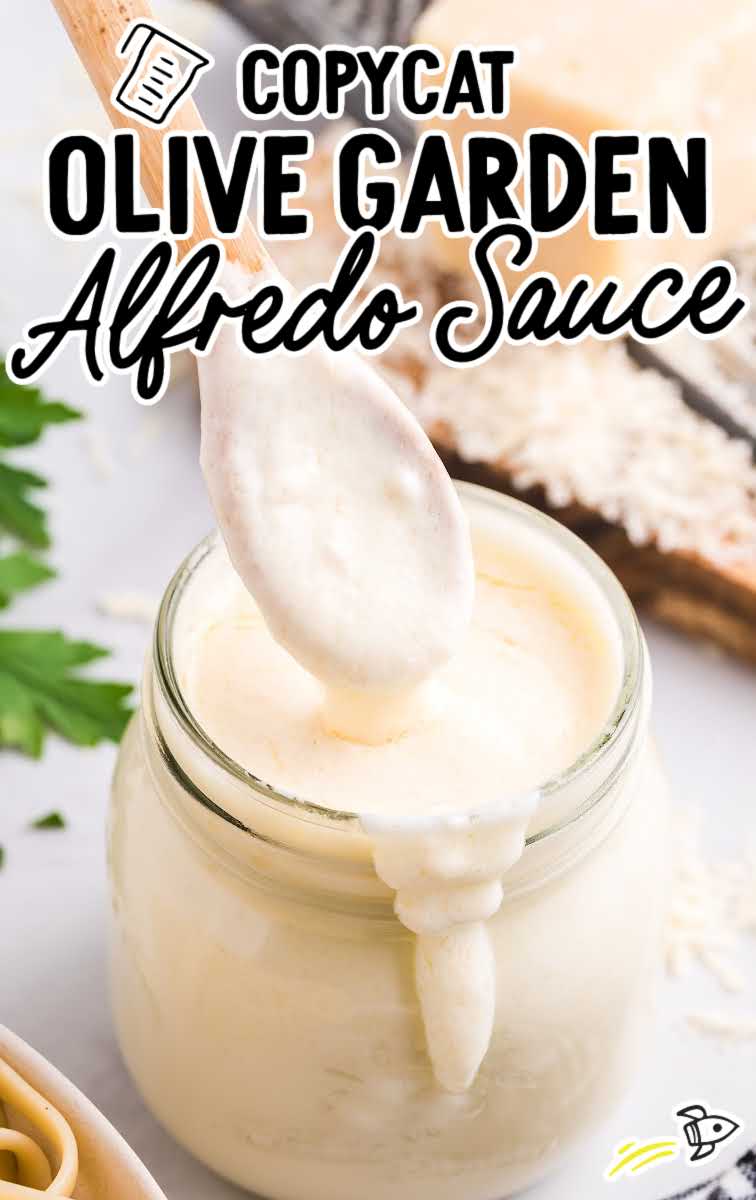
To Store – Let the sauce cool completely, transfer it to a glass jar with a tight lid, and refrigerate for up to 4 days.
Do not freeze this sauce. The heavy cream and whole milk will separate in the freezer, completely ruining the texture.
To Reheat – Alfredo is notorious for “breaking” or separating into a greasy pool if you blast it in the microwave.
To safely reheat leftovers, place the pasta and sauce in a skillet over medium-low heat. Add a splash of cold whole milk and gently toss with tongs until the sauce loosens up and becomes creamy again.
Recipe Testing Notes (Updated Feb 2026)

This recipe was originally developed and photographed in 2020. To ensure it still meets our strict restaurant-quality standards, our independent recipe tester, Karen, re-tested it from scratch in February 2026.
- The Verdict: The sauce-to-pasta ratio remains perfect, leaving just enough extra cream in the bottom of the bowl.
- Tester Correction (The Salt): During testing, Karen noted that the original instructions didn’t clearly state when to add the salt (it should go in with the garlic powder). The recipe card below has been updated to reflect this.
- Tester Tip: Always add a few shakes of salt directly to your boiling water before adding the fettuccine noodles. Top the final dish with a little extra grated parmesan.
When dinner needs to be straightforward, I lean on my easy dinner recipes or my dozens of crockpot recipes to keep things moving. I’ve got plenty of easy meals kids beg for and guests devour.

Olive Garden Alfredo Recipe
Ingredients
Pasta
- 16 ounces fettuccine or linguine pasta
Alfredo Sauce
- 6 tablespoons salted butter (¾ stick)
- 1 tablespoon minced garlic
- 1 teaspoon garlic powder
- ½ teaspoon table salt
- 2 tablespoons all-purpose flour
- 1¼ cups heavy cream
- 1½ cups whole milk
- 1 cup freshly grated Parmesan cheese (from a block)
For Serving
- Finely chopped fresh parsley (optional)
Instructions
- Cook the fettuccine according to package directions. Drain and set aside.
- In a large skillet over medium heat, melt the butter until it's bubbling.
- Add the minced garlic, garlic powder, and salt. Whisk to combine.
- Sprinkle the flour over the butter and garlic mixture. Whisk until smooth.
- Slowly whisk in the heavy cream and milk.
- Bring the sauce to a gentle boil.
- Reduce the heat to low and simmer for 2 to 3 minutes, until slightly thickened.
- Whisk in the parmesan cheese until melted.
- Add the cooked fettuccine to the skillet.
- Use tongs to toss the pasta in the sauce until coated.
- Garnish with fresh parsley and serve.
Video
Notes
- Tester Tip (Updated Feb 2026): Add a few shakes of salt directly to your boiling water before adding the fettuccine noodles to ensure the pasta is properly seasoned.
- Tester Tip: For the best restaurant-style presentation, serve immediately with fresh parsley sprinkled over the warm pasta and an extra grating of fresh parmesan cheese on top
Nutrition
This creamy, garlicky alfredo clings to every strand of pasta—find more like it in our sauce and condiment recipes.
Olive Garden Alfredo FAQs
This recipe for makes 3 to 3½ cups of sauce. It’s enough to coat about 1 pound of pasta and serve 4 to 6 people.
Yes. This recipe has been tested many times using a standard 1-pound (16 oz) box of fettuccine. The sauce-to-pasta ratio was perfect, providing enough creamy sauce to generously coat all of the noodles with just enough extra pooling at the bottom of the bowl.
Yes, the ingredients can easily be doubled. However, if you double the recipe, you will need to use a large Dutch oven or stockpot. A standard cast-iron skillet will overflow once you add two pounds of cooked fettuccine into the doubled sauce. Stir frequently to avoid scorching. When adding the cheese, whisk continuously to keep the sauce smooth and creamy.
Making alfredo sauce in a crockpot can absolutely work. Check out our recipe for Slow Cooker Olive Garden Chicken Pasta to get started.
No. Because this Alfredo sauce is made with a heavy cream and butter base, it is not safe for home canning.
The texture will not be as silky as with fresh Parmesan. However we tested pre-shredded parmesan and still ended up with a beautiful sauce. If you decide to chance it with pre-shredded cheese, just be sure to add it in small handfuls and whisk vigorously over low heat to help it melt smoothly.
If you love making restaurant-quality food at home, you can check out even more copycat recipes from your favorite restaurants.











Comments
Tammy says
Tried this once and it has been my to go to recipe for a sauce. Family loves it and taste so much better than others I have tried.
Antoinette says
This sauce is amazing. The first time I made the mistake of using jarred cheese. When I made it tonight I used a block of fresh cheese and grated it. Made a big difference. I will keep this in my rotation.
JR says
This looks great what can I use in place of whole milk?
Lexus Monroe, Editorial Assistant says
You can substitute another dairy milk with similar fat content, like 2% milk, but we haven’t tested this recipe with milk alternatives. Using a lower-fat or non-dairy option may change the thickness and richness of the sauce. For the most consistent results, whole milk is recommended.
Paul and Debra Perry says
I just made this, it is better than any other Alfredo sauce I’ve eaten