
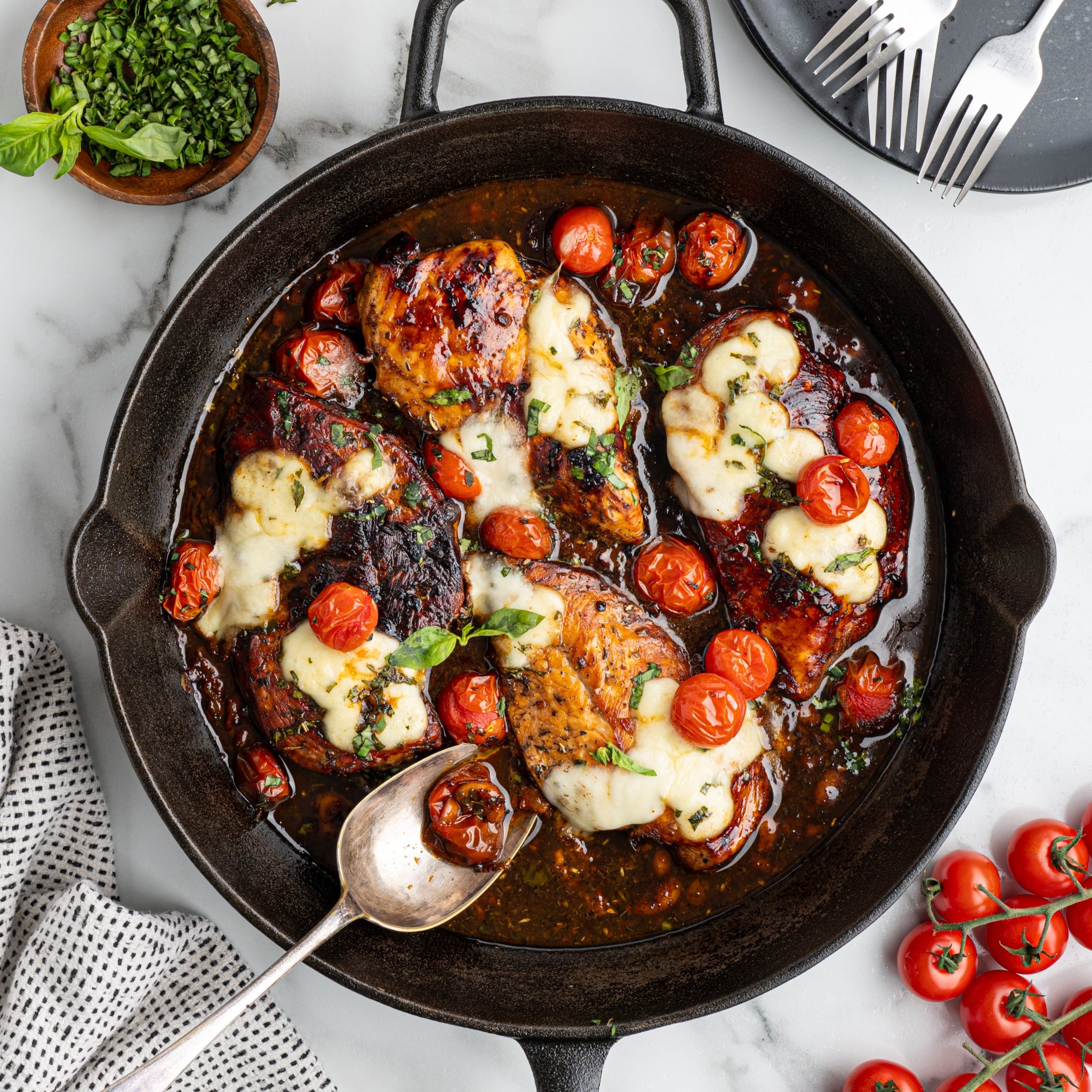
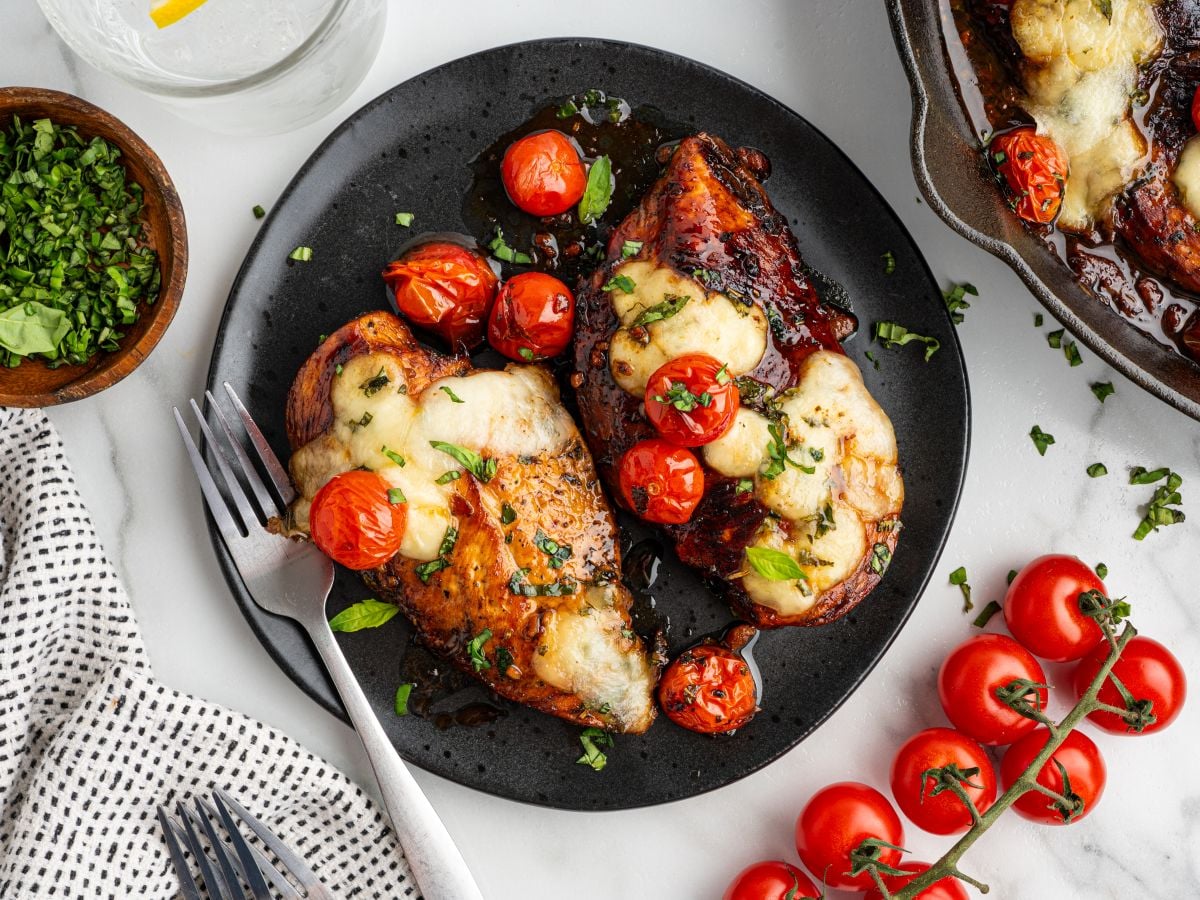
This balsamic chicken gives you juicy cherry tomatoes, melted mozzarella, and a glossy pan sauce instead of the burnt, sticky mess other versions leave behind. I’ve made this enough times to know exactly where the other recipes fall apart and figured out a fix to make this recipe foolproof.
The One Change That Fixes Balsamic Chicken
Balsamic vinegar cooks too quickly in a skillet. It burns before the chicken is even done.
You can see it happen. The pan gets ahead of you and the sauce goes before the chicken is ready. It’s the same problem you run into in marry me chicken if the sauce goes in too early.
Swapping the vinegar for a balsamic glaze changes that.
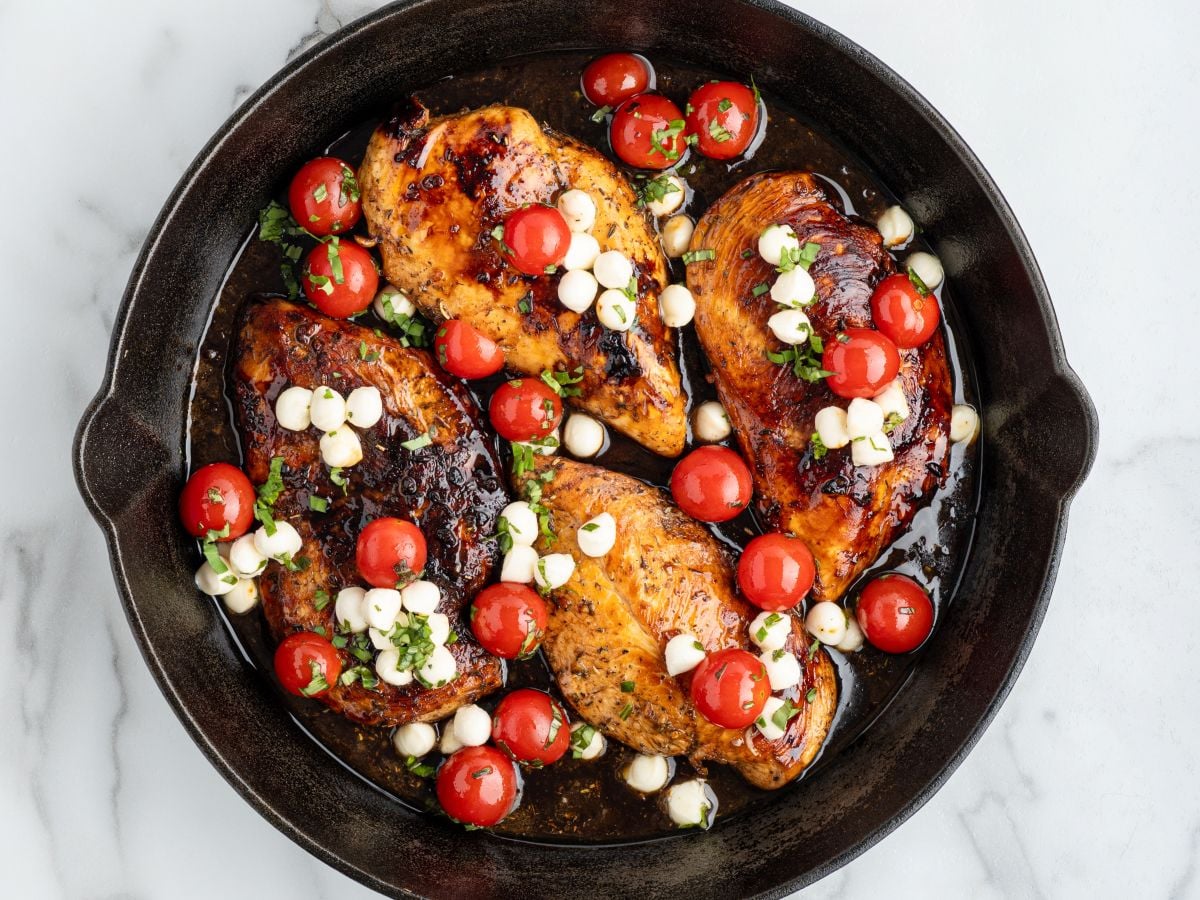
The glaze holds up under the heat, so the sauce builds in the pan instead of burning off. The tomatoes release into it. The mozzarella melts gently on top. The chicken comes out the way it should, with nothing burnt in the pan.

Everything happens in one skillet, start to finish. It’s the same stovetop-to-oven approach I use in my chicken marsala.
Troubleshooting
The marinade is scorching during the sear.
There’s too much marinade on the chicken going in, or it’s hitting the pan too early. Let the excess drip off before it hits the skillet. Give the chicken time to brown first, then bring the marinade in once the chicken has some color so it can turn into a sauce instead of catching.
The chicken isn’t browning.
The pan isn’t hot enough or it’s too crowded. Let the skillet fully heat before the chicken goes in, and give it space. If it’s packed in, it steams instead of searing. The crust won’t form, and the sauce won’t recover.
The tomatoes are collapsing.
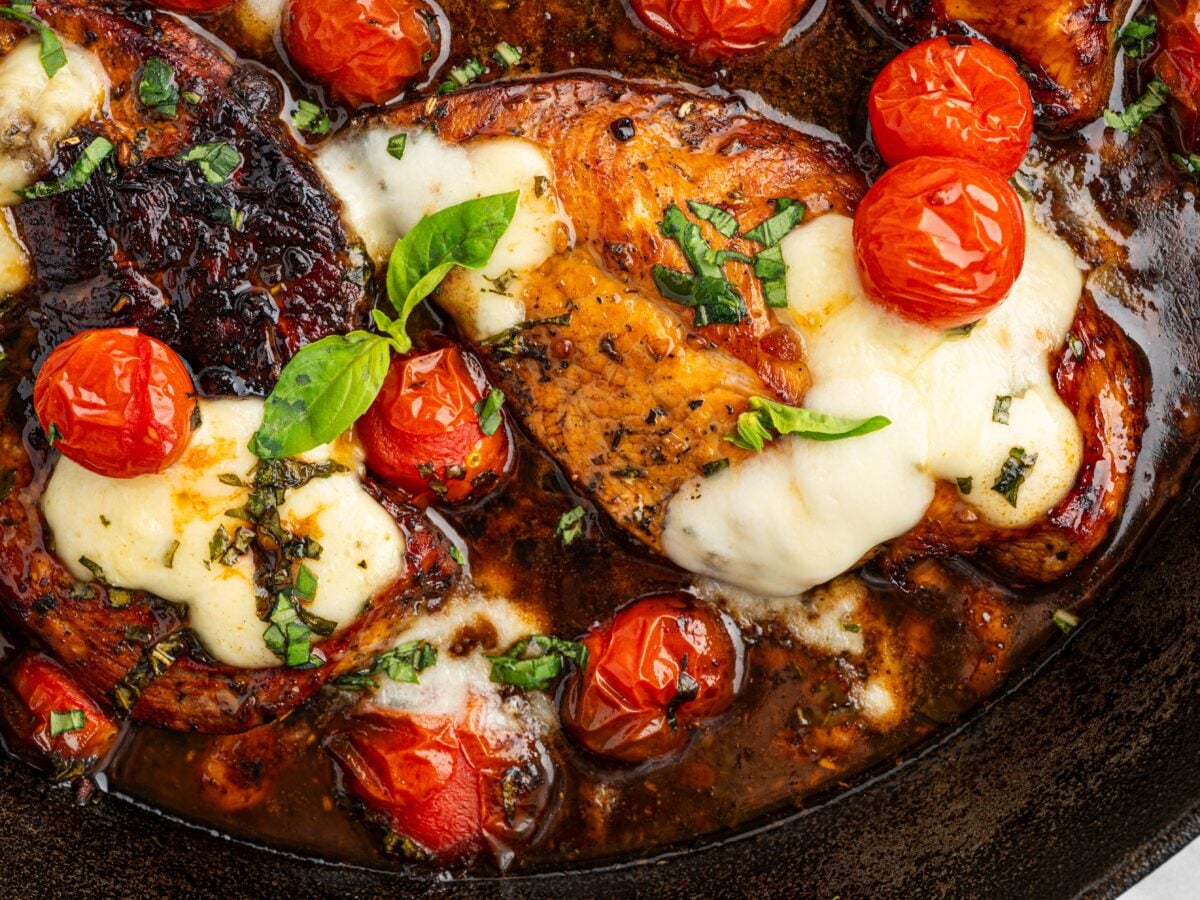
They’ve gone too far. Pull the skillet when they’ve just started to soften and release. That’s when they start to mix into the sauce without turning the whole pan watery.
The sauce looks thin when it comes out of the oven.
That’s normal. The tomatoes release their juices in the oven, so the sauce loosens at the end. Spoon it over the chicken as you serve and it settles into a glossy sauce.
Testing Notes – March 2026
What I Learned Testing This Recipe
Most versions marinate the chicken for 15 minutes, maybe 30. The first time I rushed it, the flavor stayed on the surface. You could taste the glaze, but not the chicken underneath.

Thirty minutes is the minimum. An hour makes a difference. Glaze, lemon, and garlic need time to soak into the chicken before it hits the pan. When they do, the flavor runs all the way through. If you’ve made something like Italian chicken before, this is the skillet version of it.
Balsamic Chicken
Ingredients
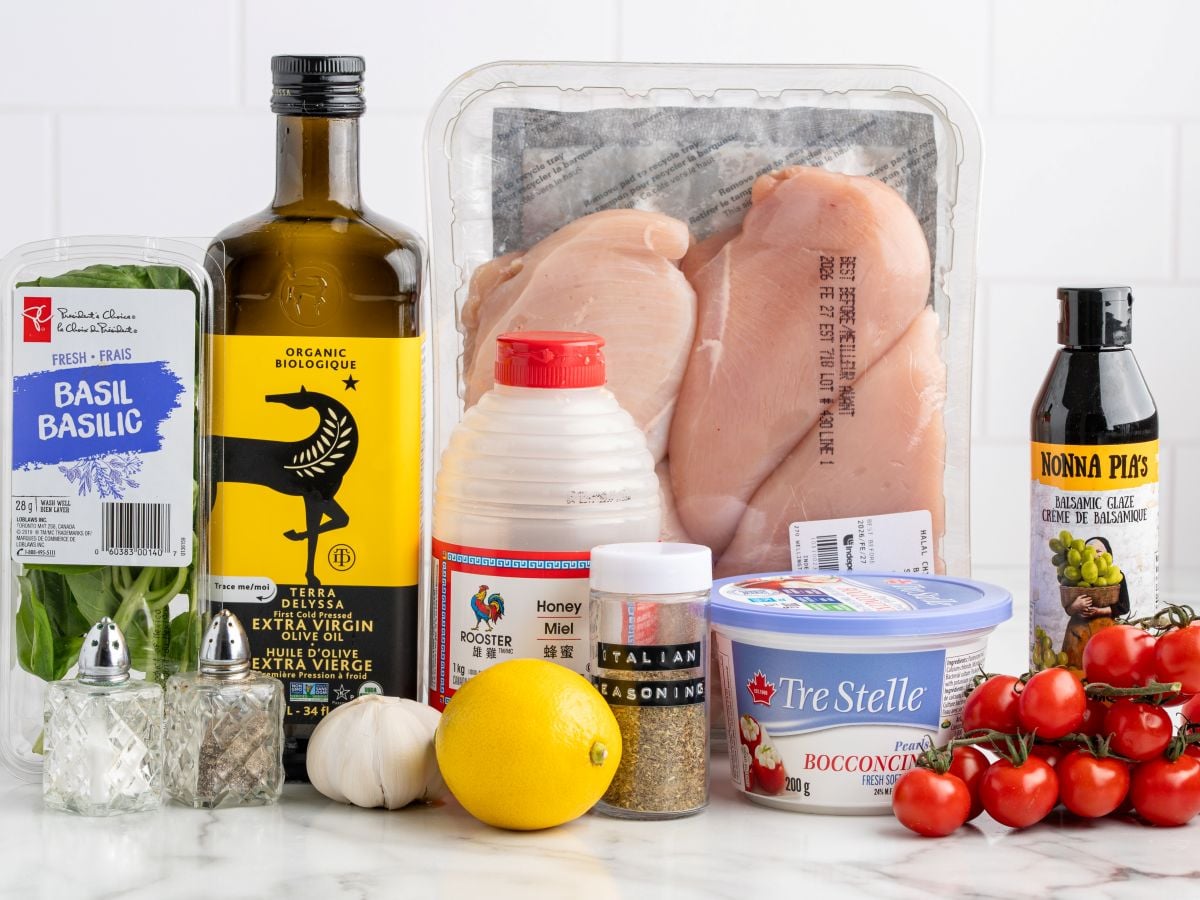
- 4 boneless and skinless chicken cutlets, pounded to an even thickness (approximately 1 ½ pounds total, each piece approximately ½ inch thick)
- ⅓ cup balsamic glaze
- ¼ cup lemon juice
- 1 tablespoon honey
- 1 tablespoon minced garlic
- 1 ½ teaspoons italian seasoning blend
- ½ teaspoon salt
- ¼ teaspoon black pepper
- 3 tablespoons olive oil, divided (2 tablespoons to cook the chicken and 1 tablespoon to mix with the tomatoes and cheese)
- ¾ cup cherry tomatoes (approximately 18-20 tomatoes)
- ½ cup fresh mozzarella pearls (approximately half of an 8-ounce package)
- 1 tablespoon fresh basil, chopped (plus additional for garnish)
Instructions
- Place the chicken cutlets into a large zip top bag, or a lidded shallow dish.
- Whisk together the balsamic glaze, lemon juice, honey, minced garlic, italian seasoning blend, salt, and black pepper in a small bowl.
- Pour the balsamic mixture over the chicken and seal the bag tightly, being sure that all the sides of the chicken are covered with the marinade. Press out excess air from the bag, or cover the dish with plastic wrap or a lid.
- Marinate the chicken at room temperature for at least 30 minutes or up to 1 hour. If marinating for longer than 30 minutes, place the chicken into the refrigerator then remove it 10-15 minutes prior to cooking.
- Preheat the oven to 400°F. While it preheats, cook the chicken in the skillet.
- Add 2 tablespoons of olive oil to a large (oven-safe) preheated skillet over medium heat. Remove the chicken from the marinade, allowing as much excess marinade to drip back into the bag or dish to use for later. Place the chicken into the skillet in a single layer being sure not to overcrowd the skillet to ensure the chicken is evenly browned and cooked. If necessary, cook the chicken in two batches.
- Cook and brown the chicken for 2-3 minutes on each side or just until golden. If cooking in batches, remove the first two pieces of browned chicken and place onto a clean plate while cooking the remaining two pieces.
- While the chicken is searing, combine together the tomatoes, mozzarella cheese balls, chopped fresh basil, and remaining 1 tablespoon olive oil, and set aside.
- Turn the heat down to low, add the first batch of browned chicken back to the skillet if necessary. Pour the reserved marinade into the skillet around the chicken, not directly on top, to maintain a good sear on the chicken. Allow the marinade to come to a low simmer for 1-2 minutes.
- Remove the skillet from the heat, top the chicken with the tomato and cheese mixture. Transfer the skillet to the preheated oven and bake for 15-18 minutes or until the cheese is melted, the tomatoes have started to pop and give off some of their juices and the internal temperature of the chicken reaches 165°F.
- Carefully remove the skillet from the heat and allow the chicken to rest in the skillet for 3-4 minutes before adding an additional sprinkle of fresh chopped basil for garnish.
Notes
- Small grape tomatoes can be substituted for the cherry tomatoes.
- Two large boneless-skinless chicken breasts (totaling at least 1 ½ pounds) can be cut in half lengthwise to form 4 thinner cutlets. You may need to pound them out to even thicknesses.
- If your skillet is not large enough, you may need to cook your chicken cutlets in two batches to ensure the chicken is evenly browned and cooked.
- A large (12-inch) oven safe heavy duty skillet is best used for this recipe. A cast iron skillet works best for this recipe.
Nutrition
Frequently Asked Questions
Yes. Cut it into rough chunks, not neat slices. Uneven pieces melt into the sauce instead of sitting on top.
Yes. They behave the same in the pan. They’re close enough in size that the timing doesn’t change.








Leave a Comment