
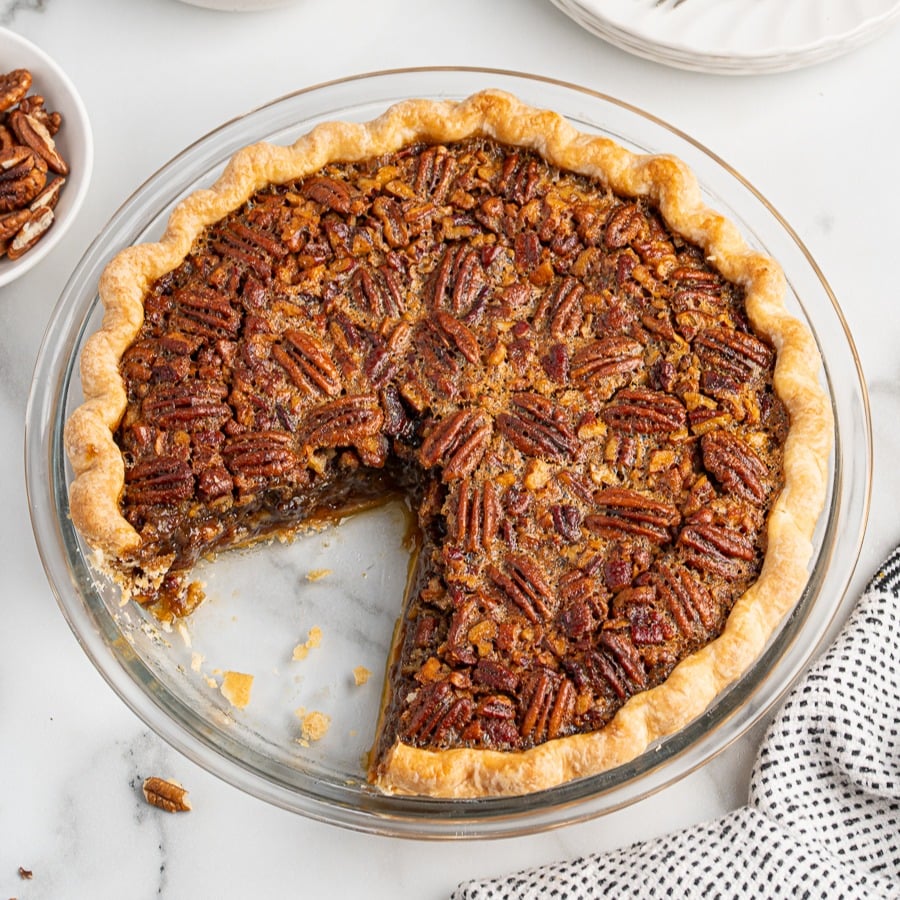

A pecan pie usually shows up for a reason. The holiday spread, the one relative who asks for it every year, or simply because the day would not feel right without it. So you want to get it right. You want a slice that sits up tall, with a glossy top and a center that holds when you lift it out.
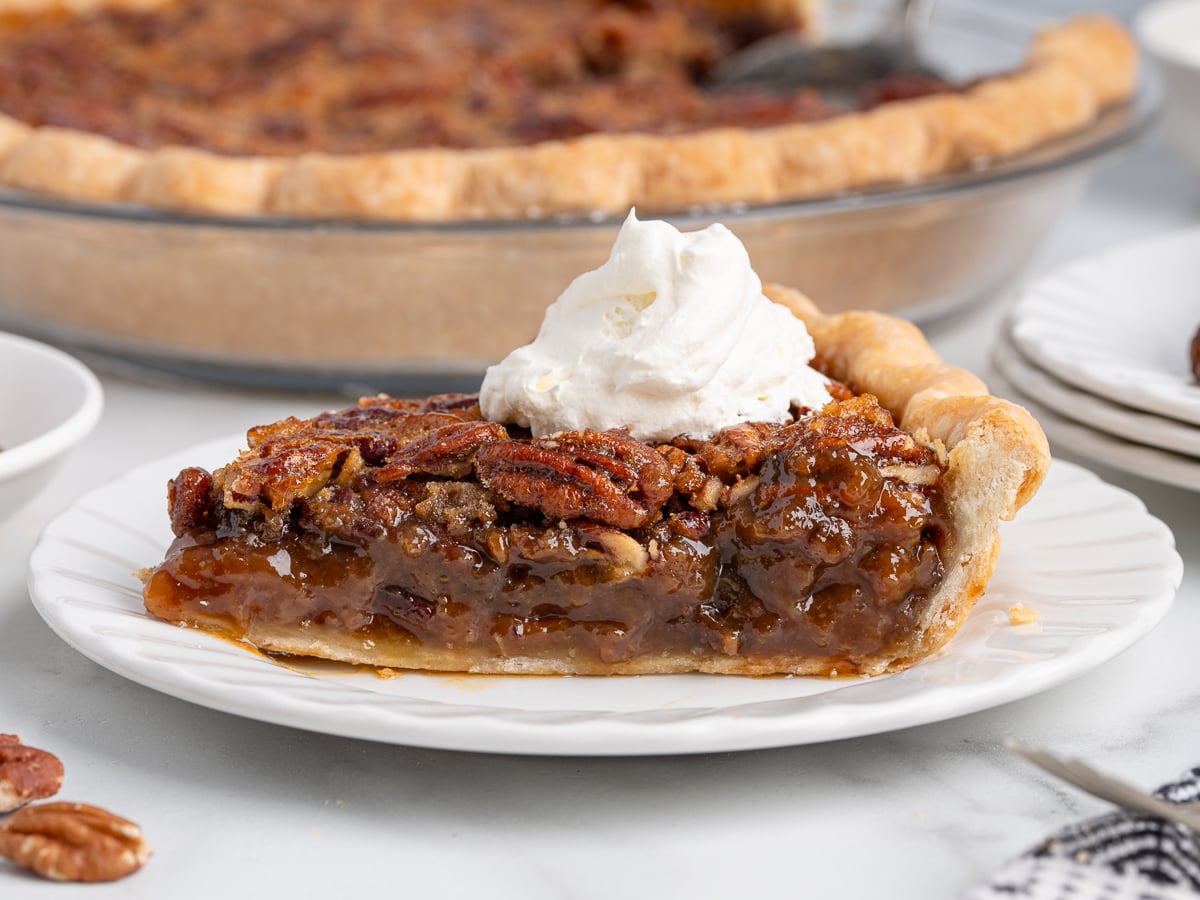
A recipe like this usually gets handed down, big on heart and short on specifics. After a lot of test pies, I worked out the version I was chasing, with a deeper, almost caramel flavor that never tips into too sweet. It is the one people ask me for now, and the one I want to pass on to you.
Ingredient Notes
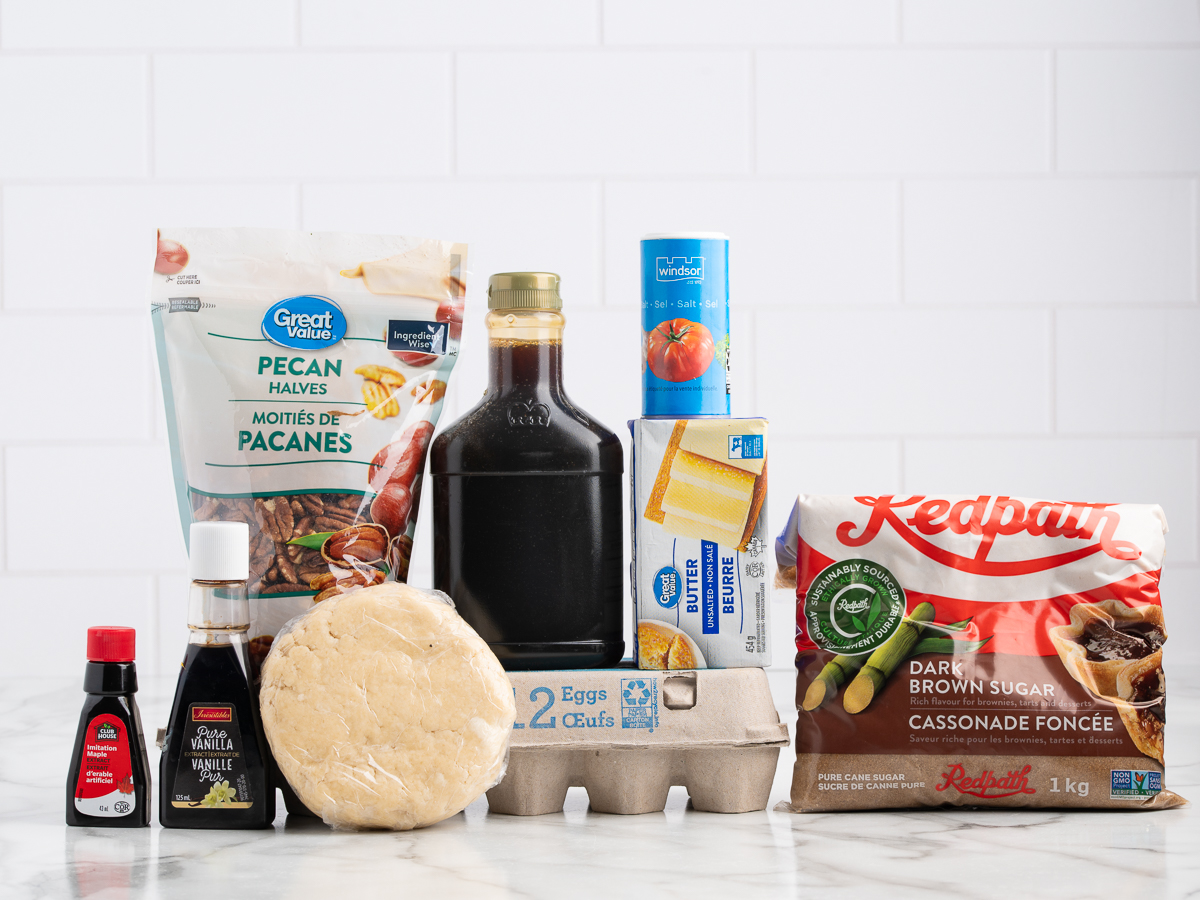
- Dark corn syrup and dark brown sugar: A lot of people say pecan pie is just too sweet. That happens when a recipe uses white sugar and light corn syrup. Using the dark version of both cuts back on that plain sugary taste and adds a deeper, almost caramel flavor instead. If sweetness is what has turned you off pecan pie before, this is the change that fixes it.
- Maple extract: Some recipes add cinnamon for extra flavor, but cinnamon can take over until the pie tastes more like a spice pie than a pecan one. A small amount of maple extract adds that same depth without taking over. You taste the pecans and brown sugar first, the way you should.
- Chopped pecans on the bottom, whole ones on top: Covering the whole top with whole pecans looks nice, but it makes the pie hard to cut. The knife has to get through all those hard nuts before it reaches the soft filling, and that tears the slice. Putting chopped pecans on the bottom and just a few whole ones on top lets the knife cut straight through, and it still looks good on top.
- Crust: I use my all-butter pie crust, since it stands up to the wet filling better than a store-bought one and bakes up sturdy enough to lift a clean slice.
Solving The Soggy Bottom Issue
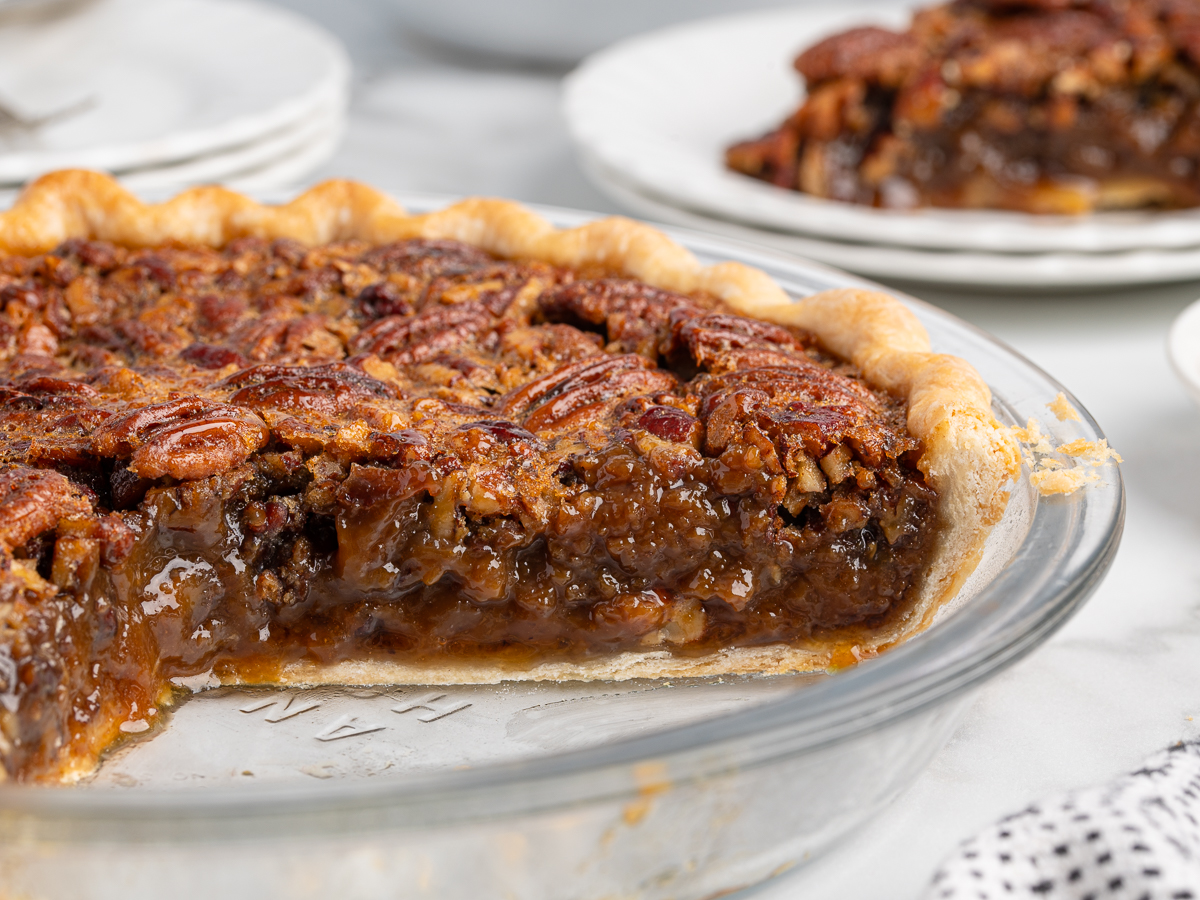
Before you add a single pecan, brush a thin coat of beaten egg across the bottom and up the sides of the raw crust, then let it sit while you mix the filling. Most people only brush the rim for color and stop there.
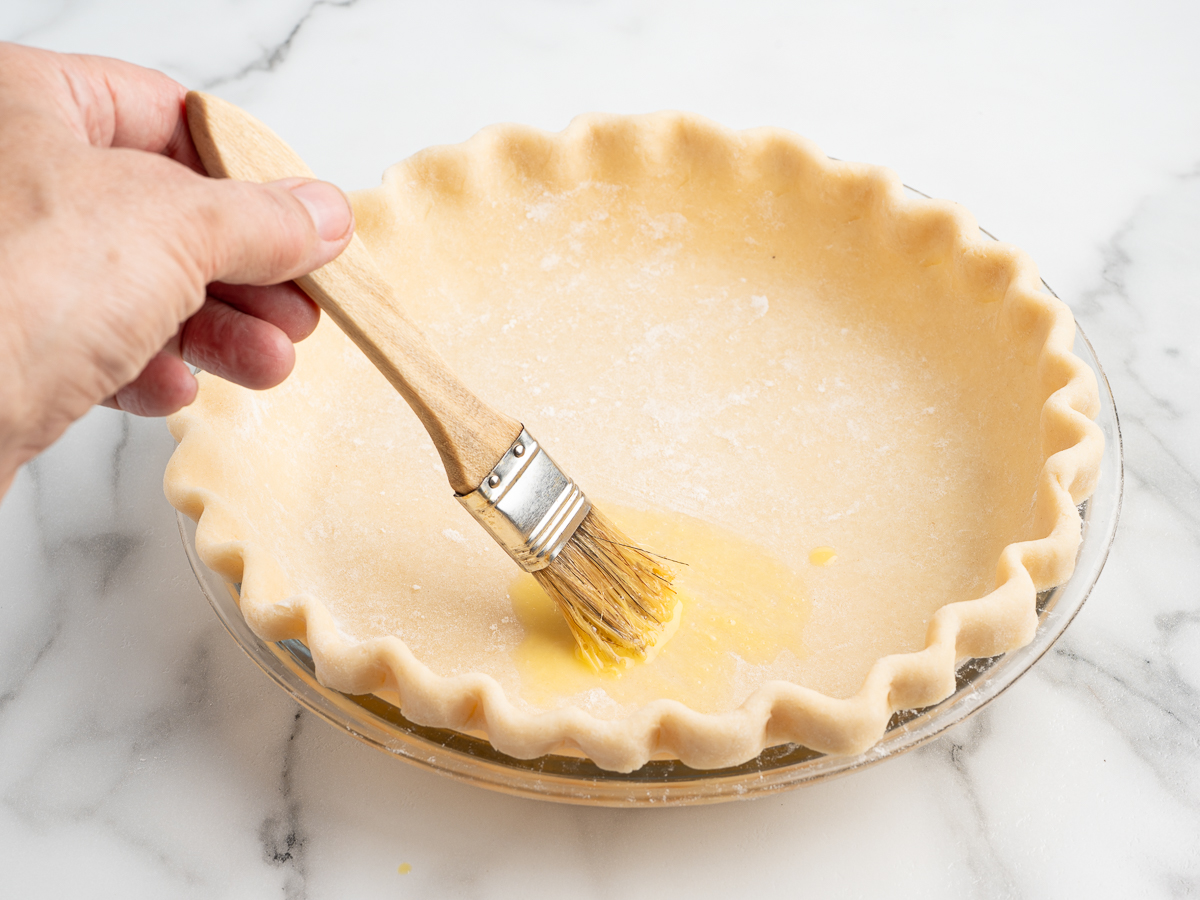
The bottom is the part that matters. That thin egg layer sets into a seal that keeps the syrupy filling from soaking straight into raw dough.
Leave A Little Room When You Pour
The filling rises as it bakes. If you fill the shell all the way to the rim, it can spill over the side and stick the crust to the dish.
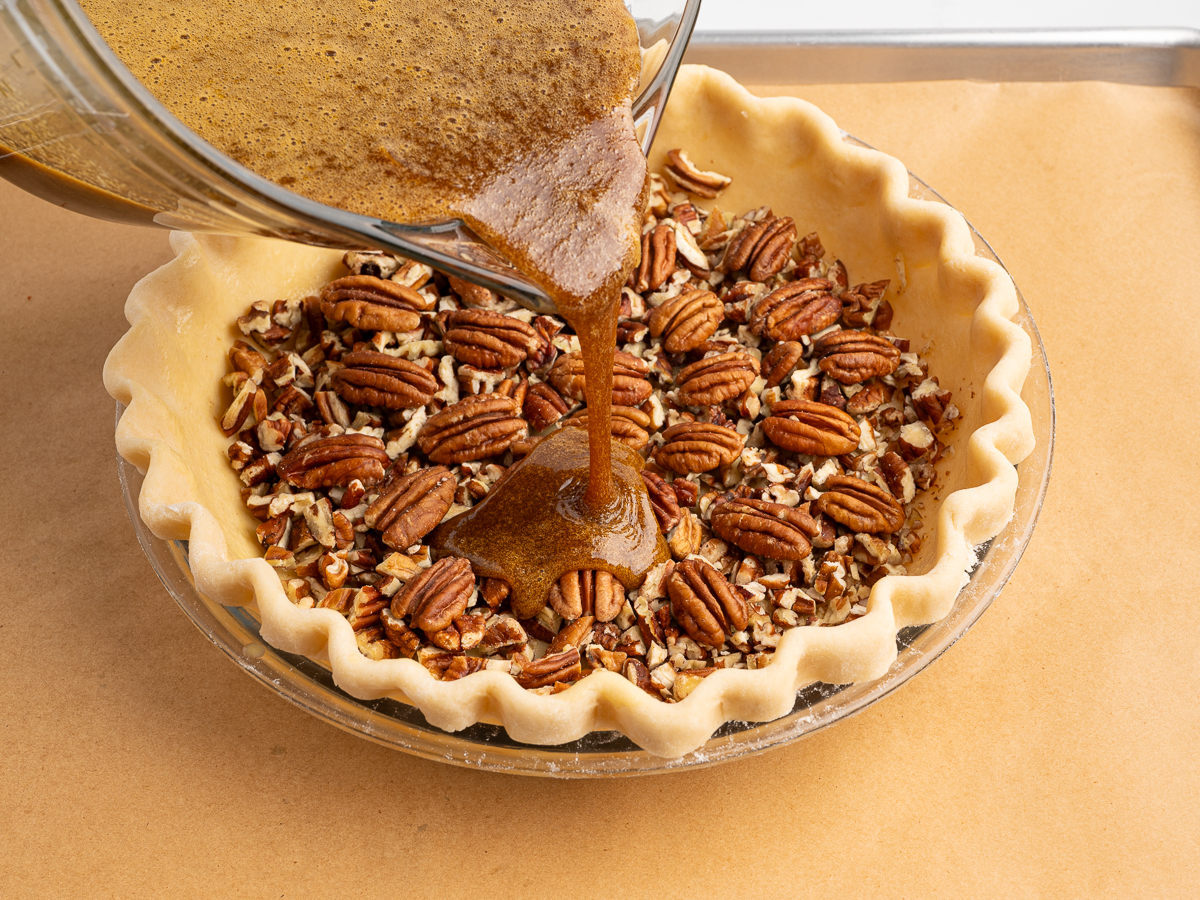
Leave a little space at the top so it has room to rise. About a quarter inch below the rim is enough.
How To Tell If The Pie Is Done
The top sets before the inside does, so a pecan pie can look finished on top and still be runny underneath. As it bakes, the filling darkens to an even shine and the center puffs into a low dome. That is your cue to start checking.
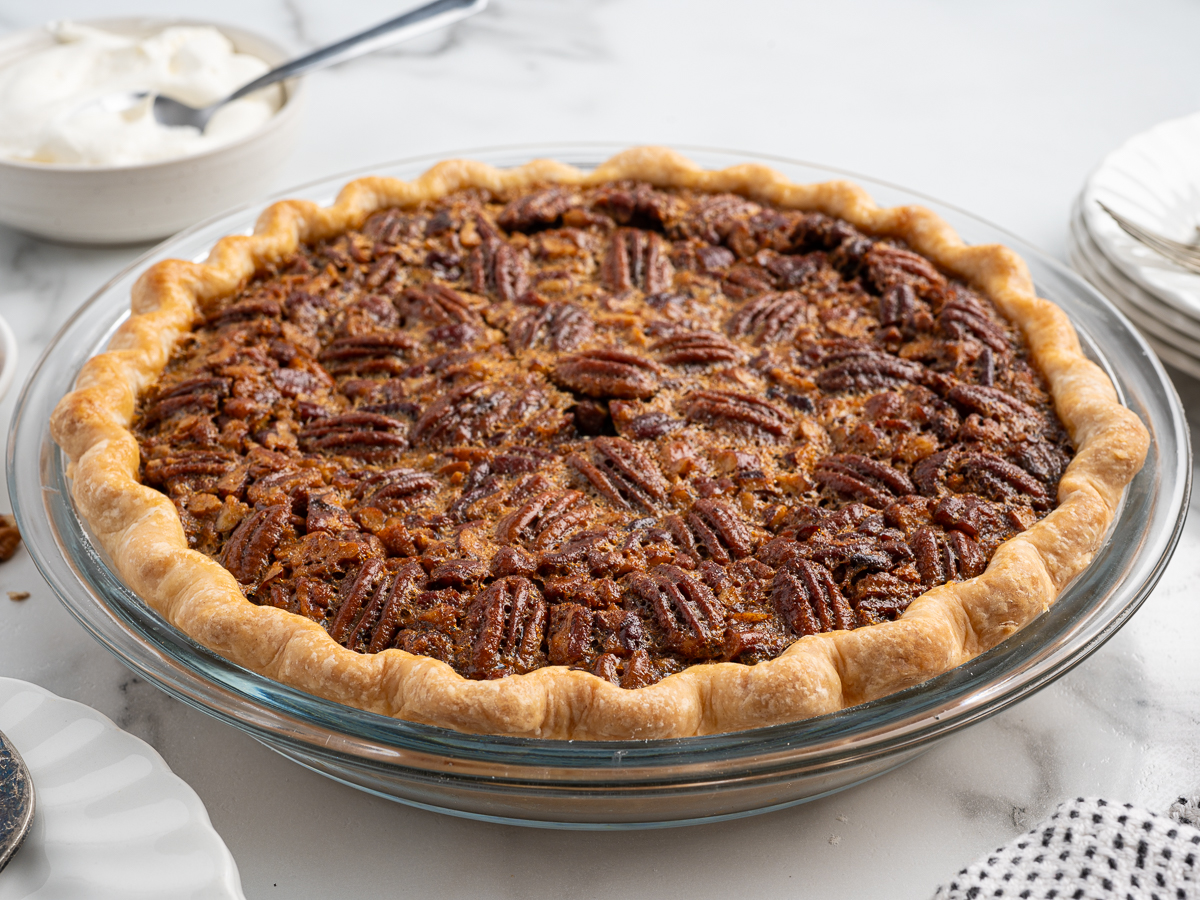
The surest test is temperature. Bake until the center reads 200°F to 205°F on an instant-read thermometer. Every time my testers baked to that point, the slices held together.
No thermometer? Give the dish a gentle shake. The edges should stay put while the very center wobbles just a little, like set Jello. If the middle sloshes like liquid, it needs more time.
The most common mistake I saw in testing was pulling it too early. It is meant to stay a little soft in the center, so when you are stuck between done and not-quite, give it another five minutes.
Make Ahead
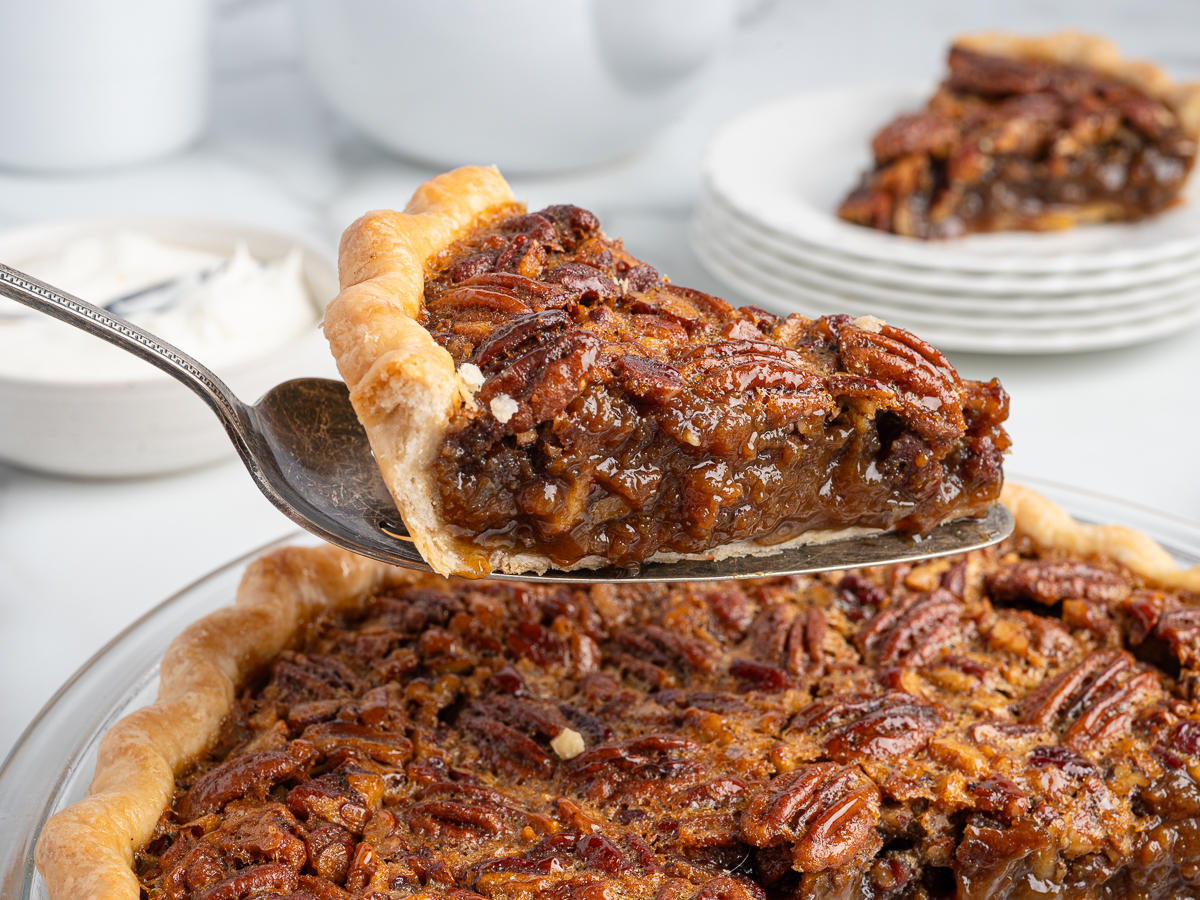
Pecan pie is better made ahead than rushed, which makes it a good one to bake a day or two before a holiday rather than the morning of.
If you want it warm at the table after it has chilled, set the slices or the whole pie in the oven on low for a few minutes until just warmed through.
Skip the microwave here. It heats the filling unevenly and pulls it back toward liquid, so a slice that cut cleanly comes out loose again. I like it just barely warm with a spoonful of homemade whipped cream on top.
Recipe Test Notes
Recipe was originally posted in November 2025, republished in June 2026.
I did not get here on the first try. An earlier version stirred the chopped pecans into the filling, and the nuts on top baked dull instead of shiny. Another used twice as many whole pecans, and they made the pie hard to slice. The version here, chopped pecans on the bottom and fewer whole ones on top, was the one that sliced clean and still looked good. I also switched from a store-bought crust to a homemade one, which held up better.
If you like this flavor but want something you can pass around at a party, the same brown sugar and pecan mix turns up in my pecan pie balls. And when I want that pecan and caramel taste without rolling out any crust at all, I make my pecan dump cake instead.

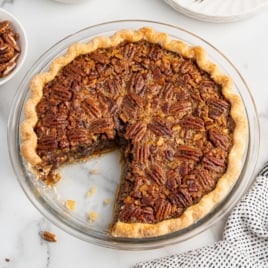
Pecan Pie
Ingredients
- 9 inch unbaked pie crust, check out my 5-ingredient pie crust recipe (or you can use a 9-inch refrigerated Pillsbury pie crust thawed according to package directions)
- 1 ¼ cup pecans, chopped
- ¾ cup whole pecans
- 1 cup dark corn syrup
- ¾ cup dark brown sugar, packed
- 3 large eggs, room temperature (plus additional egg for optional egg wash)
- 2 teaspoons vanilla extract
- ¼ teaspoon maple extract
- ½ teaspoon salt
- 4 tablespoons unsalted butter, melted and cooled slightly
Instructions
- Preheat the oven to 350°F. Spray (if using all-butter crust- no need to spray because of all the butter in the crust) a standard 9-inch pie dish with non-stick baker’s spray. If using all-butter from scratch crust, you do not need to spray the pie dish.
- Unroll the thawed pie crust into the prepared pie dish, gently tucking the edges under. Seal the edges of the crust by either fluting or crimping in a decorative pattern. Brush the entire crust (bottom and sides) lightly with the egg wash to help with browning the edges of the crust and when brushed on the bottom, it acts as a barrier to prevent the syrupy filling from creating a soggy crust. Place the pie crust onto a large rimmed baking pan lined with parchment. This will allow for easy transportation to and from the oven as well as catch any syrupy drips that may bubble over the side of the pie dish as the pecan pie bakes.
- Spread the chopped pecans evenly into the bottom of the pie crust, then top with the whole pecans in a decorative pattern.
- In a large bowl, whisk together the dark corn syrup, dark brown sugar, eggs, vanilla extract, maple extract, and salt until well combined.
- Whisk in the butter just until incorporated.
- Slowly pour the filling mixture over the pecans, being careful not to disturb the decorative pattern too much. The pecans will rise to the top giving a beautiful decorative design as the pie bakes.
- Bake for 55-60 minutes, until puffed in the center, golden brown, and the filling registers 200°F on an instant-read thermometer. You can also test for doneness by doing a jiggle test. Gently tap the rim of the pie dish and the center of the pie should just barely jiggle. You can lightly tent the pie with foil for the last 10-15 minutes to avoid overbrowning if needed.
- Remove the pie from the oven and place onto a wire cooling rack to cool completely before serving. As the pie cools, the center will settle and flatten.
Notes
- You can omit the whole pecans on top and use 2 cups chopped pecans in the pie shell instead. The pecans will naturally rise to the top during baking, giving a beautiful decorative design to the baked pie.
- The maple extract can be omitted, though it adds a lovely depth of flavor.
- A homemade all-butter pie crust can be used in place of the refrigerated crust. Be sure to use a single 9-inch crust recipe. Link the SLB all-butter crust
- For extra firm, bakery-style slices, refrigerate the cooled pie for 1 to 2 hours before slicing with a sharp serrated knife. Dip the knife in hot water, then wipe dry between slices.
- Allow the pie to cool completely at room temperature before refrigerating to prevent condensation and sogginess.
- There are many ways to create a decorative design for your pie crust. For this pie, I used the fluting method, which gives a classic wavy look to the crust. You can also crimp the edges using the tines of a dinner fork for a more rustic look.
- The most accurate way of ensuring the pecan pie filling will be properly set once cooled, is to allow it to reach 200°F-205°F on an instant read thermometer. The jiggle test is not always quite as accurate but is good if you do not have an instant read thermometer.
Nutrition












Comments
Gloria says
Such a classic!
Michelle says
I have read and re-read this recipe and I do not see where the 1/2 teaspoon of kosher salt is incorporated.
Layne Kangas says
Hi, Michelle – you add it in step three. Enjoy!
Karen says
Pecan Pie is one of my favorite pies and this recipe worked great. Loved loved loved it. Thank you!!!